NHK WORLD – JAPAN | February 2022 highlights

NHK WORLD – JAPAN | February 2022 highlights

NHK WORLD – JAPAN | February 2022 highlights

NHK WORLD – JAPAN – selected programme highlights in February

To Heal the Heart – starting 13 February

Based on the life of An Katsumasa, a Korean psychiatrist who lived in Japan, this series tells the story of one doctor’s capacity for love.

When the Great Hanshin Earthquake strikes Japan in January 1995, An Kazutaka springs into action to care for the mental health of others, even though he’s a victim himself. He listens to the concerns of earthquake survivors, empathises with their pain, and eventually becomes a pioneer researcher of PTSD (Post-Traumatic Stress Disorder) in Japan. An’s deep bond with his wife, who stays by his side through many hardships, is also depicted, as are the heartfelt ties he forms with his patients.

Four weekly episodes at 0010/0610/120/1810 GMT


Carbon Farming – A Climate Solution Under our Feet

A powerful tool for curbing climate change is right beneath our feet. Carbon farming represents a paradigm shift. The program introduces farmers in the U.S. and Japan who employ this method of regenerative agriculture. Instead of tilling the soil and spreading chemicals, they let organisms in the ground do the work. Carbon creates good soil, looking something like chocolate cake. The approach harnesses the power of nature, with twin goals of capturing carbon from the air and producing nutritious organic food.

Saturday 19 February at 0110/0710/1310/1910 GMT


BENTO EXPO

Discover how Bento connects the world, and taste it yourself, with step-by-step recipes and delicious tips and tricks!

Watch the promo here.

Mondays at 0130/0630/1230/1730/2230 GMT


Asia Insight

Asia Insight bring you the stories behind the world’s largest continent as it faces political, economic, cultural and technological change.

Watch the promo here.

Fridays at 0030/0530/1030/1530

AIB welcomes acquittal of Pakistan media group head

AIB welcomes acquittal of Pakistan media group head

AIB welcomes acquittal of Pakistan media group head

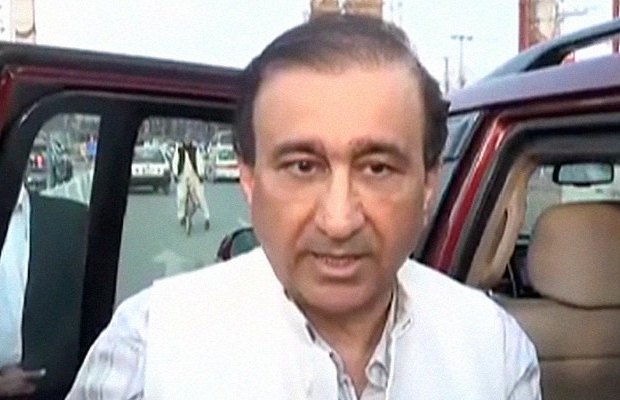
The AIB welcomes the decision of the Accountability Court in Lahore to acquit Mir Shakil-ur Rahman, editor in chief and CEO of Jang-Geo Group, of charges relating to property transactions over 30 years ago.

Rahman was kept in jail for eight months until pressure from the international community – including the AIB – resulted in his release on bail in November 2020 following an order by Pakistan’s Supreme Court. 

MSR’s arrest followed a significant campaign by the Pakistan government against Geo TV and Jang Group that has included restrictions on carriage of the nationwide TV network imposed by the Pakistan Media Regulatory Authority, and attacks on journalists working for Geo TV and Jang publications.

“We hope that the release of MSR marks the start of a change in approach to media freedom in Pakistan,” said Simon Spanswick, chief executive of the AIB. “The intimidation of journalists and media owners in the country has gone on for far too long. Pakistan needs to embrace the principles of media freedom for the benefit of its citizens.”

Deborah Turness appointed CEO, BBC News and Current Affairs

Deborah Turness appointed CEO, BBC News and Current Affairs

Deborah Turness appointed CEO, BBC News and Current Affairs

The BBC has announced that Deborah Turness has been appointed as CEO, BBC News and Current Affairs. Deborah will join the BBC from the UK’s ITN, where she is CEO.

Tim Davie, BBC Director-General, says: “I’m delighted Deborah Turness is joining the BBC as our CEO for BBC News and Current Affairs. Deborah brings a wealth of experience, insight, first-class editorial judgement, and a strong track record of delivery. She is a passionate advocate for the power of impartial journalism and a great believer in the BBC and the role we play, in the UK and globally. She will do a brilliant job of leading our news and current affairs as we deliver on the BBC’s public service mission in the digital age.”

Deborah Turness says: “In the UK and around the world there has never been a greater need for the BBC’s powerful brand of impartial, trusted journalism. It is a great privilege to be asked to lead and grow BBC News at a time of accelerated digital growth and innovation, when its content is reaching more global consumers on more platforms than ever before.”

As CEO of BBC News, Deborah will have responsibility for a team of around 6,000 people, broadcasting to almost half a billion people across the world in more than 40 languages. The BBC is consistently rated the world’s most trusted international news provider, and record numbers of people have turned to BBC News during the coronavirus pandemic. The latest figures show that eight out of ten UK adults use BBC News every week. 

Her title of CEO reflects the BBC’s ambition to continue to build the BBC’s global news brand and continue to grow its news services, which are now reaching a record 456 million people worldwide. Deborah will also be nominated to join the BBC Board.

Her appointment follows a competitive recruitment process. She replaces Fran Unsworth, who is retiring and leaves the BBC at the end of January.

To mark Human Rights Day, the BBC calls on Iran to end harassment of BBC News Persian staff

To mark Human Rights Day, the BBC calls on Iran to end harassment of BBC News Persian staff

To mark Human Rights Day, the BBC calls on Iran to end harassment of BBC News Persian staff

The BBC has today (10 December) marked International Human Rights Day by calling upon Iran to end the escalating cross-border harassment and threats towards BBC News Persian journalists and staff.  The call to end the harassment of BBC News Persian journalists comes as the Nobel Peace Prize is awarded to journalists at risk, Maria Ressa and Dmitry Muratov, “for their efforts to safeguard freedom of expression, which is a precondition for democracy and lasting peace.”

For over a decade, Iran has conducted a campaign of harassment and intimidation towards BBC News Persian journalists and their families in Iran. This has included death threats towards BBC journalists and their families in London, an asset freeze, as well as online harassment and gendered attacks on women journalists. Their family members in Iran have been arbitrarily detained, held in degrading conditions, interrogated and ordered to tell their relatives to stop working for the BBC, and faced other forms of discrimination because their relatives work for the BBC.

In the past year, threats against BBC News Persian staff and Persian-speaking journalists outside Iran have escalated. Death threats and threats of extra-territorial harm have been made towards BBC News Persian staff in London, leading to police involvement and protection. Journalists working for other organisations, and others perceived to be critics of the Iranian authorities have been abducted from other countries and returned to Iran, to be imprisoned and (in at least one case) to face the death penalty.

Liliane Landor, Senior Controller of BBC News International Services and Director of BBC World Service, said:

“It was after the escalation of persecution in 2017, when the Iranian judiciary imposed a freeze on all assets of BBC News Persian staff in Iran, that the BBC initiated its first ever UN complaint in relation to the protection of BBC journalists, and has continued to engage with UN Special Mechanisms since. This asset freeze has served to deprive BBC News Persian staff and their families of property, including their ability to sell or rent assets. The asset freeze serves as a financial sanction and penalty on BBC News Persian staff for doing their journalistic work, and it also sanctions their families.”

Concern has been raised about Iran’s treatment of BBC News Persian by the UN Secretary-General and successive UN Special Rapporteurs. For example, in March 2020, a group of UN experts made a joint statement condemning Iran’s harassment of BBC, raising concern of indications that:

“… the Iranian authorities are prepared to use force extra-territorially, in violation of international law. Harassment, surveillance, death threats against journalists, within and outside domestic boundaries violate international human right law, including the right to physical integrity, the right to life and the right to freedom of expression.”

Caoilfhionn Gallagher QC and Jennifer Robinson (Doughty Street Chambers), Counsel for BBC World Service, said:

“Today marks a historic moment, with the Nobel Peace Prize being awarded to journalists for their work. Our clients from BBC News Persian receive threats of death and violence simply for doing their jobs, and we know from Iran’s past actions that it is willing to take cross-border and deadly action to silence journalists. Many more BBC News Persian journalists are enduring other forms of systematic harassment, including their families being targeted, their assets frozen, and abuse online. We call on the international community to take immediate, robust action to ensure Iran is held accountable, and BBC News Persian journalists can report without fear.”

Michelle Stanistreet, NUJ general secretary, said:

“The continuing campaign of harassment against journalists at BBC News Persian and their families by the Iranian authorities is despicable and must stop. It is not only completely unacceptable for them to face such vicious personal intimidation, it is also a direct attack on press freedom. Journalism is not a crime, and journalists must be free to do their jobs. This year the Nobel Prize committee singled out Maria Ressa and Dmitry Muratov for their courage, adding that they were representatives of all journalists, such as those working for BBC News Persian, who stand up for freedom and democracy.” 

BBC News Persian reaches a weekly global audience of nearly 22 million people, including around 13 million in Iran. It is part of BBC World Service which delivers news content in English and 41 other language services, on radio, TV and digital. The BBC attracts a weekly global audience of 489 million people to its services available internationally, including BBC World Service, BBC World News television channel, bbc.com/news, BBC Studios and the international charity, BBC Media Action.

USAGM reports extensive audience growth

USAGM reports extensive audience growth

USAGM reports extensive audience growth

The measured weekly audience for U.S. Agency for Global Media (USAGM) programming grew by 11 percent to reach an unprecedented 394 million people in fiscal year 2021, according to the agency’s Performance and Accountability Report recently submitted to Congress.
 
The audience grew by 40 million adults, despite significant operational challenges for the agency in FY 2021, from leadership transition to pandemic limitations.
 
“The continued global effects of COVID-19, political turmoil and social unrest in many of our broadcasting areas, and increasingly disrupted media environments have driven people to seek out reliable and credible information so they can make informed decisions about their lives,” said USAGM Acting CEO Kelu Chao. “It’s clear from the research that more and more people are turning to our networks for information they can trust.”
 
USAGM continued to reach large audiences in countries of importance to U.S. national security and foreign affairs interests, including Russia (7.9 million), China (65.4 million), and Iran (12.2 million). Audience growth also occurred in several key markets – including Turkey (up 287 percent since the agency’s last survey there), Burma (up 132 percent since the last survey), and Vietnam (up 241 percent since the last survey) – as well as from previously unsurveyed markets, including India (29.4 million) and the Philippines (5.0 million).
 
Research shows audience growth across all platforms, particularly 208 million people watching USAGM content on television and 142 million listening on radio each week. Audiences consuming USAGM-sponsored content on digital platforms grew 35 percent to reach 184 million.
 
USAGM’s networks — the Voice of America, Radio Free Europe/Radio Liberty, the Office of Cuba Broadcasting, Radio Free Asia, and the Middle East Broadcasting Networks — deliver news and programming via radio, television, and internet in 62 languages.
 
A sixth USAGM entity, the Open Technology Fund, provides tools to help audiences overcome internet restrictions and surveillance. In FY 2021, these tools saw a 177 percent increase in weekly unique users, 121 percent increase in weekly visits, and 44 percent increase in total proxy traffic over the previous year.
 
Research conducted to estimate the agency’s global audience adheres to standards developed by the Conference of International Broadcasters’ Audience Research Service and reports the number of unique individuals who access USAGM content, or what is referred to as the unduplicated audience. This global audience estimate is just one element in USAGM’s annual performance report. The agency also measures impacts based on quantitative and qualitative data on a wide range of factors, including program quality and credibility, engagement with content, and audience understanding of current events.
 
A brief Audience and Impact summary is available here.
The full Performance and Accountability Report is available here.
ABC chair takes Australian government to task

ABC chair takes Australian government to task

ABC chair takes Australian government to task

The chairperson of ABC Australia has issued a statement in connection with the Australian Senate’s intentions to launch an inquiry into the broadcaster’s complaint handling procedure:

The inquiry into the ABC’s complaints handling process announced by Senate Communications Committee Chair, Senator Andrew Bragg, appears to be a blatant attempt to usurp the role of the ABC Board and undermine the operational independence of the ABC.

As Senator Bragg is aware, in October the ABC Board initiated an independent review of the ABC’s complaints system by two eminent experts, Professor John McMillan AO, former Commonwealth and NSW Ombudsman, and Jim Carroll, former SBS Director – News and Current Affairs. The terms of reference for the review are comprehensive and wide-ranging.

This review is consistent with the duties of the Board under the ABC Act. Under Section 8 of the Act, the ABC Board has the legal responsibility for developing codes of practice relating to programming matters and to ensure that the gathering and presentation by the Corporation of news and information is accurate and impartial.

The fact that these powers are given to the Board, not to the Government of the day, is a key pillar of the ABC’s operational independence.

This review is well underway and members of Parliament, including Senator Bragg, have already been interviewed as part of the review process. An issues paper will be released shortly and the review will then be seeking public submissions. The review will be rigorous and thorough and its findings will be released by the ABC board in April 2022.

Instead of respecting the integrity of this process, the Senate Committee under the leadership of Senator Bragg has decided to initiate a parallel process. I will leave it to Senator Bragg to explain his motives but the impact of this action is clear. As Chair of the ABC Board I am duty bound to call out any action that seeks to undermine the independence of the national broadcaster.

Once again, an elected representative has chosen to threaten the ABC’s independence at the expense of the integrity of this irreplaceable public service. Any incursion of this kind into the ABC’s independence should be seen by Australians for what it is: an attempt to weaken the community’s trust in the public broadcaster.

This is an act of political interference designed to intimidate the ABC and mute its role as this country’s most trusted source of public interest journalism. If politicians determine the operation of the national broadcaster’s complaints system, they can influence what is reported by the ABC.

A fundamental democratic principle underpinning the ABC has been its independence from interference by those motivated by political outcomes. Politicians, like all citizens, are welcome to criticise anything they find wrong or objectionable that is published by the ABC but they cannot be allowed to tell the ABC what it may or may not say.

Transparency and accountability are important and the Senate Committee performs a vital role. The ABC attends Senate Estimates hearings on multiple occasions every year and answers hundreds of questions on notice. It is extremely regrettable, however, that the Committee has, on this occasion, sought to undertake a task that is not only already underway but also is the legal responsibility of the ABC Board.

When Parliament resumes later this month, I respectfully ask the Senate to act to defend the independence of the ABC, as Australia’s national broadcaster, by passing a motion to terminate or suspend this inquiry until the independent process commissioned by the ABC Board has been completed.

Ita Buttrose AC OBE
Chair, ABC