The Longlist for the 13th annual AIBs – the international awards for factual content, is announced today, Tuesday 12 September 2017
Factual content from countries as diverse as Papua New Guinea, Denmark, the UK and Argentina
18 distinct categories to reward factual video, audio and online productions
From the hundreds of entries, the Association for International Broadcasting’s shortlisting team has narrowed down the list of contenders across the 18 programme categories.
“This year’s range, breadth and depth of entries is astonishing,” says Simon Spanswick, Chief Executive of the Association for International Broadcasting. “The energy demonstrated by the programme producers around the world is astonishing. We have seen and heard remarkable stories told imaginatively and sensitively – despite many being truly difficult and disturbing subjects.”
“To illustrate the range of work entered, there are political stories from the USA, Philippines, North Korea and the Maldives,” says Clare Dance, the AIBs Co-ordinator. “Deeply moving personal stories have come from Korea, Japan, the UK and Denmark. And then there’s news coverage of the major events of the past year.”
The international spread of entries is reinforced this year, with work from almost 40 countries submitted. Work has been submitted for the first time from Italy and Papua New Guinea, while increased numbers of productions have come from Europe, North and South America, the Middle East and the Asia-Pacific region.
Inclusion on the AIBs 2017 Longlist indicates that the production is among the world’s best factual content produced for television, radio or online platforms.
International judges
The AIBs 2017 Shortlist will be announced on 22 September as the panel of 55 jurors in more than 20 countries starts work on the final judging of entries.
The 2017 winners will be announced at a gala evening at LSO St Luke’s in London on 1 November, hosted by Matthew Amroliwala (pictured left) presenter and journalist at BBC Global News.
The leading awards for quality factual productions
First awarded in 2005, the AIBs are recognised as one of the leading prizes for factual productions in any language. The list of winners includes the world’s leading broadcasters and production companies, and notable personalities including Sir David Attenborough, Larry King and Christiane Amanpour.
The AIB is saddened to learn that Les Murray, the former football broadcaster and known to football fans across Australia as “Mr Football”, has died aged 71.
Regarded by many as the voice of Australian football, Murray had been battling a long-term illness, according to his long-term employer SBS. He had retired from his role on the The World Game in July 2014, having played a major role in the game’s development in Australia since the 1980s.
In a statement, SBS said: “Les will be remembered not just for his 35-year contribution to football in Australia, but for being a much-loved colleague, mentor and friend who has left a unique legacy. To say he will be sorely missed is an understatement.
Murray pioneered football broadcasting in Australia following the launch of the National Soccer League in 1977, initially on Channel 10, and went on to become the voice of World Cup coverage on SBS for several decades. He hosted eight World Cups in total, his debut coming at Mexico 1986.
He also worked across the Asia-Pacific region as Chair of the ABU Sports Group for more than 10 years, and had been an advisor to the Association for International Broadcasting. Murray was also a member of the FIFA Ethics Committee.
Murray came to Australia from his native Hungary at the age of 11 after the 1956 uprising, without any knowledge of the English-language. Murray began his career at SBS in 1980 as a Hungarian subtitle writer, but it was his passion for football that rapidly brought him into the network’s sports team. By 1986, he was hosting SBS’s World Cup coverage. As an SBS football commentator and presenter, he covered eight World Cups before retiring in 2014.
Tributes have flown from all circles, with Australian Prime Minister Malcolm Turnbull, the football community and fans sharing their accolades of the lauded sports commentator.
Over his career, he championed the cause of immigrants in Australia, devoting much time to breaking down the many barriers that newcomers to the country had to face and helping to develop the country as a model of tolerance to all races. It was fitting that he worked for SBS, Australia’s multicultural network.
Les Murray will be greatly missed by his colleagues at SBS, the AIB, ABU and across the world of football and sports broadcasting.
The second World .Radio Advisory Board meeting was held in Geneva on 4 July 2017 at the headquarters of the EBU. This Board, chaired by AIB Chief Executive Simon Spanswick, steers the development of the new .radio top level domain and resolves issues surrounding name allocations in the new TLD.
At present, the .radio TLD is being offered through the Pioneers Programme. This allows companies that have a serious interest in using – and promoting – the new .radio extension to gain exposure globally. The Association for International Broadcasting is a pioneer, providing a special web site for its annual awards – the AIBs – at www.theaibs.radio. Companies interested in becoming a .radio pioneer and having use of a .radio domain in advance of the opening of registration requests can contact the AIB for more information.
In August, “sunrise” registrations will be opened, with general availability from 15 November 2017.
“The .radio top level domain will allow every organisation with radio operations, or companies and individuals with close links to radio, to demonstrate their involvement in the radio industry,” commented Simon Spanswick, WRAB President and Chief Executive of the Association for International Broadcasting. “This is the first community domain in the world, and it’s great that the radio industry is able to lead this new global domain initiative.”
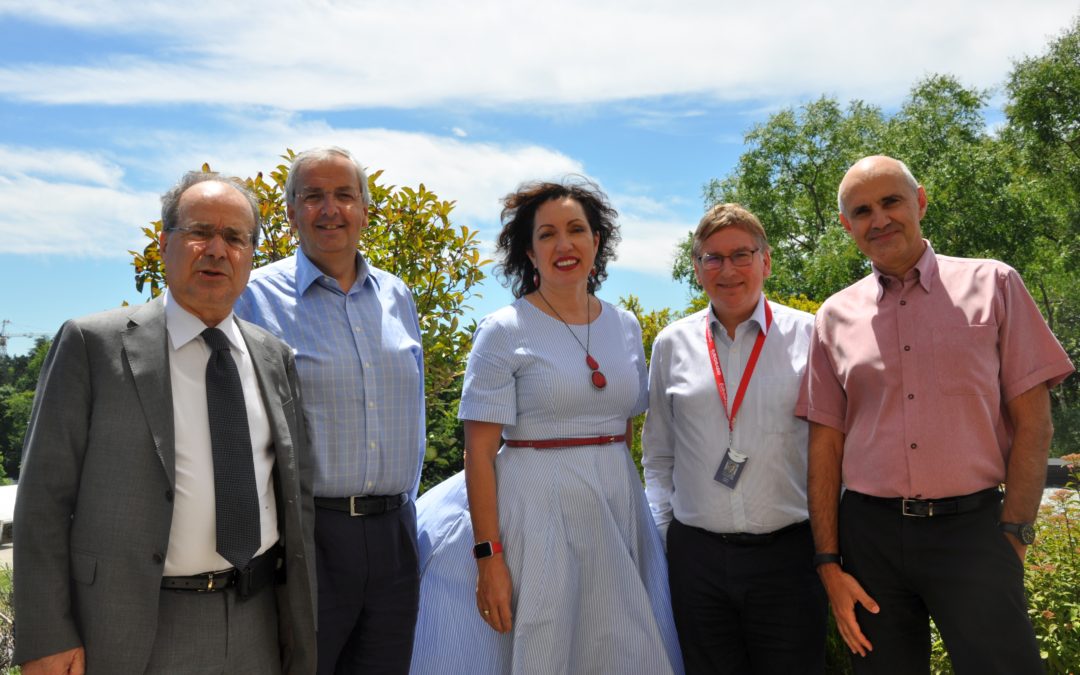
Pictured above, from left: WRAB Members at the Geneva meeting – Giacomo Mazzone (EBU); Simon Spanswick (AIB); Olya Booyar (ABU); Graham Dixon (EBU); Alain Artero (EBU)
Two major industry associations to work on cyber security and other key issues; AIB endorses NABA/DPP Security Requirements
The Association for International Broadcasting, the trade association for television, radio and online across the world, announces that it is to collaborate closely with the Digital Production Partnership (DPP),
DPP’s membership represents the whole media supply chain: production companies, manufacturers, suppliers, service providers, post production facilities, consultancies, broadcasters, distributors, and not-for-profit organisations. Besides working on the development of specifications and best practice in content exchange, a major DPP focus is the issue of cyber security.
Cyber security is also a key issue for the Association for International Broadcasting. The AIB has been working on the subject for the past three years and its specialist Working Group brings together broadcasters and key suppliers from across the globe, ranging from New Zealand to the USA. As a result of this new collaboration, the AIB is announcing that it is endorsing and backing the NABA/DPP Broadcaster Cyber Security Requirements for Suppliers.
Through this new collaborative venture, DPP will become an associate member of the AIB, and the AIB will become a DPP member.
“This new collaboration between the AIB and DPP is important for the whole broadcasting industry,” comments Simon Spanswick, AIB chief executive (pictured right). “There is much commonality between the aims and the work programme of our two organisations and cyber security is at the top of both organisations’ agendas. In endorsing the NABA/DPP security requirements document, the AIB is reaffirming its commitment – and that of its Members – to driving the media industry towards increased security to protect broadcasters from devastating cyber attack. We will work closely with our DPP colleagues over the coming months on this critical issue.”
Mark Harrison, Managing Director DPP, added “There are few more important areas for change in the media sector than the improvement needed in security practices throughout the supply chain. The DPP believes that pan-industry change such as this can only be delivered by collaboration. So we are really delighted to be working more closely with the AIB, who are just as committed to this area as we are. The North American Broadcasters Association (NABA) defined some important, pragmatic cyber security requirements in broadcasting; and now the DPP and AIB will work together to drive their implementation.”
The new collaboration between the AIB and DPP will also allow the exchange of information on a wide range of other issues, and lead to closer co-operation between Members of the two organisations.
The Association for International Broadcasting has been visiting parts of Asia, meeting Member organisations and exploring potential new relationships with organisations across the region.
The AIB’s chief executive Simon Spanswick took part in the Asia Media Summit organised by the Asia Pacific Institute for Broadcasting Development (AIBD) in Qingdao, China. Attended by more than 400 delegates from over 40 countries, the Summit addressed the issues surrounding the role of media in global development and sustainability. The AIB CEO met Mme Liu Yandong, Vice Premier of the People’s Republic of China, alongside Ministers from Russia, Bangladesh, the Maldives, Samoa, Myanmar and Malaysia and the heads of the AIBD and ABU as well as senior officials of the United Nations and a number of its agencies.
Following the Asia Media Summit, Spanswick travelled to Seoul where he met executives of the Korean Broadcasting System, an AIB Member. Discussions centred on the work of the AIB and how KBS – as a Member of the Association – benefits from the activities the organisation carries out on behalf of its Members. There were also conversations about the future of the media and how public broadcasters like KBS can maintain their relevance to audiences – particularly the youth – as consumption patterns change.
The ransomware attack that was unleashed on to computers in over 100 countries on Friday 12 May demonstrated just how important it is for media companies to take the issue of cyber security seriously.
Companies and organisations as diverse as Britain’s National Health Service, Germany’s Deutsche Bahn rail network (pictured left), Spanish telecommunications company Telefonica and car manufacturers including Nissan and Renault, each suffered from the consequences of this immense cyber attack. The Association for International Broadcasting’s own Cyber Security Working Group is actively collating data on any impact there has been on media companies from this attack.
On Friday evening, the AIB’s Twitter feed (right) linked to a map of incidents traced around the world produced by a UK-based IT expert going under the name of Malwaretechblog. This 22-year-old was subsequently reported to have discovered the “kill switch” for the ransomware, bringing much of the attack to a halt (http://www.bbc.co.uk/news/technology-39907049).
“The Association for International Broadcasting has been actively working on the issue of cyber security with its Members,” said Simon Spanswick, chief executive of the AIB. “Since the attacks on Sony and TV5 Monde, the AIB has been bringing its Members together to share information and intelligence and to explore how to encourage the entire media industry to work together, and with suppliers, to combat the threat of attack. We have been telling media companies that the issue of cyber security is one of their major governance challenges. It requires board level discussion and for a board member to take responsibility for the issue as this is not simply an IT issue. It goes to the heart of a company’s responsibility to protect itself and its employees, and to ensure that it can continue to operate in a worst case scenario. The AIB is there to support its Members on this crucial, mission-critical issue.”
As part of the AIB’s work on cyber security, the Association is pressing home the need to take the entire security issue seriously at the highest levels in all organisations. In April 2015, the AIB published advice to its Members in a briefing document that remains relevant today. AIB Members can request a copy from the Secretariat.
In October 2015, the AIB worked with Deloitte to deliver a high-level confidential briefing event on the issues of cyber security. The one-day conference brought together representatives of many AIB Members, as well as key players in cyber security including Britain’s GCHQ that has responsibility for the nation’s cyber security (now separated into the National Cyber Security Centre). At that event, high-level GCHQ speakers noted the need for governments to include media companies in national work on cyber security and their classification as critical national infrastructure.
Since then, the AIB’s cyber security working group has developed a work programme that aims to share information and intelligence among AIB Members while at the same time pressing suppliers to the industry to respond to broadcasters’ security needs and requirements. The chair of the working group, Denis Onuoha (CISO at UK transmission company Arqiva), has spoken at major broadcasting events including NAB to highlight the ever more urgent need for the entire media industry – broadcasters and suppliers – to respond to the constantly increasing number of threats that exist from both nation states and cyber criminals.
At the European Broadcasting Union’s International Broadcasting Assembly in Sofia on 18-19 May, the AIB will be presenting to a range of international broadcasters about the threat posed to their businesses from cyber attack. In June, the AIB will be meeting with national security agencies to develop collaborative links that benefit AIB Members in protecting their businesses against cyber attack.
“This is a piece of work that will continue to develop and grow over the coming months and years,” says Simon Spanswick. “The AIB is working hard on behalf of its Members to ensure that they can protect themselves, their brands and their reputations in a world where the threats from cyber criminals has never been more challenging. The media industry needs to stay one step ahead of those who work to wreck businesses and those who – knowingly or unknowingly – derail broadcasters from their missions to inform, educate and entertain.”


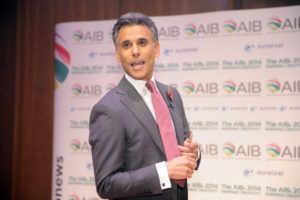 The 2017 winners will be announced at a gala evening at LSO St Luke’s in London on 1 November, hosted by Matthew Amroliwala (pictured left) presenter and journalist at BBC Global News.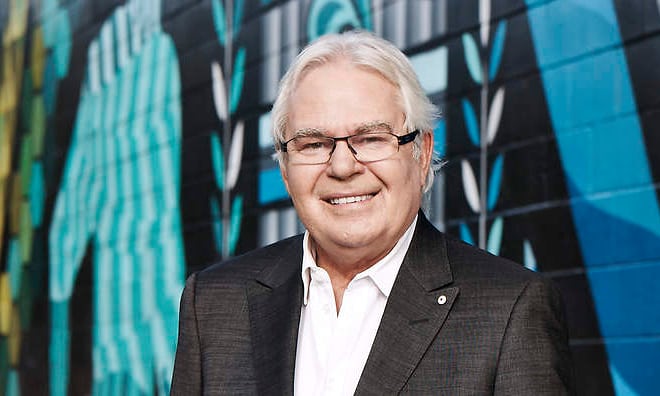

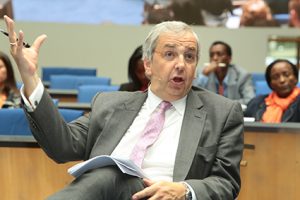 “This new collaboration between the AIB and DPP is important for the whole broadcasting industry,” comments Simon Spanswick, AIB chief executive (pictured right). “There is much commonality between the aims and the work programme of our two organisations and cyber security is at the top of both organisations’ agendas. In endorsing the NABA/DPP security requirements document, the AIB is reaffirming its commitment – and that of its Members – to driving the media industry towards increased security to protect broadcasters from devastating cyber attack. We will work closely with our DPP colleagues over the coming months on this critical issue.”
 Mark Harrison, Managing Director DPP, added “There are few more important areas for change in the media sector than the improvement needed in security practices throughout the supply chain. The DPP believes that pan-industry change such as this can only be delivered by collaboration. So we are really delighted to be working more closely with the AIB, who are just as committed to this area as we are. The North American Broadcasters Association (NABA) defined some important, pragmatic cyber security requirements in broadcasting; and now the DPP and AIB will work together to drive their implementation.”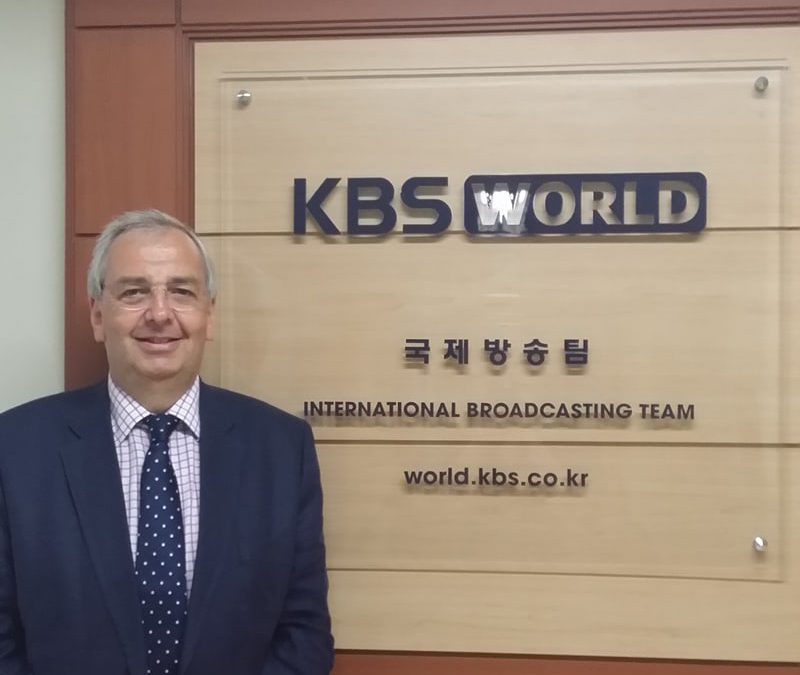
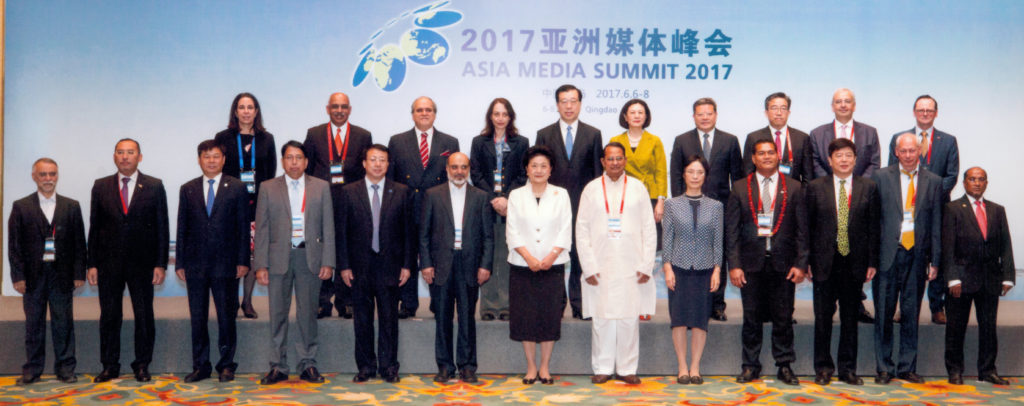 The AIB’s chief executive Simon Spanswick took part in the Asia Media Summit organised by the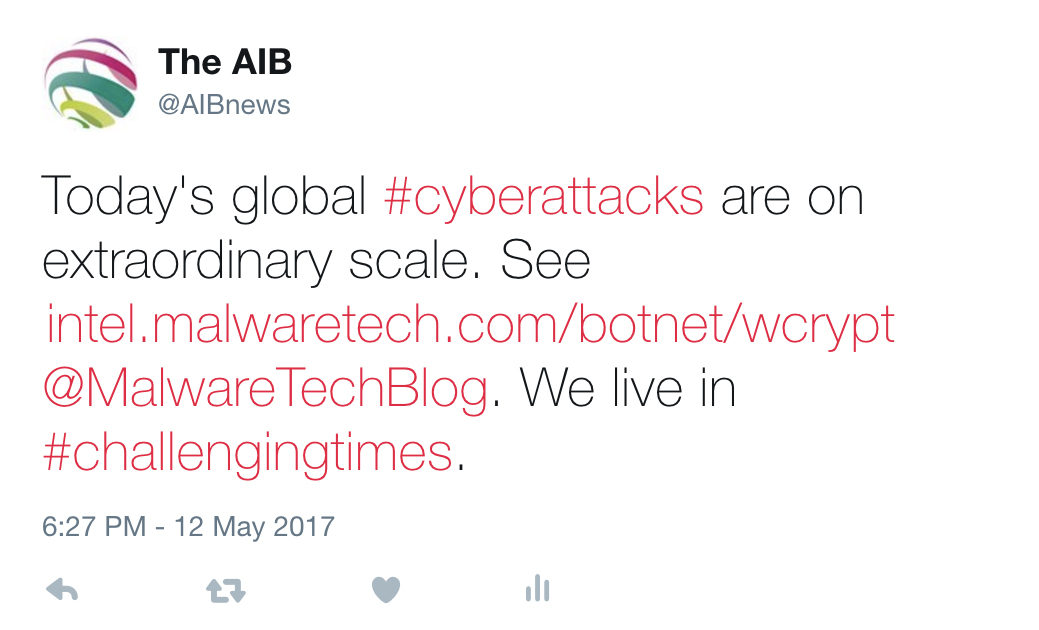
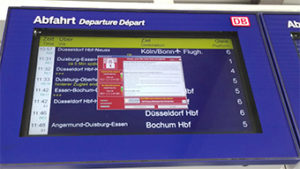 Companies and organisations as diverse as Britain’s National Health Service, Germany’s Deutsche Bahn rail network (pictured left), Spanish telecommunications company Telefonica and car manufacturers including Nissan and Renault, each suffered from the consequences of this immense cyber attack. The Association for International Broadcasting’s own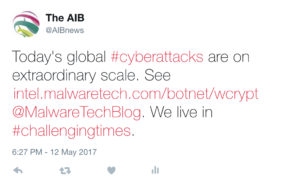
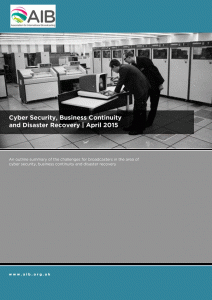 As part of the AIB’s work on cyber security, the Association is pressing home the need to take the entire security issue seriously at the highest levels in all organisations. In April 2015, the AIB published advice to its Members in a briefing document that remains relevant today. AIB Members can request a copy from the