AIB publishes FIFA World Cup 2026 safety briefing for media organisations

AIB publishes FIFA World Cup 2026 safety briefing for media organisations

AIB publishes FIFA World Cup 2026 safety briefing for media organisations

​The Association for International Broadcasting (AIB) has published a new safety briefing for member organisations ahead of the FIFA World Cup 2026, which will take place across the USA, Mexico and Canada.

The briefing has been developed to support broadcasters, production companies and media organisations deploying staff to the tournament, with a particular focus on operational, legal and digital security risks that may affect media personnel working in and around the event.

While the World Cup is one of the world’s largest sporting occasions, the AIB notes that the operating environment for media organisations has become significantly more complex in recent years. The guidance highlights issues including enhanced border scrutiny in the USA, device inspection and digital security concerns, civil unrest and crowd safety considerations, as well as location-specific security risks in parts of Mexico.

Importantly, the briefing is not aimed solely at reporters and correspondents. The AIB stresses that production staff, engineering teams, technical crews, producers, digital teams and operational personnel may face the same risk profile as journalists, particularly when entering the USA or operating in fast-moving public situations.

The publication forms part of the AIB’s wider work supporting member organisations with strategic intelligence, operational awareness and risk mitigation across the international media sector.

The AIB is also working closely with the Committee to Protect Journalists (CPJ) on safety issues surrounding the World Cup. Together, the organisations are developing a series of webinars and practical briefings for media organisations and their staff in the run-up to the tournament.

The first webinar is scheduled to take place on 25 May, with registration details to be circulated to AIB members shortly.

Simon Spanswick, chief executive of the AIB, said:

“Risk for media organisations is no longer confined to traditional hostile environments. Increasingly, operational risk begins at the border and extends through digital exposure, legal considerations and rapidly changing public situations.

We felt it was important to provide practical guidance that can support not only journalists, but everyone involved in the deployment of media operations around the World Cup.”

The FIFA World Cup 2026 safety briefing is available exclusively to AIB members.

Media organisations that are not currently members of the AIB and would like to discuss access to the briefing, AIB membership and the range of intelligence reports, strategic briefings, working groups and industry support provided by the Association are invited to contact the AIB Secretariat.

Further information about the AIB is available at: AIB official website

AIB publishes update Purpose and Membership Principles

AIB publishes update Purpose and Membership Principles

AIB publishes update Purpose and Membership Principles

The Association for International Broadcasting (AIB) brings together organisations from across the world engaged in international broadcasting and cross-border media. In a rapidly evolving global media environment—characterised by technological change, geopolitical complexity and shifting audience behaviours—it is increasingly important to articulate clearly the values and principles that underpin our shared work.

The Association has now published a revised set of AIB Purpose and Membership Principles. These have been developed and agreed by the AIB Executive Committee to provide that clarity. They set out the core concepts that define the Association’s mission and the standards to which all AIB member organisations are expected to adhere.

These principles are not intended to prescribe uniformity across a diverse global membership. Rather, they establish a common framework grounded in professionalism, integrity and respect for the role of international broadcasting in informing audiences, supporting media freedom and fostering global understanding.

They are designed to:

  • reinforce the credibility and trust that underpin international broadcasting
  • provide a clear reference point for membership and governance
  • support collaboration and knowledge exchange across the AIB community
  • ensure that the Association remains a trusted and respected forum for the global media industry

As the media landscape continues to evolve, these principles will serve as a stable foundation for the AIB’s work—supporting members in navigating change while upholding the values that define responsible and effective international broadcasting.

AIB confirms Executive Committee for 2026–2028 under new staggered election system

AIB confirms Executive Committee for 2026–2028 under new staggered election system

AIB confirms Executive Committee for 2026–2028 under new staggered election system

The Association for International Broadcasting (AIB) has confirmed the composition of its Executive Committee (ExCo) for the 2026–2028 term, marking the first implementation of the organisation’s new staggered election system.

Approved by AIB members earlier this year, the revised structure is designed to strengthen continuity, maintain institutional knowledge, and support long-term strategic oversight. Under the system, three Executive Committee members are elected each year to serve two-year terms, ensuring that experienced members remain in place as new representatives join.

New Executive Committee members (2026–2028)

Following the close of nominations, three candidates were put forward for the three available places. As the positions were uncontested, all nominees are appointed to the Executive Committee for the 2026–2028 term:

  • Ahmet Görmez, TRT
  • Chris Loweth, BBC News
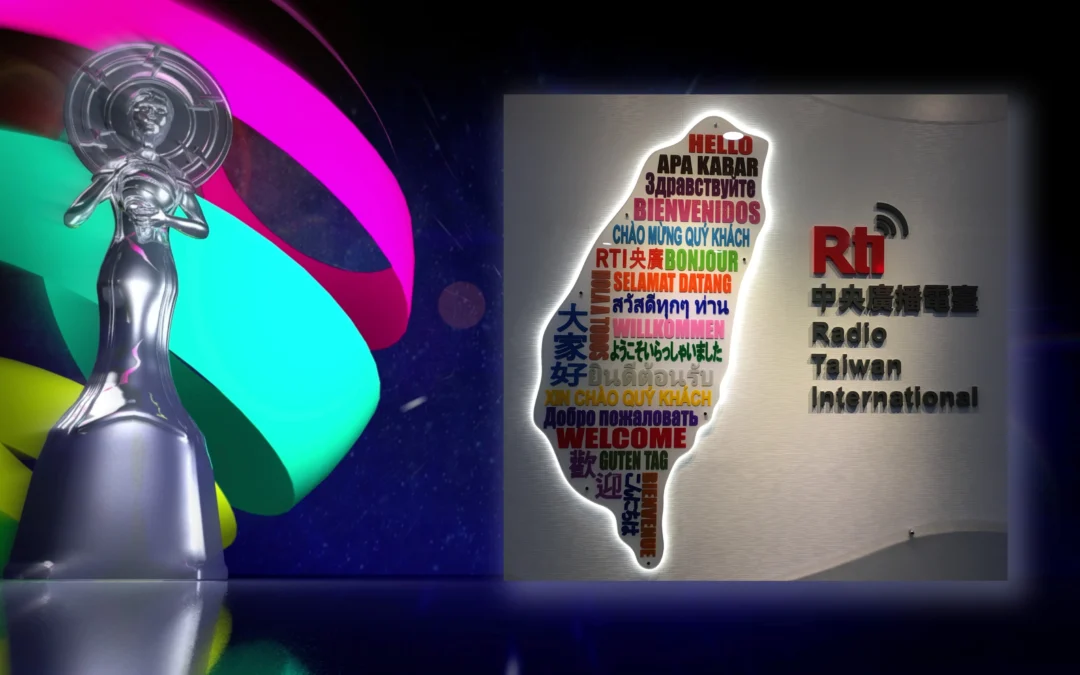
  • Chris Liu, Radio Taiwan International (Rti)

Continuing members (to March 2027)

These members join the three other Executive Committee members whose terms continue until March 2027:

  • Nesryn Bouziane, ABC
  • Craig Dale, Mediacorp
  • Serge Schick, France Médias Monde

Strengthening governance and continuity

The introduction of staggered elections represents an important evolution in AIB governance. By avoiding a full turnover of the Executive Committee in any single year, the organisation ensures greater stability, preserves expertise, and enables more effective strategic planning.

The Executive Committee plays a central role in guiding AIB’s activities, supporting its mission to serve the international broadcasting community, and ensuring that the organisation continues to deliver value to its global membership.

AIB Chief Executive Simon Spanswick said:
“The move to a staggered election system strengthens the AIB’s governance by ensuring continuity and retaining experience at Executive Committee level. I am looking forward to working with the full Committee as we continue to develop the AIB’s activities and support our members worldwide.”

The AIB extends its thanks to all members of the Executive Committee past and present for their commitment and contribution to the work of the Association.


AIBs 2026 open: a global barometer of journalism in a complex world

AIBs 2026 open: a global barometer of journalism in a complex world

AIBs 2026 open: a global barometer of journalism in a complex world

Entries are now open for the AIBs 2026 — the 22nd annual international awards recognising excellence in journalism and factual storytelling across video, audio and digital platforms.

Presented by the Association for International Broadcasting, the AIBs bring together work from across the world, creating a unique, cross-border view of how journalism is being produced, delivered and received in an increasingly complex and uncertain environment.

A global barometer of journalism

Each year, the AIBs reveal more than a list of outstanding programmes. They provide a snapshot of the global media landscape — highlighting the stories being told, the challenges being faced, and the ways in which journalists and producers are adapting to rapid change.

From investigations that hold power to account, to documentaries that illuminate social and environmental realities, to innovative storytelling across digital platforms, the AIBs showcase the breadth and depth of contemporary factual production.

In this way, the awards act as a global barometer of journalism — reflecting both the pressures on the sector and the resilience of those working within it.

Journalism under pressure — and responding

Across many regions, journalism is operating under increasing strain. Political pressure, economic constraints and the evolving dynamics of digital distribution are reshaping how news and factual content is produced and consumed.

And yet, the work continues.

Entries to the AIBs consistently demonstrate the determination of journalists to ask difficult questions, provide clarity in complex situations, and deliver reporting that serves the public interest. Whether produced for local audiences or global platforms, this work remains essential to informed societies.

Open to all, across all platforms

The AIBs are open to entries in any language, reflecting the truly international nature of the competition. Work created for local, national or global audiences is equally welcome.

The awards cover a wide range of categories spanning:

  • Video — including news, investigative, documentary and factual storytelling
  • Audio — from radio to podcasts and innovative formats
  • Digital — reflecting the growing importance of on-demand and platform-native journalism

This broad scope ensures that the AIBs reflect the full diversity of modern media.

A platform for recognition

To be shortlisted for an AIB award is to stand alongside some of the most compelling journalism produced anywhere in the world. Entries are assessed by an independent international panel of jurors, ensuring rigorous and fair evaluation across all categories.

The awards provide an opportunity for journalists, producers, editors and organisations to showcase their work on a respected global stage — and to contribute to a wider understanding of how journalism continues to evolve.

Enter the AIBs 2026

If you are producing journalism or factual content that informs, challenges and connects audiences, we invite you to submit your work.

Entries are open now and will close on 3 July 2026.

Full details of categories, entry criteria and submission guidelines are available at:
https://theaibs.tv

Join us in recognising the work that helps audiences make sense of the world — and in shaping the global barometer of journalism.


World Radio Day 2026: Radio’s Enduring Power in a Changing World

World Radio Day 2026: Radio’s Enduring Power in a Changing World

World Radio Day 2026: Radio’s Enduring Power in a Changing World

13 February marks World Radio Day 2026 – a moment to celebrate the world’s oldest electronic mass medium and its extraordinary resilience.

As the AIB noted in its special publication marking World Radio Day a decade ago, radio is both a cultural force and a global industry – a medium that touches billions every day and generating tens of billions of dollars in revenue worldwide. That fundamental strength has not diminished. If anything, radio’s importance has grown.

Across continents, radio remains:

  • The most accessible medium – free-to-air, affordable, and available on devices from battery-powered receivers to smartphones
  • A lifeline in emergencies – from earthquakes and cyclones to conflict zones, where mobile networks fail but radio continues
  • A trusted source of news – particularly in fragile or restricted media environments
  • A driver of social cohesion – creating shared national conversations and community connection

Today, radio is delivered across AM, FM, DAB/DAB+, satellite and IP platforms, with streaming and on-demand audio expanding reach to new generations. Yet the core strength remains unchanged: intimacy, immediacy and human connection.

The numbers tell the story

  • The BBC World Service reports a weekly global audience of over 200 million across platforms, with radio continuing to account for a substantial share of its reach.
  • Radio France Internationale (RFI) reaches tens of millions of listeners worldwide each week, particularly across Africa where FM partnerships and digital streaming extend its footprint.
  • In many countries, weekly radio reach remains above 80–90% of the adult population, demonstrating sustained mass appeal.
  • Industry data consistently shows radio as one of the most trusted news sources globally.

AIB members: Innovating while preserving reach

AIB members continue to demonstrate radio’s adaptability:

  • Expanding FM networks across Africa and Asia to strengthen local access.
  • Deploying portable transmission systems and “radio-in-a-box” solutions in crisis environments.
  • Integrating IP streaming, mobile apps and social media interaction to complement terrestrial broadcasting.
  • Delivering educational programming, youth engagement initiatives and multilingual services for international audiences.

From global broadcasters to regional and community stations, AIB members ensure that radio remains both technologically modern and socially essential.

Radio’s second century

As we move further into radio’s second century, its hybrid future is clear: terrestrial broadcasting and IP distribution will coexist, reinforcing resilience, reach and relevance.

On World Radio Day 2026, the AIB salutes presenters, producers, engineers, editors, correspondents, technologists, regulators and listeners everywhere.

Radio remains innovative. Radio remains trusted. Radio remains indispensable.

AIB publishes new member briefing on social media, disinformation and trust in news

AIB publishes new member briefing on social media, disinformation and trust in news

AIB publishes new member briefing on social media, disinformation and trust in news

The Association for International Broadcasting has published a new member-only briefing, Social Danger?, examining the implications of the continuing shift towards social media as a primary source of news and information.

The briefing has been produced in response to growing concern across the international media community about the scale, sophistication and impact of disinformation, fake social media accounts and coordinated influence operations — and the challenges these pose for trusted news organisations.

Rather than focusing on individual incidents or claims, the briefing provides strategic context and operational insight into how social media environments shape audience behaviour, how false narratives are embedded and amplified, and why professional journalism faces a structural disadvantage inside algorithmically driven feeds.

What the briefing covers

Without revealing specific findings, the briefing explores:

  • How changes in news consumption behaviour are affecting audience trust and scrutiny

  • Why social platforms can unintentionally favour misinformation and emotional content

  • The growing role of coordinated fake accounts and influence operations in exploiting social media dynamics

  • The implications for international broadcasters, public service media and funders

Importantly, the briefing is designed as a working reference document, not a one-off read. It includes:

  • A paired risk–mitigation matrix, helping organisations assess editorial, strategic, geopolitical and reputational risks and map them to practical responses

  • A directory of investigative organisations and reference points, enabling members to track and verify future developments in this area

Why this matters

For broadcasters, the issues addressed in Social Danger? go well beyond social media strategy. They affect:

  • Editorial integrity and brand trust

  • Strategic planning and risk management

  • Engagement with regulators, funders and policymakers

  • The long-term sustainability of public-interest journalism

Accessing the briefing

Social Danger? is available exclusively to AIB members as part of the Association’s programme of practical briefings and industry support.

Non-members who would like to learn more about the briefing, or about AIB membership and its benefits, are invited to contact the AIB Secretariat at contactaib@aib.org.uk.