29 September 2006
The news media death toll for 2006 has reached 102, yet another blood-stained milestone for those covering the news around the world, according to the International News Safety Institute.
The deaths of two journalists in a helicopter crash on assignment in Nepal, correspondent Hem Bhandari and cameraman Sunil Singh of NTV, were the latest in a spiralling death toll between January and the end of September.
And the outlook is grim. This time last year the total casualty count stood at 77.
The International News Safety Institute recorded 147 news media dead covering the news in 2005, making it the worst year ever. The numbers included 48 killed when a military aircraft packed with journalists crashed in Iran.
The majority of the dead between January and September this year were apparently murdered because of their work. Seventy-nine were shot, stabbed, bombed or beaten to death, 13 died in accidents and 10 in crossfire.
The journalists and support staff in their news gathering teams, such as drivers and translators, died covering stories in 33 countries through 29 September.
As has become customary, most – a total of 34 – were killed in Iraq, the vast majority by insurgents. Almost all were Iraqis, reporters and cameraman in the main, who bear the burden of keeping the world informed about their country’s agony. A total of 137 news media personnel have fallen in Iraq since 2003.
After Iraq, the deadliest countries were Sri Lanka, Guyana – where five newspaper print technicians were murdered by gunmen in one incident on 8 August – Philippines, India, Brazil and Argentina.
“The rising death toll suffered by people covering the news is a stain on free societies everywhere,” commented INSI Director Rodney Pinder. “Free societies cannot exist without a free flow of information and whenever a member of the news media is slain a window to the truth is slammed shut.
“We need fast and effective action by democratic governments and international institutions to halt this deadly spiral. If we do not act, our freedom will slowly wither and then it will be too late.”
INSI has joined with the International Federation of Journalists and the European Broadcasting Union in proposing a UN resolution on the protection of journalists around the world. Thus far it has met with little success but the effort will continue.
“We owe it to hundreds of brave colleagues around the world, who bring us the news at great risk to their lives, to press on with this initiative – to keep hammering on the doors of our governments and international bodies until someone wakes up,” Pinder said.
INSI monitors all places where members of the news media are in danger at work, whether from conflict, disaster, disease, hostile regimes or other violent elements. We track and record all staff and freelance casualties during coverage-related activities – print, photo and video journalists as well as essential support staff such as drivers, fixers and translators. As we are a safety organisation, our casualty list includes all causes of death, whether deliberate, accidental or health-related.
26 September 2006
The BBC has unveiled the new channel identity for its flagship domestic network, BBC ONE. Launching on 7 October, the new idents use a circle theme treated in a variety of ways by the creative team from Red Bee Media that was commissioned to create the new visuals.
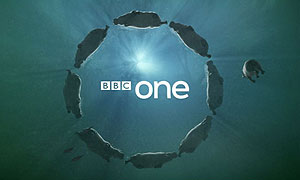
One of the idents features a fantastical exploration of what it would look like if adult hippos could swim. The action climaxes with synchronised swimming in a circle. The 3D hippos were created by Framestore CFC, the team behind the famous Walking With series led by Mike McGee.
Naomi Gibney, Head of Marketing, BBC ONE adds: “In developing the new BBC ONE identity, the key for me was simplicity.
“Out of an incredibly challenging brief, Red Bee has created a simple, true, idea with the branding at the heart of the execution. We chose this idea from Red Bee as it celebrated BBC ONE’s unique ability to bring people together, and their executions beautifully convey magical moments when this happens.”
26 September 2006
More than 90 entries have been received for the 2006 AIB International Broadcasting Awards.
Broadcasters all over the world have answered the call to celebrate success in international broadcasting, submitting a wide range of programmes in a variety of languages that have been watched and heard by audiences worldwide.
Now the judges are starting work, evaluating the entries and deciding who will be the winners of the second AIB Awards.
Our international judges – in countries from Australia across to Canada – have looked at the range and quality of the entries and have asked for additional time to evaluate and do full justice to the remarkable programming and technological innovations that have been submitted. For this reason, we are postponing the AIB Awards ceremony until after the summer break in the northern hemisphere. Look out for details of our evening of celebration of success in international broadcasting that will be taking place in early September.
See who’s entered and who’s judging by clicking
here.
25 September 2006
Al Jazeera’s long-awaited English language satellite TV service has announced its African line-up of bureaux and reporters. The new 24-hour English-language news and current affairs channel, headquartered in Doha, will have bureaux in Cairo Egypt, Abidjan- Ivory Coast, Nairobi Kenya, Johannesburg- South Africa and Harare- Zimbabwe. In addition, Al Jazeera International will share the resources of Al Jazeera Arabic Channels African bureaux located in Ndjamena- Chad, Tripoli- Libya, Nouakchott- Mauritania, Rabat- Morocco, Dakar- Senegal, Mogadishu-Somalia, Johannesburg- South Africa and Khartoum- Sudan.
Our reporting from Africa will be unparalleled. We will have more bureaux and resources dedicated to Africa than any other global broadcaster, said Nigel Parsons, Managing Director of Al Jazeera International on a visit to South Africa.
Talking from the channels Doha headquarters, Director of News, Steve Clark said, Africa is one of the most pivotal places in the world to report from. It is a continent of hope and change. We are planning other bureaux across the continent of Africa and will be announcing them in due course, Steve Clark continued.
Al Jazeera International will have a strong presence and high level of expertise in Africa through its bureaux and dedicated resources. In pursuing a news agenda that is all-inclusive, it is the only global news channel to be granted a licence to operate a bureau in Zimbabwe. That will give Al Jazeera International unique access to this part of Southern Africa.
Andrew Simmons, Bureau Chief Africa, has been co-ordinating sub-Saharan coverage. He will also be deployed on special reporting assignments. Large swathes of Africa have been uncovered by television news for too long. And so many parts of this beautiful continent suffer from what I would term reactive coverage. We want to carve out a news agenda that is pro-active. I believe that in doing so the outside worlds perception of this continent could gradually change, said Andrew Simmons. We will set out to normalise news coverage in Africa. While we wont ignore the tragedy and injustice of conflict, our cameras will bring viewers the myriad stories of achievement and causes for celebration. We want to concentrate on the people of Africa, not necessarily the political initiatives of those in power.
Al Jazeera International also announced that it has appointed correspondents Amr El-Kahky in Cairo, Gabi Menezes in Abidjan and Haru Mutasa as correspondent in Nairobi. They join Farai Sevenzo as correspondent in Harare and Kalay Maistry as correspondent in Johannesburg announced to the press earlier in the year. The teams we have in place show a level of dedication and understanding that I am sure will give us a distinctive edge, said Andrew Simmons.
25 September 2006
Arqiva supports Natural History Museum at Dino Jaws launch
On-site Occasional Mobile Services enable live broadcasts
Live launch coverage on GMTV, Europes biggest breakfast TV station
The Natural History Museum is working with Arqiva to make live broadcasting facilities available at the world famous London museum. At the recent launch of the Dino Jaws exhibition, Arqivas Satellite Media Solutions division provided a complete Occasional Video solution to the Natural History Museum, including an on-site Satellite News Gathering (SNG) truck, offering broadcasters a cost-effective and flexible way of covering the event. With Arqiva providing an on-site SNG, camera crew and space segment services as well as turnaround at the BT Tower, GMTV made full use of the facilities and aired a live piece, including a two-way link, from the Natural History Museum on the morning of the Dino Jaws launch.
Sarah Hoyle, Media Relations Manager at the Natural History Museum said, The launch of Dino Jaws, our new family blockbuster exhibition bringing visitors face-to-face with ten amazing moving dinosaurs, was our biggest press event of the year. Arqiva provided us with a perfect solution that enabled broadcasters to cover all the action without having to bring their own equipment into the museum. This made the entire process straight-forward and easy to manage and resulted in some great coverage of Dino Jaws on GMTV.
Simon Thrush, Commercial Director of Broadcast Services, Arqiva Satellite Media Solutions, added, Weve worked with the Natural History Museum for a number of years and are proud to support its work. Our Occasional Mobile Services enable broadcasters to cover an event in a cost-effective way and were delighted to be able to generate valuable extra publicity for the Natural History Museum. Following the success of the Dino Jaws launch, were now looking to provide the service for the museums future events.
Featuring lifelike moving dinosaurs, Dino Jaws explores the sometimes gruesome, and often disgusting, subject of dinosaurs and their food. Bringing together intriguing fossil evidence, fun hands-on exhibits, scientific insights and realistic animatronics, Dino Jaws reveals everything scientists now know about what and how dinosaurs ate.
25 September 2006
Czech TV has purchased a significant amount of high-powered graphics and editing equipment from Quantel to boost its all-important graphics and promos production capabilities. Czech TVs new Quantel equipment roster includes two eQ multi-resolution editing/ effects/ grading/ deliverables systems, both equipped with Quantels powerful QColor in-context color-correction option; a Paintbox gQ HD graphics system; two (SD) Paintboxes for close to air work, supported by four of Quantels QPaintbox software-only applications for preparation and off-line graphics creation.
The new systems sit alongside two Paintboxes and an HD-RGB eQ system purchased in October 2005, and all are fully integrated with Czech TVs two Quantel Picturebox sQ graphics servers, which provide centralised graphics storage, multi-user access and playout-to-air.
Quantel systems guarantee us super-fast results essential in news and sports, said Mr Zbynek Louda, graphics department chief at Czech Television. The eQs performance allows us to process a large amount of source material very quickly, so we can choose the best shots to make really stunning promos, and its HD-RGB operation also gives us an entry into the world of DI. The fact that all the Quantel systems share a common UI philosophy and file formats is also a huge advantage.
Mr. Rudolf Pop, technical director of Czech Television, added, Our large scale use of Quantel technology is a great advantage for a public broadcaster. We are currently engaged in a total re-design and re-branding exercise as we move towards introducing new digital channels. Such a project can only be successfully completed in a reasonable timescale with the kind of completely new approach to workflow that Quantel offers.
The equipment has been supplied to Czech TV through Quantels reseller, 20-20 Vision Graphics. Sales Manager, Tomas Kocanda, said, Czech TV is rightly proud of the very high quality of its promotions and news graphics, and many different versions of each piece have to be quickly and efficiently produced to keep the schedule fresh and up-to-date. This order for a second wave of equipment is a direct result of Czech TVs satisfaction with the systems it purchased last year.
