26 October 2018
Global broadcaster supports world’s leading factual programming Awards

The Association for International Broadcasting announces a landmark partnership arrangement with Al Jazeera Media Network for the annual factual programming awards, the AIBs.
2018 marks the 14th year that the UK-headquartered Association for International Broadcasting has staged the AIBs and it is the first year that the competition has secured a global event partner.
“We are delighted to welcome Al Jazeera Media Network as the event partner for the AIBs 2018,” said Simon Spanswick, chief executive of the Association for International Broadcasting. “The support of Al Jazeera will be central to the success of these awards which are designed by and for the industry to celebrate its work. This new alliance allows us to develop the AIBs and to enable more participation by broadcasters and production companies throughout the world.”
Abdullar AlNajjar, Executive Director of Global Brand and Communications at Al Jazeera Media Network, adds: “The Network is committed to freedom of the media, as we see more and more restrictions being placed on broadcasters in territories on every continent. We believe that it is vitally important to support those who are holding truth to power, and to celebrate the work of these programme makers from across the globe. Al Jazeera is glad to be partnering with AIBs factual programming awards to celebrate the achievements of some of the best programme-makers who bring the stories that matter to global audiences.”
The AIBs are the world’s leading awards for factual productions across TV, radio and online and attract entries from broadcasters and production companies in over 40 countries. The competition is divided into 20 categories that range from daily journalism to investigative documentary, children’s factual to sport.
The AIBs 2018 will be presented at a gala dinner in London on 7 November. This event, which regularly sells out, is attended by broadcasting executives, producers, editors and journalists from countries throughout the world. The shortlist of entries is available at http://theaibs.tv/AIBs-2018/Shortlist-2018/SHORTLIST3-2018.pdf.
1 October 2018
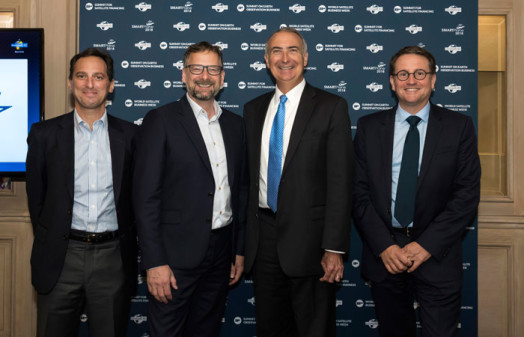
Leading global satellite operators – Intelsat (NYSE: I), SES (Euronext Paris: SESG), Eutelsat (Euronext Paris: ETL) and Telesat announced today the creation of a consortium called the C-Band Alliance, or CBA, in a move that could accelerate making mid ‐ band spectrum available for 5G services.
The CBA is designed to act as a facilitator as described in a recent U.S. Federal Communications Commission (FCC) proceeding featuring the companies’ market-based proposal to clear a portion of C-band spectrum in the United States. The formation of the CBA is a significant achievement and demonstrates the industry alignment necessary to make this mid-band spectrum available quickly, thus supporting the U.S. objective of winning the race to introduce terrestrial 5G services.
The market-based proposal was developed in response to a proceeding initiated by the FCC in August 2017, which led to the Notice of Proposed Rulemaking (NPRM) that was formally approved by the FCC on July 12, 2018 and published in the Federal Register of August 30, 2018. The proposal reflects the unique U.S. telecommunications environment and aims to protect the quality and reliability of the extensive services provided by satellite operators in the C-band spectrum to U.S. broadcasters, media, and data companies. The proposal establishes a commercial and technical framework that would enable terrestrial mobile operators to quickly access spectrum in a portion of the 3,700 to 4,200 MHz frequency band in the U.S., speeding the deployment of next-generation 5G services.
The proposal specifies the use of a consortium, now known as the CBA, to undertake the technical and commercial implementation of the spectrum clearing process. This process is necessary to repurpose the C-band spectrum for use in a 5G environment. The CBA will be led, effective immediately, by Bill Tolpegin, currently CEO of OTA Broadcasting, who will serve as Chief Executive Officer of CBA. Media sector veteran Preston Padden will serve as Head of Advocacy and Government Relations
A significant milestone in the progression of the proposal, the establishment of the CBA signifies that the satellite operators delivering the vast majority of satellite C-band services in the U.S. have agreed upon the key technical and commercial steps necessary to enable commercial implementation of the spectrum clearing process. The CBA also ensures that customer services are protected from potential interference as new wireless services are introduced into the cleared portion of the spectrum.
(Source: Eutelsat press release)
11 September 2018
Vizrt to show multiple advanced image creation workflows with Viz Engine real-time rendering at the core
At the 2018 IBC Show, Vizrt, the leader in powerful visual storytelling tools for the media industry, will spotlight the power, versatility, and scalability of its Viz Engine real-time rendering system. Presentations at stand 7.B01 will highlight several new features and native support for third-party formats and systems, including the latest version (3.11) of the Viz Engine rendering and design software.
Vizrt’s render engine now allows producers to bring their graphics to a new quality level by rendering in the full HDR color range, using the latest IP streaming technologies, adding new levels of motion capture for augmented reality (AR).
Real-time motion capture and augmented reality
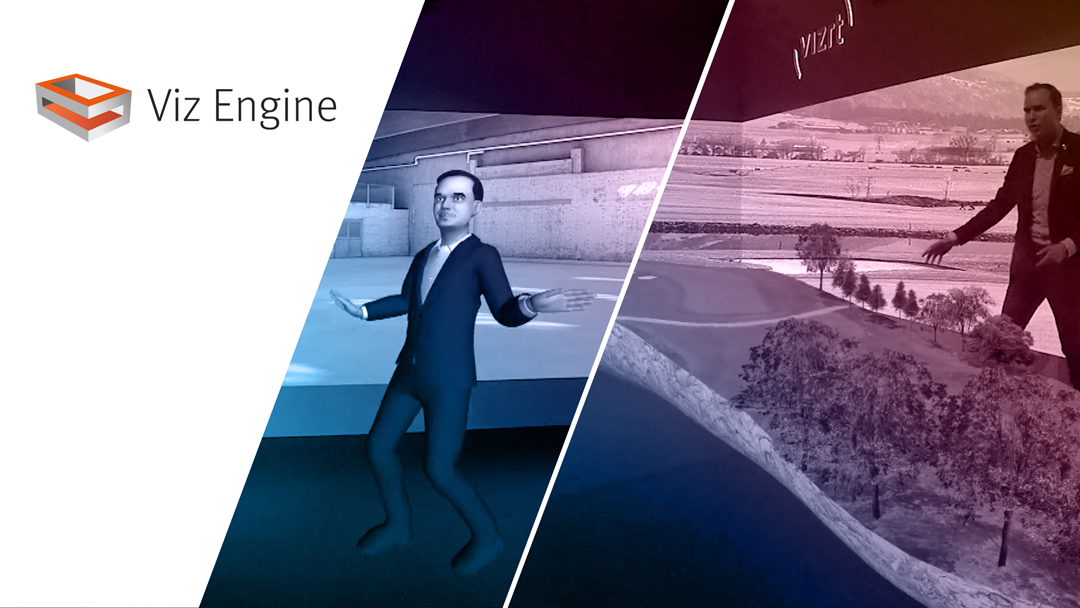
Vizrt will present The Big AR Show on its exhibit stand showing the latest in advanced augmented reality storytelling. This year’s show features the new bone and skin-based mesh deformation tools as well as real-time motion capture and photorealistic rendering—powered by Viz Engine. With the introduction of bones and skin based mesh deformation, along with physical based rendering, Viz Engine/Viz Artist 3.11 allows for complex storytelling with a new degree of interactivity. Three-dimensional models can be imported with predefined animations, but can also be driven by live motion capture streamed to Viz Engine.
Motion capture for The Big AR Show is provided by Motion Analysis Corp. as a live stream from their stand (Hall 7.B60). Motion Analysis is the sole provider of robust real-time retargeted skeleton data directly into the Viz Engine. The results will be a fully interactive AR 3D model interacting with the presenter during the presentation.
AR tools for esports
At IBC 2018 Vizrt is partnering with tracking company Ncam Technologies and Unreal Engine. During the Big AR Show, Vizrt will demonstrate the latest version of NcamAR for Unreal Engine 4 (UE4) integrated with Viz Engine. The new architecture enables Vizrt customers to combine template-based graphics and texts with Unreal Engine game assets for enhanced storytelling within live productions.
HDR workflows
High Dynamic Range (HDR) is gaining momentum among high-end film productions, live music concerts and sporting events due to its advanced color rendition attributes. Vizrt has developed and implemented HDR in Viz Engine supporting the HLG and PQ HDR formats. We will now show full compatibility with the S-Log3 HDR format developed by Sony. This is a high-quality digital intermediate process for a variety of post-production workflows.
At the IBC Show, Vizrt shows the S-Log3 capability at the Sony booth (13.A10) as a part of live production workflow where S-Log3 live video is converted to HLG and SDR.
Comprehensive IP Support
At IBC, Vizrt, which supports all flavors of video over IP, will show the continued advancement of its product portfolio for SMPTE 2110 IP-based production and distribution environments. At the core of these workflows is Viz Engine, providing graphics rendering, clip players, audio, downstream keyers and DVEs. The system is format agnostic, giving media companies the flexibility to move forward with quickly evolving IP standards. In addition, this ensures video, audio and graphics systems will continue to perform regardless of the choice of house format.
As part of this company-wide IP initiative, Vizrt is integrating the Matrox X.mio5 Q25 SMPTE ST 2110 NIC card with multi-channel 4K support over 25GbE, making Viz Engine ready for a wide variety of IP-based productions. With compositing NDI and SDI inputs, streaming via WebRTC and support for up to 16 RTP stream inputs, Viz Engine defines a new level of possibilities on any IP-based workflow.
About Vizrt
Vizrt is a worldwide market leader in the areas of real-time 3D graphics, studio automation, sports analysis and asset management tools for the media and entertainment industry. This includes interactive and virtual solutions, animations, maps, weather, social media, video editing, compositing, and multiplatform VOD and live playout tools. Vizrt has customers in more than 100 countries worldwide including CNN, CBS, Fox, BBC, BSkyB, Sky Sports, CBS Sports, Fox Sports, Al Jazeera, NDR, ITN, ZDF, VICE, The Washington Post, TF1, CCTV, NHK and the list keeps growing. Vizrt has nearly 600 employees and operates in 40 offices worldwide. Vizrt is a privately owned company by Nordic Capital Fund VIII. For further information please refer to www.vizrt.com

30 August 2018
The International Broadcasting Convention (IBC) will be held in Amsterdam from Thursday 13 to Monday 17 September 2018. SatADSL will be present at the major event of the year for the broadcast and video technology industry. 1,700 exhibitors and 57,000 attendees are expected.
Amsterdam hosts IBC each September, attracting attendees and exhibitors from 170 countries. Just like the NAB Show in Las Vegas, IBC brings industry leaders in broadcasting, telecommunications, media, and entertainment together in fifteen halls.
This year’s event focuses on how companies are preparing for the future, with particular attention to speed and agility – the two key elements in every forward-thinking strategy. A prestigious line-up of some 400 speakers has been assembled to explore the theme of “Shaping The Future Together”.
SatADSL will take part in this event for the second time. If you are a satellite operator or an Internet service provider, we will be happy to meet you at stand “5.C31” in Hall 5. Michel Dothey, our Chief Commercial Officer, Fulvio Sansone, our Chief Technology Officer, and Caroline De Vos, our Chief Operations Officer, will showcase the SatADSL services: satellite IP connectivity, business solutions and specific business-oriented solutions. They will also show you what makes SatADSL different from the competition: the unique Cloud-Services Delivery Platform (C-SDP). Finally, they will present the new PaaS offer (Platform as a Service), opening the SatADSL C-SDP to every satellite, hub or IP service operator and bringing an additional level of added value to our current services.
To welcome you in the best conditions, we invite you to contact us today at caroline.devos@satadsl.net or +32 2 351 33 74 to arrange a meeting at our stand. You can also contact Michel Dothey at +32 495 53 06 12.
For more information about IBC: https://show.ibc.org.
28 August 2018
The Red Bull Air Race uses the Ghost Plane and more graphic tools to add a new level of storytelling to the World Championship of air racing.
Take a combination of speed, the most agile raceplanes, a unique aerial track and some of the most stunning locations in the globe, and you have the Red Bull Air Race. Created by RedBull in 2003, the Red Bull World Championship has the best pilots in the world compete to fly flawlessly through the racetrack, passing giant air-filled gates with precision while trying to set the best time. The pilot finishing the track in the fastest time takes the race victory. Tens of thousands of fans gather around the world to watch this exciting motorsport competition live, while even more fans tune in to the live video production that is enhanced with augmented reality (AR).
A race at this scale can be tricky to watch from the ground. Fans want to know how fast the pilots are going, if they pass the gates correctly, and how did their competition do?
“The Red Bull Air Race is a sport which is hard to understand if you just watch it, because you don’t see the difference between two pilots,” says Stefan Koch, TV Director at Red Bull Air Race “The key is to attach people to the story.”
Engaging the audience
Red Bull Air Race, together with the production company netventure, have taken innovative approaches to grab the viewer’s’ attention and explain the air racing action. For the fans in the stands, several big video walls are in place. These video walls show race data visualized by netventure using Vizrt graphics tools that allow to share the excitement in real-time.
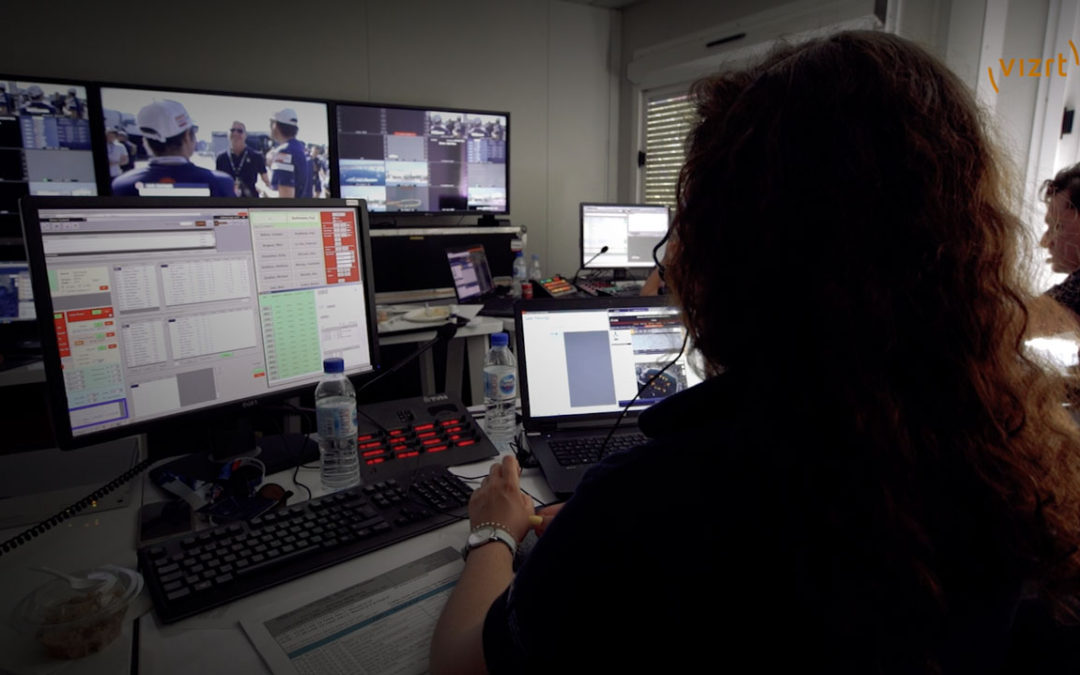
The real-time graphics are controlled with Viz Trio, which gives an operator full control of which pilot’s stats to share and when. The graphics and the tools to manage them play an instrumental part in creating an exciting story for both the live audience onsite and viewers on TVs and mobile platforms.
The ghost plane
The second innovation created by Red Bull Air Race and the support from netventure is the Ghost Plane. The ghost plane allows a visual head-to-head comparison between two pilots.
“They (Red Bull Air Race) wanted to add some more excitement during the competition since you cannot have two airplanes in the race track at the same time, says Antonio Bleile, Virtual Graphics Developer at netventure. “They wanted a tool to visualize competitors against the actual flying pilot.”
A real raceplane overlaid with an AR plane is the perfect solution for the audience to see in real-time who is winning. Accuracy is the key for a feature like this to work properly. netventure developed a plugin for Viz Engine to read flight data from the cockpit and apply it to the AR plane. Viz Engine has an open architecture allowing users to develop their own plugins to work specifically for their storytelling needs.
Capturing every emotion

Red Bull Air Race also wants to share the emotions of the pilots with the viewers. This is different to most other races however, because once the pilot crosses the finish line, they can’t relax, they need to remain focused and land their planes. Cameras have been installed inside the cockpit of each raceplane to capture every cheer or disappointment of the pilots. In addition, the pilots are interviewed on the ground as soon as they get out their planes. These interviews are recorded and ready to be broadcast live, with the help of a Vizrt partner EVS. The input from the recording is edited with Vizrt graphics by netventure and shared live on the video walls and broadcast live through Red Bull Air Race
“Emotion is part of successful sports event. Combining Vizrt’s graphics with the adrenaline rush of the planes racing at high-speed through the track, the Red Bull Air Race is one of the most exciting new sports today,” said Yan Heydlauf at Vizrt.

28 August 2018
More and more communities are choosing the SatADSL hotspot solution—and for good reason: it is easy to implement and to use, comes at an affordable price, and can even be cost-effective.SatADSL celebrates its 7 years of business with its head in the stars – the company’s story is one of success! Let’s return to earth and talk about the reasons behind this success with Thierry Eltges, co-founder and CEO of SatADSL.
What was the context that led to the creation of SatADSL?
Thierry Eltges: SatADSL was created 7 years ago. After working as an engineer at the European Space Agency (ESA), I started my consultancy company in the early 2000s ‒ Sea & Space Exploration. Several people, all working at SatADSL now, joined me in this adventure: Caroline De Vos, Fulvio Sansone, and Maïte Aguirre. For 10 years, we worked for ESA and industrial companies such as Newtec or satellite telecommunications operators such as SES. Sea & Space Exploration, still active today, is very business-oriented and specializes in market research for launching new products and services. After a study for ESA, we decided to start SatADSL.
What was this study about?
Thierry Eltges: It focused on the African VSAT market and the technological potential of the low-cost terminals developed by the Belgian company Newtec, one of SatADSL’s current partners. For almost a year, we traveled extensively throughout Africa to understand the real needs of local businesses. We noticed that, at that time, only very large, expensive telecommunications systems existed, resulting in a very high communications cost. There was a real demand for a reliable, low-cost system and our market study showed it was possible.
So you went from theory to action…
Thierry Eltges: Yes, we were determined to prove that our market plan was realistic and achievable. We launched SatADSL in 2011 and started looking for a private investor. Two years later, SPDG, the holding company of the D’Ieteren family, became a partner. They launched a capital increase of EUR 1 million and SatADSL became a limited company. Today, SPDG owns about one-third of the company. The other shareholders include SatADSL employees.
How has the company developed since then?
Thierry Eltges: We started out with 4 in 2011. In the following years, we hired more and more people and today we have 17 full-time employees. Since the beginning in 2011, our business grew very fast and has continued to do so exponentially. Initially, we were only reselling the services of other operators such as SES. But already during the first year, we realized that these services were not suitable for the African market. We wanted to offer complete solutions and customized services for end-user customers. That is why we created our own service offering and even developed our own service platform: the Cloud-based Service Delivery platform (C-SDP). This platform meets the need for monitoring and control of our customers. It also allows for preventive maintenance, which means our customers can check the quality of their connections in real-time (speed, interruptions, etc).
Which technological developments can we expect?
Thierry Eltges: In 2012, we started to buy bandwidth for our service platform in Brussels. This allowed us to manage customer traffic directly and to create our own service profiles: dedicated services, shared services with limited contention (cheaper than dedicated services), multicast services for radios, VNO services for customers who want to share capacity between multiple sites, etc. We can now offer customers complete solutions, even in professional niche markets. Our customers need more than just a connection. Just to name one example, we have a solution for hotspot services. This allows our customers to offer end-users ‒ typically nearby villagers ‒ WiFi access: they can connect via their laptop or mobile phone to the Internet from anywhere within a range of 300 meters of the customer’s hotspot.
So you had to develop software and obtain a high amount of IT expertise…
Thierry Eltges: … Exactly! Especially to distribute the bandwidth more effectively between the various users. Today, we can offer more complex solutions, like networks for tactical military communications. In addition, we have opened our serivce platform C-SDP to every satellite, teleport or service operator. We are very proud of this platform, it is unique on the market and we just filed a patent application.
In your opinion, how does the SatADSL team contribute to the company’s success?
Thierry Eltges: We are a really close-knit team with multiple skills: engineers in very specialized fields, software developers, and administrative, sales and operational support teams. We are particularly recognized for the quality of our technical support. Unlike most companies, we do not limit ourselves to reactively helping customers when they have problems, but we proactively offer solutions to their specific needs. Another important feature of this team is its flexibility: we believe nothing is impossible and we always provide satisfying solutions to our customers. This “modus operandi” made it possible to develop a service platform that is as flexible and complete as the C-SDP.
