

BBC brings ‘Once upon a time in Iraq’ to 11 countries
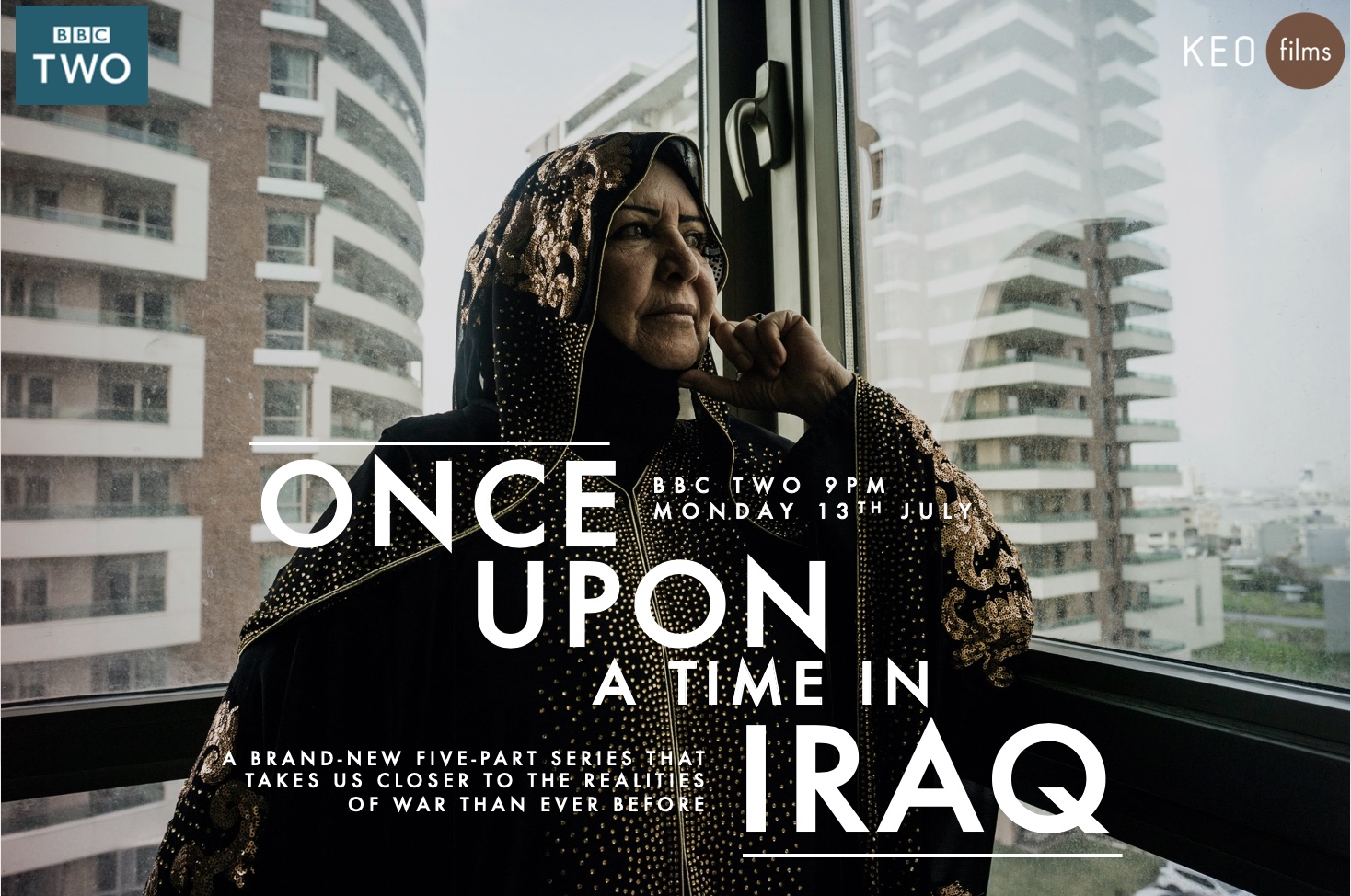
BBC News Russian audiences in 11 countries will be able to watch a Russian-language edition of the award-winning docuseries, Once Upon a Time in Iraq. From Monday 26 April, the five-part documentary will be published with Russian voiceover for audiences in Russia and ten other countries – Armenia, Azerbaijan, Belarus, Kazakhstan, Kyrgyzstan, Moldova, Tajikistan, Turkmenistan, Ukraine and Uzbekistan – via the BBC News Russian YouTube channel, its website bbc.com/russian and its channels on the social networks VKontakte and Odnoklassniki.
Premiered on the BBC platforms in the summer of 2020, Once Upon a Time in Iraq was produced for the BBC by Keo Films and directed by award-winning director James Bluemel. Illustrated with unique material from personal archives, the gripping documentary traces years of chaos and bloodshed following the 2003 invasion of Iraq by the US-led coalition. The story of the war that changed the world is told by the Iraqis and Americans who lived it.
James Bluemel is known for his Bafta-winning docuseries about the Syrian migrant crisis, Exodus: Our Journey to Europe. Talking about his work on Once Upon a Time in Iraq – which, in 2020, won two Rose d’Or awards – Bluemel says that he hadn’t expected much interest in the series. However, meeting and speaking to Iraqis or Americans, who were in Iraq over those years, he had the most fascinating insights and moving personal stories which hardly had been heard before.
He says: “I think people assume they know the story of the Iraq war and that there is nothing left to say. However, when the films were eventually shown on the BBC, the response was overwhelming. People engaged with the subject and characters, they began to think of the war in a more humanised, empathetic way. It remains a huge surprise that the films have had the reaction they have had. And now to know that they will be seen in Russia and 10 other countries is absolutely fantastic. I hope the series has a similar effect of bringing a more nuanced and empathetic response to what Iraqis have had to endure since 2003.”
BBC News Russian Editor, Jenny Norton, adds: “Once Upon a Time in Iraq is a thought-provoking docuseries, offering a very frank and honest portrayal of the true impact of the US-led coalition’s intervention in Iraq. Unsparing on every level, this documentary by British film-makers is the kind of journalism that the BBC wants to bring to its Russian-speaking audiences.”
Each episode of Once Upon a Time in Iraq is dedicated to one or several people or events. In Episode One – The War – heavy-metal musician Waleed Nesyif who, like many Iraqi teenagers then, was infatuated by the West and saw life under Saddam as oppressive, tells about the Baghdad youths’ anticipation of the hostilities, and what the first weeks of the invasion brought about.
Episode Two – The Insurgency – about the following stage of the war when Iraq was gripped by waves of insurgency against the occupation, is told by US Lieutenant Colonel Nate Sassaman who found himself unprepared for the hostility they were faced with, and Allaa Adel who, as a 12-year-old in Baghdad, was hit in the face by shrapnel from a roadside bomb intended for the American military.
In Episode Three – Falluja – the story of the war’s most intense battle is told through the tragedy lived by embedded freelance photographer Ashley Gilbertson who, along with reporter Dexter Filkins, was working for New York Times, and by Falluja resident Nidhal Abed who, on the fateful day of 4 November 2004, had to take her two-year-old son Mustafa to the doctors.
In Episode Four – Saddam – the story of the fallen dictator is told by the CIA senior analyst John Nixon who interrogated him, a volunteer translator Samir Al Jassim who was involved in his capture, and the military policeman Brandon Barfield who accompanied him on his way to the gallows.
In Episode Five – The Legacy – the invasion’s outcomes are judged by Omar Mohamed, a Mosul university professor who authored an anonymous blog bearing witness to three years of the city’s life under ISIS. Waleed Nesyif, now a university-graduate Canadian citizen, and Um Qusay, a Sunni who risked her life by giving shelter to Shia soldiers fleeing an execution by ISIS, return to the film’s narrative.
Selected quotes from the documentary:
Dexter Filkins: “Ultimately war it’s a kind of laboratory of the human condition in extremis. You see the best of people and you see the worst. You see moments of incredible heroism and also hatred and irresponsibility.”
Nate Sassaman: “War as an institution is pure evil.”
“This is really the sole reason I’m sitting in this chair. Is that when we get to 2038 and there’s a whole other generation of lawmakers, instead of us rushing into things, like I feel like we rushed so badly. That we sit back, and we go through a whole bunch of other options before we set the before we set the force in action, because once the force is put into action, you can’t pull it back.”
Allaa Adel: “I hope that what happened to Iraq happens to America. I’ve never wished harm on anyone, but I wish it upon them.”
Omar Mohamed: “Can the Americans say they did something good in Iraq? I want them to look into my eyes and tell me this. They didn’t bring freedom. They brought chaos.”
Once Upon a Time in Iraq will be available for viewing on the BBC News Russian website and YouTube channel, as well as via VKontakte and Odnoklassniki. Each new episode will be published every day from Monday 26 April 2021.
BBC News Russian regularly brings to its audiences the best of the BBC’s documentaries.
BBC News Russian also connects with its audiences via Facebook, Instagram, Telegram and Twitter.
BBC News Russian is part of BBC World Service.
[Source: BBC press release]