BBC discusses the future of digital news in the Western Balkans

BBC discusses the future of digital news in the Western Balkans

The future of digital media in the Western Balkans will be the main theme of a major conference in Belgrade organised by the BBC’s Serbian service. The Balkan media market is facing serious challenges such as the proliferation of fake news, the fragmentation of the media scene and financial instability.


The Director of BBC World Service Group, Jamie Angus and senior BBC journalists will come together with leading media representatives from around the region at the one-day conference.   They will discuss some of the key issues facing the region’s digital news industry, and how the BBC’s standards, experience and insights can help serve the regional audiences on digital platforms.


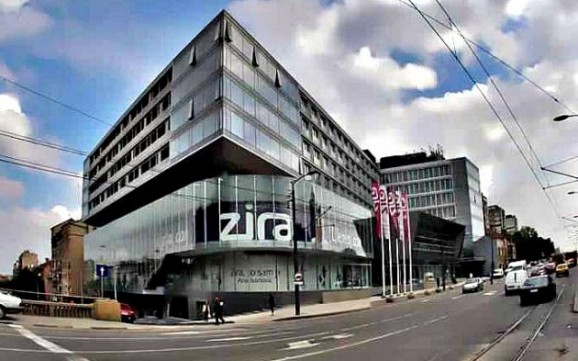
Jamie Angus will open the conference, the Future of digital news in the Western Balkans, at Belgrade’s Hotel Zira on Tuesday 24 April. UK Ambassador to Serbia, Denis Keefe, will join Jamie Angus to greet participants.  First Deputy Prime Minister and Minister of Foreign Affairs of the Republic of Serbia, Ivica Dacic, will join Jamie for the closing of the conference.


Jamie Angus says: “Just as our newly launched service, BBC News Serbian, is establishing itself on the regional media scene, I am very happy to welcome our colleagues from Serbia, Montenegro, and Bosnia and Herzegovina to join us in a very timely conversation about reaching and serving digital audiences.”


The subjects to be discussed at the conference include:


  • Rising to the global challenge: quality news in the age of fakes, fragmentation and financial uncertainty
  • Future of digital news – regional voices
  • The Serbian diaspora and digital news – what are they reading and why?
  • The BBC Newsroom stylebook – creating a standard style for online journalism
  • The business of digital news – where does the money come from?


BBC News Serbian (BBC News na srpskom) digital service was launched on 26 March 2018 and in its first week reached over 95 thousand people through its website, bbc.com/serbian and social media (Twitter and Facebook).   BBC News Serbian was the last of the 12 new language services launched as part of the expansion of the BBC World Service between 2017 and 2018.

AFP launches AFPTV live select for TV networks and digital media

AFP launches AFPTV live select for TV networks and digital media

Agence France-Presse is launching AFPTV Live Select, a new service providing comprehensive, original live coverage by selecting one of four available live video feeds at any time. With afptvlive.com, a new platform dedicated to live coverage, users can control reception of feeds delivered through a secure IP solution that meets the highest standards in the market.

“With AFPTV Live Select and the launch of afptvlive.com, AFP’s video offering is once again standing out from the crowd with its rich content, diversity of angles and quality of the user experience”, says AFP Chairman and CEO Emmanuel Hoog. “The biggest global networks, both news and generalists, already enjoy real-time access to our schedule and can view all feeds broadcast by AFP to choose the one that best suits their editorial line.”


From Lima to Johannesburg, from Pyongyang to Washington, AFP allows the world’s media to benefit from live pictures on every topic of interest to their audiences.


The new platform’s real-time agenda and planning features are also available to AFPTV Live Essential customers, which offers live satellite video coverage of key current events. “AFP responds to our need for at-a-glance information about their live offers with a clear and intuitive website which my team have found easy to navigate and interact with” says Simon Ward, Assignement Editor at BBC News.


Clients also benefit from a direct helpline within the AFP editorial team to answer any query about coverage.


AFP will introduce its new service at MIPTV in Cannes, from 9 to 12 April and through customised on-demand demos.

TRT World’s “Journalism for Juniors” initiative empowers refugee youth

TRT World’s “Journalism for Juniors” initiative empowers refugee youth

  • TRT World keeping promises with “Journalism for Juniors” initiative and enabling future possibilities for refugee children
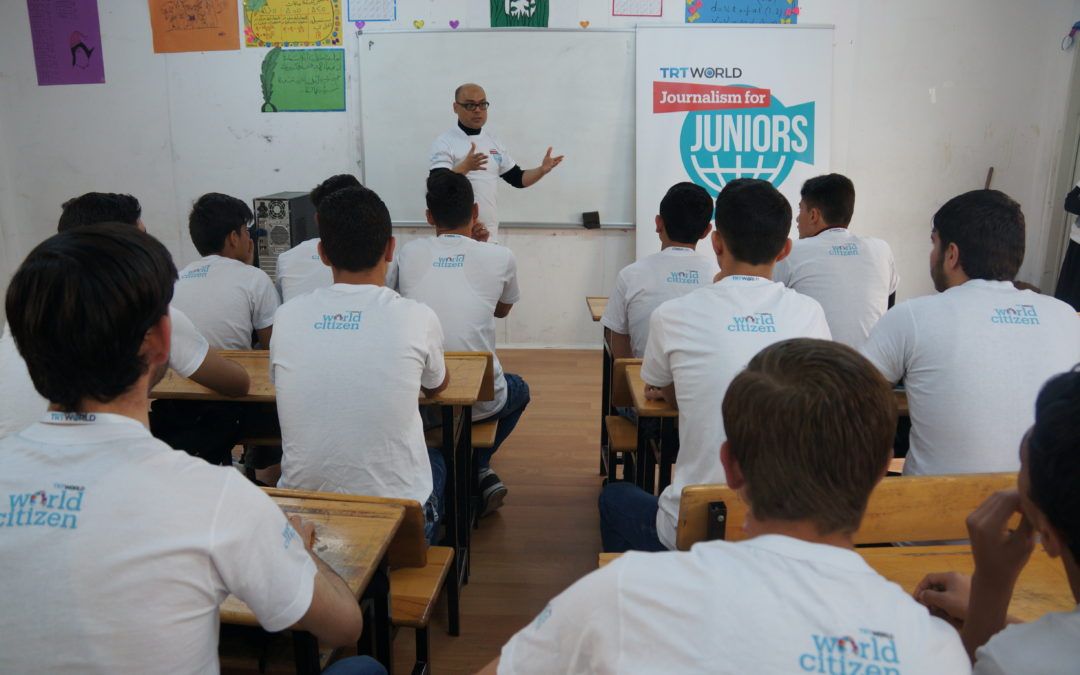
  • The second round of “Journalism for Juniors” program was held in the Harran Camp on March 2nd-4th 2018, providing more than 60 high school students introductory workshop to mobile journalism and story-telling, designed and run by TRT World staff.

The Syrian War has entered into its seventh year with no end in sight. The conflict has left thousands of children at risk of becoming a lost generation with no access to education.

Turkey hosts the largest number of Syrian refugees with more than 3 million refugees. The Turkish Government is working to provide education to the Syrian refugee children and it has launched numerous campaigns to provide humanitarian aid to those fleeing. Joining these efforts, TRT World has stepped up to help out in welcoming refugee children. TRT World launched its “World Citizen” initiative the first initiative of its kind to be launched by a global media network whose employees are on the ground, working on grassroots humanitarian-based initiatives.

TRT World has institutionalized its commitment to inspiring humanity’s collective conscience with the launch of its  World Citizen campaign. Under the World Citizen umbrella, TRT World introduced a “Journalism For Juniors” programme in October, 2017.

The second round of Journalism for Juniors workshop series took place in the Harran Refugee Camp during 2nd to 4th March 2018 to address the education deficit of Syrian refugee children. The project series hopes to move beyond providing traditional charity for the refugees and instead focuses on providing high school students with the knowledge, skills, and hope for a better future.

With 64 participants (ages 17-18; 36 male and 28 female Syrian teenagers), the three-day introductory workshop to mobile journalism and story-telling, designed and run by TRT World staff, provided young students an opportunity to learn the basics of journalism while empowering them to take control of their own narratives. After lessons in creative story-boarding, digital news-making, responsible social media usage, and verifying news credibility, the students went on to write, film, and edit original stories around the camp. They gained the confidence to tell their own stories and share their voice with the world.

In a special sharing session today, Syrian refugee children got the chance to listen Dr. Jamal Abdullah’s success story, currently a Senior Researcher at TRT World Research Centre, who grew up in Syrian refugee camps as a Palestinian child. Dr. Jamal who survived tough times yet achieved exemplary academic results becoming an academician at Oxford University has acquired 3 masters degrees in international relations, political science and political sociology and mastered 3 languages; English, Arabic and French. Aspiring Syrian refugee participants, Dr. Jamal conducted his training session entitled “A future under construction” to motivate students to dream big and not to lose hope.

Hana, a 12th grade student originally from Aleppo said “I decided to be a journalist when I was 13 the time the revolution started in Syria. Now finally I am given the opportunity to learn more about mobile journalism. With these workshops we had, I am more determined today to achieve my goal to be a journalist one day.”

About TRT World

TRT World, Turkey’s first English broadcasting international news platform is launched in 2015 and headquartered in Istanbul, with four newsrooms and an extensive global bureau network covering major regions and hot spots. Strategically designed to maximise its global reach, it is broadly available in all major English-speaking territories and can be accessed via traditional media, including free-to-air, cable and satellite, and other digital platforms, including mobiles, desktops and social media. A distinctive voice to the global news landscape, this is TRT World.

(Source: TRT World)

NHK WORLD TV programme highlights March

NHK WORLD TV programme highlights March

The Fisherman and the Forest

The tsunami of March 11, 2011 was first and foremost a disaster for humans. More than  22,000 people in Japan’s northeast died or went missing. However, other species were affected too, including creatures of the sea. Oyster farmer Shigeatsu Hatakeyama, known for the phrase “forests are lovers of the sea,” decided to restart oyster farming. NHK captured images of the sea working with mountains to rejuvenate itself, nurtured along by humans.
March 9 Fri. 23:10/  March 10 Sat. 5:10/ 10:10/ 17:10 (UTC)

Tsunami Piano

A ravaged high school piano, soaked by the tsunami, sat stoically after the Great East Japan Earthquake. Renowned musician Ryuichi Sakamoto came across it when visiting the disaster area. The sounds were divorced from conventional tonality, and Sakamoto employed them in his first album in eight years. He also attached sensors to the keys, transforming the instrument into a machine that converts seismic waves into sounds. It was his way of conveying the message that the disaster should never be forgotten. Moving to watch and listen as the teacher and students who had used the “tsunami piano” before the quake react to its new melodies.

March 16 Fri. 15:30/ 21:30/  March 17 Sat. 3:10/ 9:10 (UTC)

J-MELO on Sendai

J-MELO shines the spotlight on Sendai, the largest city in Japan’s northeast, known as the Tohoku region. In the first of two programs, host May J. and friends take a musical journey around town. Sendai proves to be a treasure trove of tunes from up-and-coming rock bands, performers of traditional folk music, and many other kinds of artists. Part two features an appearance by MONKEY MAJIK, a Canadian and Japanese band based in Sendai.

Part1: March 18 Sun. 15:10/ 21:10/  March 19 Mon. 3:30/ 9:30 (UTC)

Part2: March 25 Sun. 15:10/ 21:10/  March 26 Mon. 3:30/ 9:30 (UTC)

Tsuruko’s Tea Journey

In one form of the Japanese tea ceremony, the host serves traditional kaiseki cuisine, sake, and finally tea to the guests. The ritual, established as an art form more than four centuries ago, is believed to be the foundation of Japan’s omotenashi hospitality. One woman has decided to embark on a unique nationwide pilgrimage to immerse herself in the art. Tsuruko Hanzawa is a rare “catering chef” of tea ceremonies. At 70, she loaded her pots, pans, and tools for making tea onto a van and set off in her kimono, serving food using local ingredients and tea to the people she met along the way. Exploring a life devoted to tea, this documentary follows Tsuruko for two years as she battles illness to continue her pilgrimage.

March 30 Fri. 23:10/  March 31 Sat. 5:10/ 10:10/ 17:10 (UTC)

MWC 2018 – Anticipated broadcasting trends

MWC 2018 – Anticipated broadcasting trends

Nick Moreno, Director of Strategy, Satellite & Media, at Arqiva anticipates the following broadcasting trends at this year’s Mobile World Congress:


“The biggest broadcasting trend we are going to see at this year’s Mobile World Congress is around the shift to new ways of viewing.


“Consumer viewing habits are changing at a significant rate, and we’re already seeing the mobile device becoming the first-screen for younger, millennial audiences watching video content. In the near future, vast amounts of video will be viewed on mobile devices, and to enable that the industry needs much more efficient delivery mechanisms.


“This is pushing new technologies such as 5G into implementation phase, as companies attempt to meet the demands of the modern viewer. 5G offers significant benefits for delivering video at scale to millions of customers, and many will be exploring this at MWC.


“Another trend that will be interesting for broadcasters is the use of blockchain technology.


“We are already starting to see blockchain looked at as a ledger of video rights, so that various industry players can easily view the rights for monetising a certain piece of video content in different territories.


“Blockchain could also have a longer term use case as the enabling technology for ultra-local peer-to-peer distribution of content, allowing content to be distributed closer to the consumer (i.e. local servers, personal PCs) whilst still having legitimately tracked usage rights.”