RFE/RL Opens New Offices in Vilnius and Riga to Reach Growing Audiences and Counter Disinformation

RFE/RL Opens New Offices in Vilnius and Riga to Reach Growing Audiences and Counter Disinformation

RFE/RL Opens New Offices in Vilnius and Riga to Reach Growing Audiences and Counter Disinformation

This week, Radio Free Europe/Radio Liberty (RFE/RL) opened new offices in Vilnius, Lithuania and Riga, Latvia. Announced in March 2022, these offices are critical parts of a comprehensive strategy to counter disinformation and reach new audiences in Belarus and Russia with trusted, independent news and information.

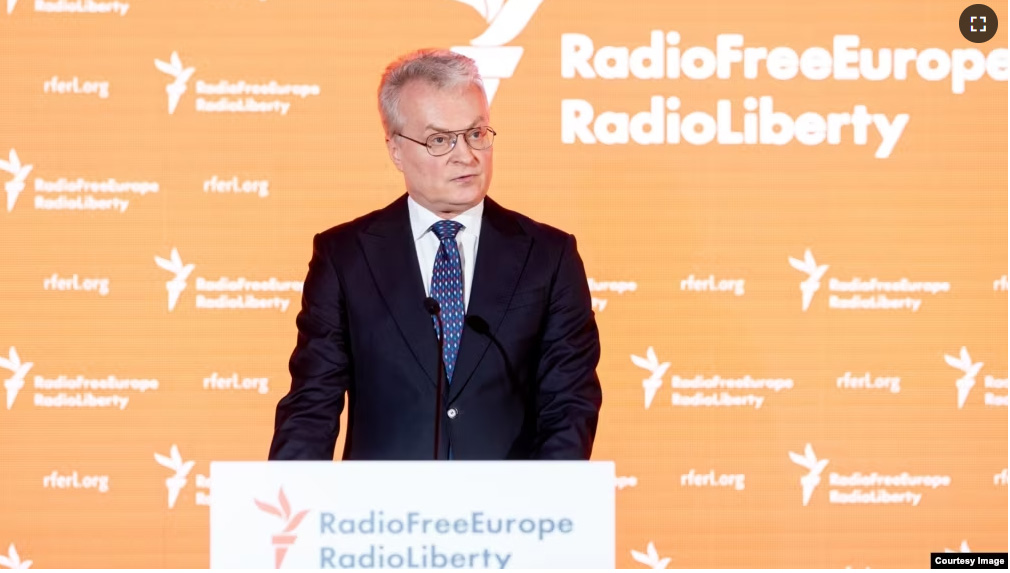
At an event commemorating the Vilnius launch, RFE/RL President and CEO Jamie Fly was joined by Lithuanian President Gitanas Nauseda, Speaker of the Parliament Viktorija Cmilyte-Nielsen, exiled Belarusian leader Svyatlana Tsikhanouskaya, U.S. Ambassador to Lithuania Robert S. Gilchrist, former RFE/RL president and member of the RFE/RL Board of Directors Dr. Jeffrey Gedmin, and other esteemed guests. At an event in Riga, Fly was joined by Latvian President Egils Levits, Latvian Minister of Culture Nauris Puntulis, U.S. Ambassador to Latvia John Carwile, members of Parliament, and media and civil society partners.

“I am honored that RFE/RL journalists have been welcomed in Riga and Vilnius by the Latvian and Lithuanian governments and local communities,” said Fly. “Having served Latvian and Lithuanian audiences during difficult periods in their histories, we are excited to be able to return now to work together to provide new generations who are still denied freedom with access to unbiased reporting.”

RFE/RL’s Riga office will become one of the company’s largest reporting hubs, with state-of-the-art facilities. It will host journalists from Current Time — a 24/7 Russian-language news platform — and the Russian Service who were forced out of Russia in March 2022, as well as new staff hired in Latvia. The office will produce Russian-language content offerings, including investigative journalism and non-news programming for RFE/RL’s soon-to-be-launched streaming platform Votvot. Current Time’s popular morning show, which frequently trends number one on Russian YouTube, will be produced from Riga, along with the Russian Service’s signature YouTube news shows.

In addition to meeting the demand for independent news within Russia, RFE/RL’s Riga office will produce Russian-language content for audiences in the Baltics, wider Europe, and beyond. A new daily news program will cover the Baltic region, providing an important counterpoint to disinformation about the three EU members and the freedoms enjoyed by their citizens.

A Digital Innovation Lab in the Riga office will develop new reporting tools, storytelling formats, and distribution processes that are replicable at RFE/RL and within the broader media community. In partnership with the Open Technology Fund, the Digital Innovation Lab will examine new ways to respond to Russian censorship and disinformation across RFE/RL’s markets.

RFE/RL’s new Vilnius office will host journalists exiled from Belarus in the aftermath of Alyaksandr Lukashenka’s fraudulent 2020 re-election. However, the Vilnius office is more than a haven. Current Time will create new video products from Vilnius for Russian-speaking audiences in Belarus as alternatives to Kremlin and other state propaganda. RFE/RL’s Minsk bureau was raided and sealed, and the Belarus Service’s websites were blocked in July 2021. In December 2021, RFE/RL was designated an “extremist organization,” a label that criminalized both the reporting and consumption of RFE/RL content. Two Belarus Service journalists – Ihar Losik and Andrey Kuznechyk – remain unjustly imprisoned by the Lukashenka regime.

While in Lithuania, Fly met with Speaker of Parliament Viktorija Cmilyte-Nielsen, Deputy Foreign Minister Mantas Adomenas, Deputy Chancellor of the Government Rolandas Krisciunas, Head of International Relations and EU Group Kestutis Vaskelevicius, and members of Belarusian civil society. In Latvia, Fly met with President Egils Levits, Prime Minister Krisjanis Karins, Foreign Minister Edgars Rinkevics, and other officials for productive discussions about challenges to media freedom in the region.

Since Russia’s invasion of Ukraine in February 2022, traffic to RFE/RL websites from within Russia has increased to record numbers despite significant Kremlin censorship. Both at the war’s start and at key moments, video views from within Russia surged, demonstrating the immense appetite of Russian-language audiences to know the truth. RFE/RL’s award-winning coverage is meeting this demand with extensive reporting on Russian atrocitiesconscription, and more.

For decades, the people of Latvia and Lithuania have been enthusiastic consumers of and contributors to RFE/RL’s reporting — both from RFE/RL’s Latvian and Lithuanian services, which operated from 1975 to 2004, and more recently from Current Time. These new offices mark RFE/RL’s physical return to Riga and Vilnius, where the services maintained bureaus from 1992 to 2004.

[Source: RFE/RL press release]

MBC GROUP’s Shahid announces major period drama “Slave Market”

MBC GROUP’s Shahid announces major period drama “Slave Market”

MBC GROUP’s Shahid announces major period drama “Slave Market”

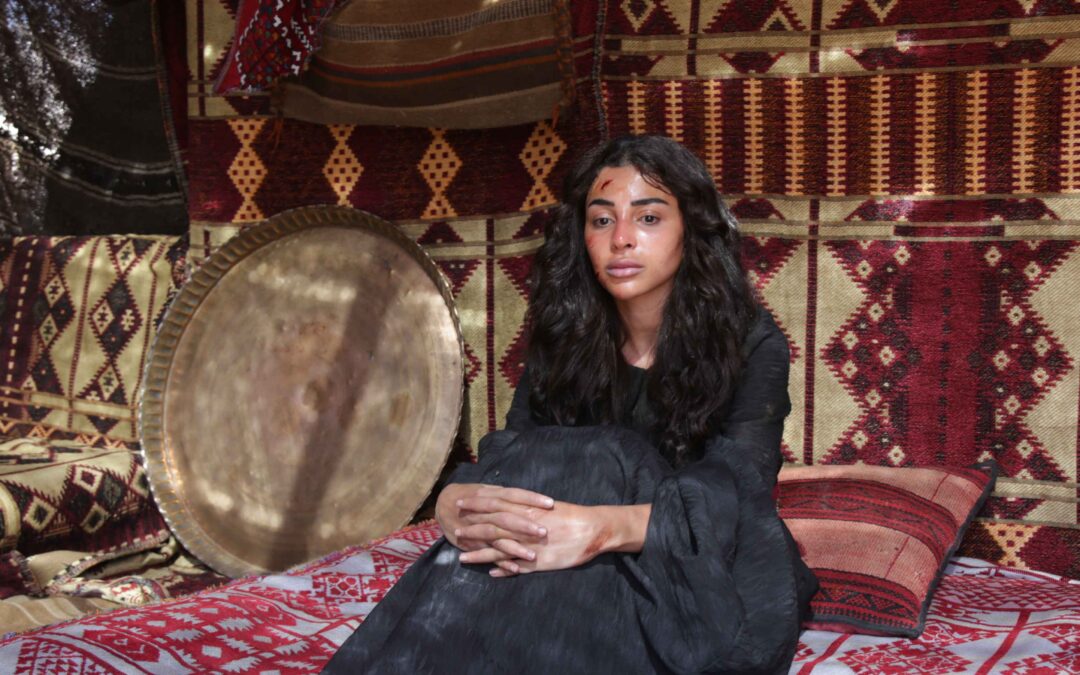
Shahid, the world’s leading Arabic streaming platform by MBC GROUP, announces the debut of its new period drama, “Slave Market” (دكة العبيد).

A Shahid Original series produced by MBC STUDIOS, “Slave Market” – one of the platform’s most significant productions of the year – will release on Shahid on Friday 13 January 2023.

Penned by Kuwaiti writer, Heba Mashari Hamada, and directed by the award-winning Tunisian director, Lassaad Oueslati, the series narrates five stories taking place simultaneously in different parts of the world. Set in the 1900s, whilst these stories may differ in detail, they all intersect at the fate of each story’s protagonist when they all fall into slavery. The first season of the drama (nine episodes) follows the journey of the five main characters – Rahma (Arabian Peninsula), Colonel Morton (and his English family living in Jeddah), Lavani (Mumbai), Quako and Natanda (Eastern Africa), and Khorshid’s family (European Caucasus) – up to the point they all end up at the slave market.

Featuring a multi-national cast from Saudi Arabia, the Arab region, and beyond, “Slave Market” stars Fayez Bin Jurays, Apeksha Porwal, Al Anoud Saud, Hashim Najdi, Haneen Turkistany, Nawaf Al-Dhufairi, Nagham Almalki, Marzouk Al Ghamdy, Saeed Al Qahtani, Shyam Kishore, Janique Charles, Chris J Gordon, Avant Strangel, Justina Biosah, Genlee Motlana, Paballo Owami Landu, Shannon Gaskin, Nick Cornwall, Natasha Choufani, Lauren Elise Thomas, Nizar Alsulaimani, Sumaiah Abdulwahab and more.

“Slave Market” was filmed across 104 locations depicting various parts of the Middle East, Africa, Asia, and Europe, and features 70 main cast members as well as a 150-strong supporting cast and over 17,000 extras.

To accommodate scenes at sea, more than 35 interior and exterior designs, depicting ships from that period, were built exclusively for the series.

A total of 4,700 costumes were specially created for the series, with wardrobe design led by Yasmine El Kadi.

Also involved are Ahmed Abdelaziz (DOP), Yehia Allam (Production Designer), Firas Ibrahim (Executive Director), Ayman Ibrahim (Line Producer), Mostafa Tantawi (VFX), Ragui Hanna (VFX Supervisor), and Mostafa Aly (Sound Engineer).

[Source: MBC press release]
New BBC documentary offers a candid look at BBC Persian journalists at work

New BBC documentary offers a candid look at BBC Persian journalists at work

New BBC documentary offers a candid look at BBC Persian journalists at work

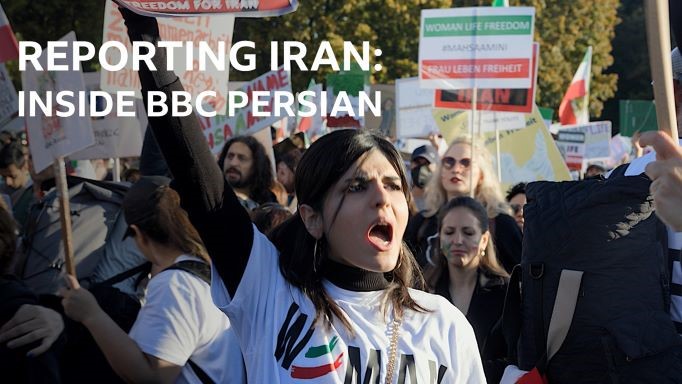
Reporting Iran: Inside BBC Persian – a new documentary offers a candid look at BBC Persian journalists at work

For the first time the BBC has lifted the lid and gone behind the scenes with the BBC News Persian team, showing the work that goes into reporting Iran while the BBC is banned from the country, and the struggle and turmoil faced by staff.

Produced, directed and filmed by the BBC’s Namak Khoshnaw, Reporting Iran: Inside BBC Persian is available via BBC iPlayer and the BBC News YouTube channel from Thursday 12 January.  It will be broadcast by BBC News and BBC World News TV channels from Saturday 14 January.

The documentary takes viewers into the heart of BBC Persian’s newsroom in London as the team covers the unrest in Iran. BBC Persian presenters, reporters and producers talk about the complexities and challenges of carrying out their journalism despite being banned in Iran, and the personal sacrifices they make to do it.

Opening on the day of special reporting marking four weeks following the death of Mahsa Amini – the 22-year-old whose death in police custody has triggered national protest – the documentary shows the work of a presenter who is told while on air that Mahsa’s father is on the line.  As she asks the grieving father about the official report just released, stating the cause of his daughter’s death, the line keeps breaking just as he tries to say what he thinks the truth is.

Showing the challenges of reporting despite all the attempts by the Iranian government to hide the truth, the documentary zeroes in on the work of the BBC Persian social-media team.  BBC journalists can’t be sent to Iran, and in order to report and counter the disinformation, the team checks information to verify events, people, locations and meta-data.

Similar forensic work goes into the reporting of the disappearance and death of the 16-year-old Nika Shakarami who was among the protesters. The verification process – from confirming the exact locations of the video clips, analysing the officially released video, to talking to eyewitnesses and Nika’s family, to checking the authenticity of the document stating the cause of death – takes the team a few days. One team member compares the work to puzzles they have to put together to build up an accurate picture of events.

In an emotive narrative of Reporting Iran: Inside BBC Persian, the reporting of the dramatic and tragic events unfolding in Iran is intertwined with the personal drama and sacrifice by the BBC journalists whose persecution and harassment by Iranian authorities has been the subject of multiple protests by the BBC and the UN.

The Iranian authorities are not the only source of harassment and abuse suffered by the BBC journalists. The film portrays their treatment by some participants of an opposition rally in Berlin, who taunt and slam BBC Persian for giving platform, in their view, to pro-government figures. It also talks about a presenter who is accused of sympathising with the Iranian security forces, and is subjected to trolling.

Reporting Iran: Inside BBC Persian is full of poignant details that bring to the fore the personal dimension of the journalists who are reporting the country they come from.  It closes “With thanks to the staff of BBC Persian, those who appeared in the film and those who chose not to. And with respect to all journalists harassed and intimidated for doing their jobs, in pursuit of the facts.”

BBC News Persian is part of BBC World Service.

[Source: BBC press office]

NHK WORLD Monthly Focus for January: The Golden Age of Crime

NHK WORLD Monthly Focus for January: The Golden Age of Crime

NHK WORLD Monthly Focus for January: The Golden Age of Crime

NHK WORLD Monthly Focus for January: The Golden Age of Crime

Kiriko’s Crime Diary

January 15 Sun. Ep.1 
January 22 Sun. Ep.2
January 29 Sun. Ep.3
Subtitled 0:10/12:10
Dubbed 6:10/18:10 (UTC)

Kiriko struggles to make ends meet. Now that her best friend has died she does not know how she will carry on. She learns about a man caught stealing who says he wants to go to prison and begins searching for ways to get arrested herself. This dark comedy based on a novel by Harada Hika highlights the growing problem of crimes committed by the elderly in Japan while also delivering a positive message about the importance of having goals.

Explore the Tokyo National Museum

January 8 Sun.
0:10/6:10/12:10/18:10 (UTC)

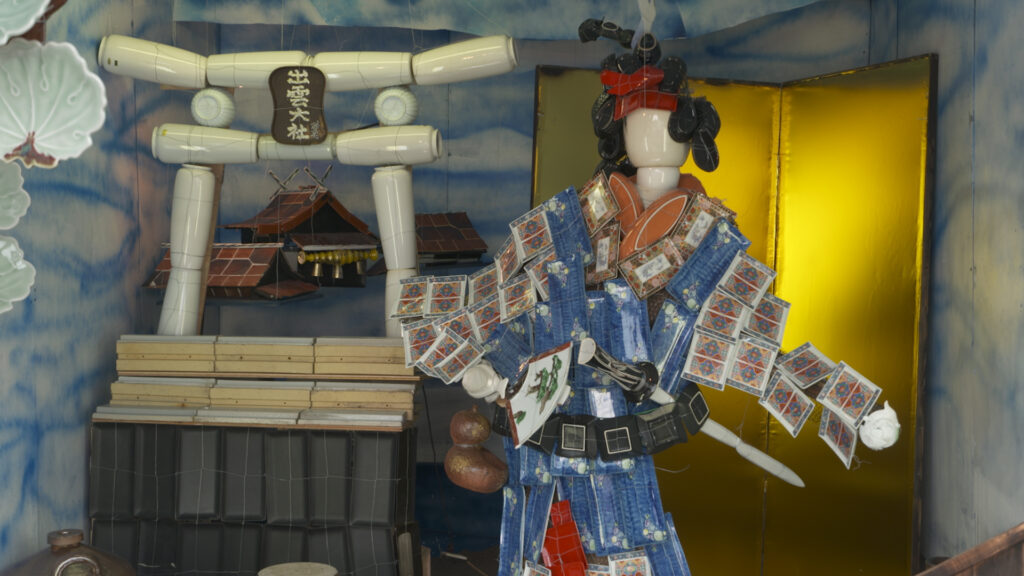
The Tokyo National Museum is home to a collection of some 120,000 objects, including 89 items designated as especially important by the Japanese government. Paying a visit as the institution celebrates its 150th anniversary are the hosts of NHK WORLD-JAPAN’s DESIGN TALKS plus, who marvel at the first ever exhibit of every such national treasure in the museum’s possession. They also experience cutting-edge technology that provides a taste of the future. Join us on this 50-minute artistic adventure. 

Wild Hokkaido

Sundays
1:45/7:45/13:45/19:45 (UTC)

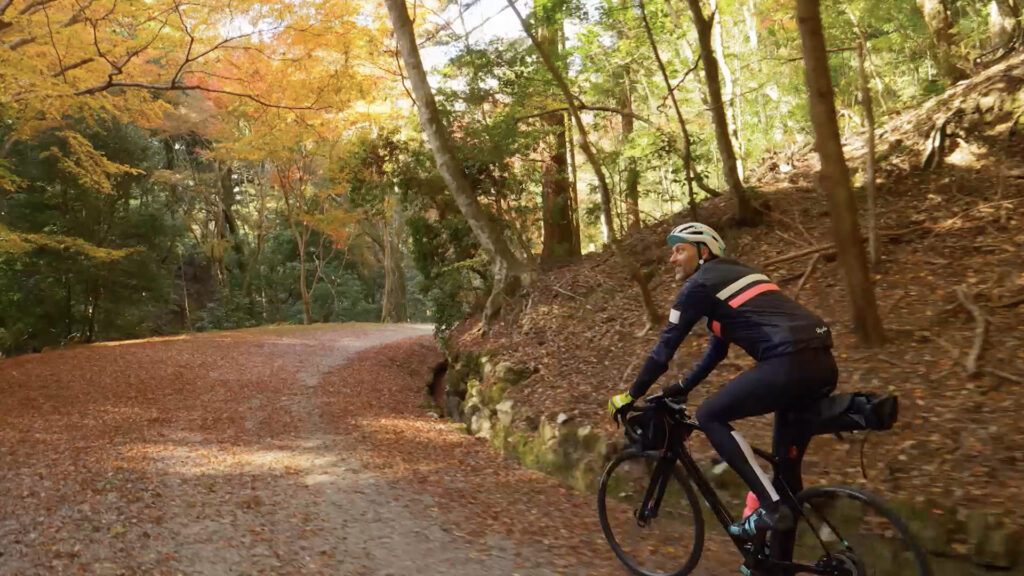
Be immersed in nature’s beauty. Discover Hokkaido at its wildest and best as our presenter guides you through its amazing experiences.

Trails to Oishii Tokyo

Wednesdays 
14:30/20:30

Thursdays 

3:30/9:30 (UTC)

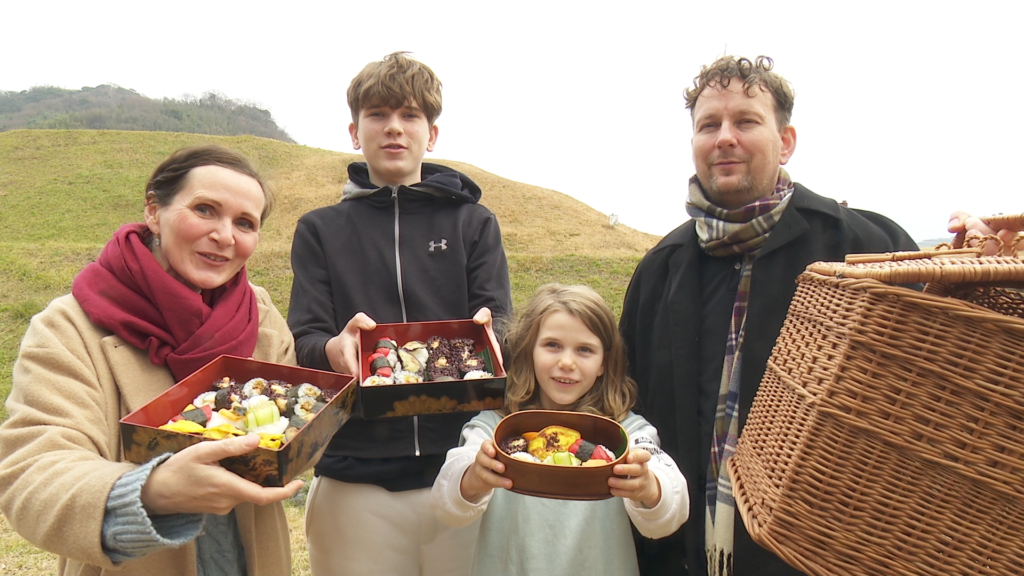
Delicious food from Tokyo’s markets! Learn about the amazing ingredients which are sourced from across Japan and sold at Tokyo’s fresh food markets


The international media of the DG8 reaffirm the importance of their missions

The international media of the DG8 reaffirm the importance of their missions

The international media of the DG8 reaffirm the importance of their missions

The DG8 leaders held their annual summit on Thursday 15 and Friday 16 December 2022 in Paris, under the chairmanship of France Médias Monde. Organized in a hybrid format, the summit allowed the majority of members to meet face-to-face after two years of pandemic-related restrictions.

During this meeting, the eight major international public media (BBC World Service, Deutsche Welle, USAGM, NHK World-Japan, ABC Australia, CBC/Radio-Canada, SRG SSR/SWI and France Médias Monde) have reaffirmed their cooperation around shared interests: the importance of guaranteeing all citizens access to professional, balanced and independent information, the fight against disinformation and all forms of manipulation, as well as the security of editorial teams on the ground and on digital platform, a corollary of the freedom to inform.

Highly responsive media offerings in the face of global upheavals

International media have played a key role in health awareness during the Covid-19 pandemic for the past two years. They also contribute greatly to raising audiences’ awareness of environmental issues and the consequences of climate change. On a daily basis, they are on the front line to cover all the major events of the world, including the most sensitive ones, even in the most remote areas. They have been particularly active since the beginning of the war in Ukraine in reporting on the conflict and have multiplied initiatives to make their radio and television channels and their digital offerings as widely accessible as possible, by adapting to the broadcasting technologies and reception modes available, and by strengthening or launching offerings in the languages spoken in the region. In the same way, members have successfully continued to develop editorial offers for Africa, Latin America, Middle-East or Asia in regional languages, have increased coverage of the Pacific and have plans to expand their footprint and reach into this strategic vulnerable region, always striving to provide audiences with reliable information that complies with the ethical rules of journalism. These initiatives go hand in hand with efforts to ensure the preservation or growth of a free and professional local media landscape.

Members united to ensure the safety of staff and the freedom to inform

In the face of states that deny their populations’ access to impartial information and attempt to influence discourse outside their own borders, the DG8 media will continue, with the support of the international community and organizations working for press freedom, to seek every means to make themselves accessible. In a context of unfavorable international tensions, the DG8 circumventing censorship working group is actively pursuing its work of exchanging and sharing solutions among members. Similarly, in a context of increasing risks for information professionals, DG8 members continue to cooperate on the physical and digital security of their teams on the ground, including hacking, tracing and other forms of digital harassment, which undermine the freedom to inform.

Unique public service missions that require unfailing support 

Following the summit, DG8 leaders paid tribute to the courage and professionalism of their international media teams serving all audiences, whose work is the first line of defense against disinformation, on a global scale, in more than 60 languages. With more than 1.5 billion user contacts following them every week, the combined audience of the eight groups, which continued to increase significantly in 2022 on both broadcast and digital platforms, illustrates the confidence of audiences in the verified, pluralist and balanced information they deliver on all continents. In order to consolidate their unique, international and multilingual mission on information, the members of DG8 wished to stress the importance of guaranteeing the level and predictability of their financial resources, as well as preserving and reaffirming all the guarantees of their independence, which are a prerequisite for the confidence of their global audience.

[Source: USAGM press release]