NHK WORLD Monthly programme focus for April

NHK WORLD Monthly programme focus for April

NHK WORLD Monthly programme focus for April

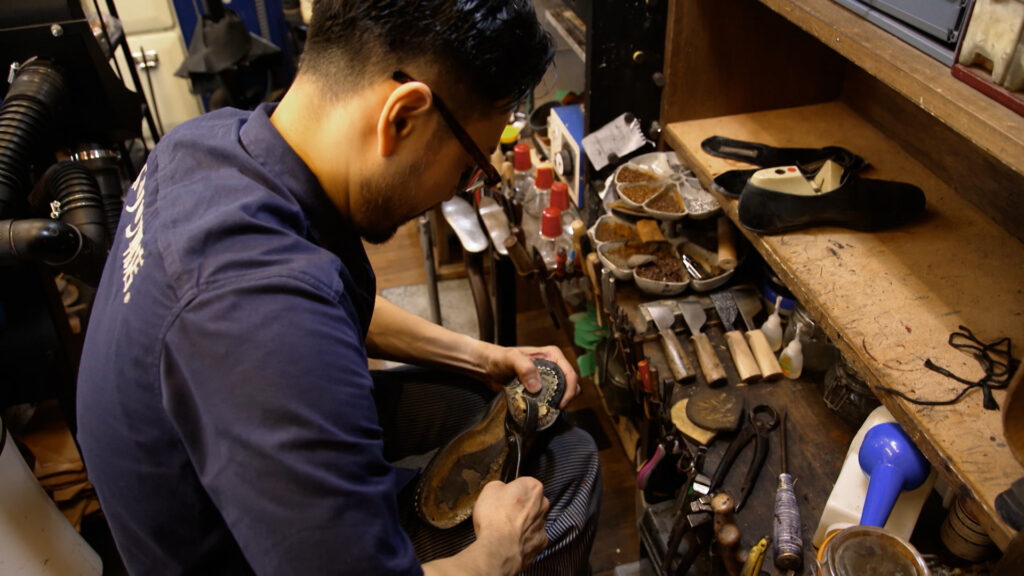
Detective heroes in the making

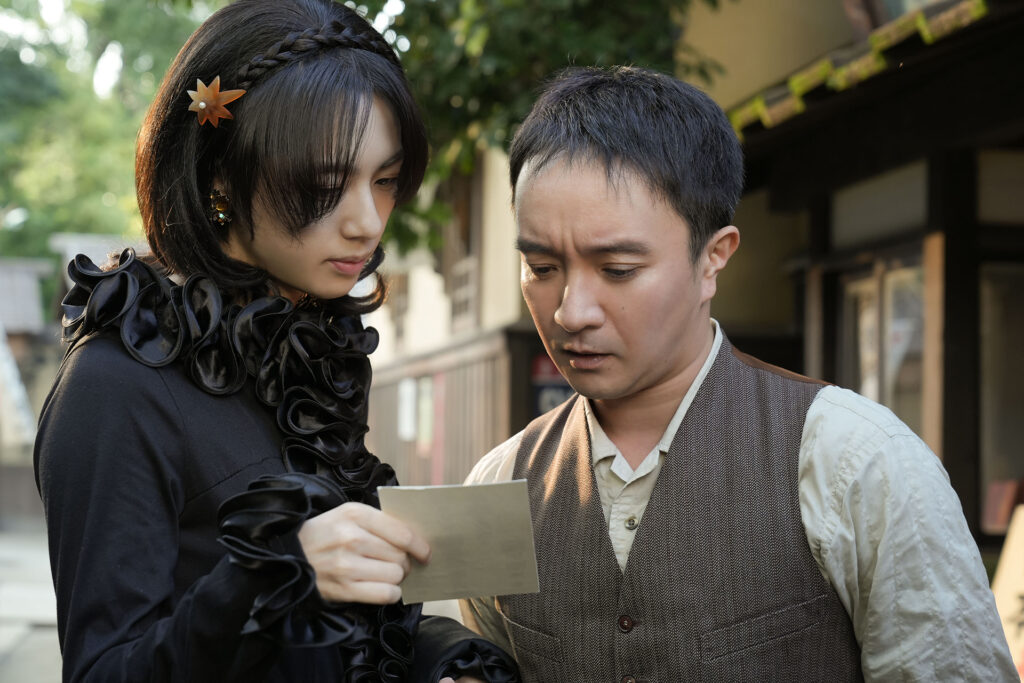
Dear Detective from RAMPO with Love

April 23 Sun. Ep.1
April 30 Sun. Ep.2
Subtitled 0:10/6:10/12:10/18:10 (UTC)

At the dawn of the 20th century in Tokyo, the streets were rough, and the locals yearned for a hero. Hirai Taro—later known as the renowned Japanese mystery author Edogawa Rampo—was still an unknown. But things start to change when he meets the elderly detective Shirai Saburo, whose humor and melancholy captivate Hirai. Meanwhile, Shirai is intrigued by Hirai’s eccentric ideas and boundless passion. The two forge an unlikely partnership and embark on a thrilling journey as detectives.

Dive in Tokyo

Wednesdays
0:30/5:30/10:30/15:30/21:30 (UTC)

Tokyo: where both tradition and the latest trends coexist. Join us on a journey to discover the real Tokyo as we dive into its historic old towns and encounter many fun surprises along the way.

Explore Japan’s capital with us in Dive in Tokyo, part of our regular program lineup from April.

Zero Waste Life

Fridays
1:45/6:45/12:45/17:45/22:45 (UTC)

Meet people around Japan who strive for a life without waste under the traditional philosophy of “MOTTAINAI,” which values cherishing the things we have.


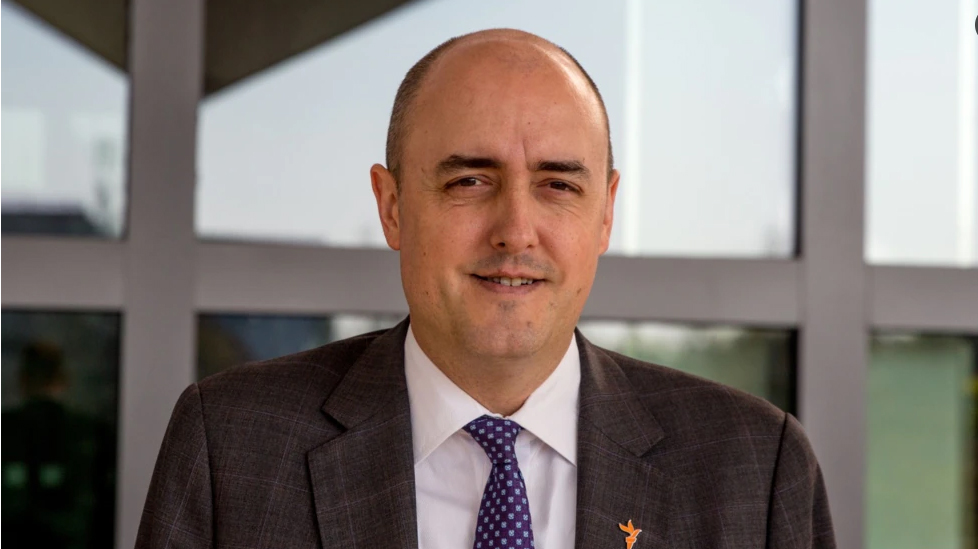
RFE/RL President and CEO Jamie Fly Visits Ukraine, Moldova as RFE/RL Expands Efforts to Counter Russian Disinformation

RFE/RL President and CEO Jamie Fly Visits Ukraine, Moldova as RFE/RL Expands Efforts to Counter Russian Disinformation

RFE/RL President and CEO Jamie Fly Visits Ukraine, Moldova as RFE/RL Expands Efforts to Counter Russian Disinformation

Radio Free Europe/Radio Liberty (RFE/RL) President and CEO Jamie Fly visited Moldova and Ukraine for meetings with senior officials, civil society groups, and the company’s journalists. His trip reinforced RFE/RL’s commitment to counter Russian malign influence, and to support media freedom in both countries.

“I am in awe of the professionalism and resilience shown by our incredible journalists reporting every day on Ukraine’s struggle to defend its freedom,” said Fly. “RFE/RL is committed to continuing to expand our reporting on this war as we grow our audiences in Russia, Ukraine, and across the region.”

Fly visited Ukraine as RFE/RL’s Ukrainian Service, known locally as Radio Svoboda, launched a new hour-long weekday morning show “Svoboda.Ranok” on YouTube from a new bureau in Lviv. The show recaps the latest news from the frontlines overnight, while giving Ukrainian audiences hope as they begin their day. RFE/RL also launched a new reporting project, “How Are You?” to cover the stories of the approximately thirteen million forced migrants displaced by Russian aggression.

During a visit to Odesa, Kyiv, and Lviv, Fly met with senior government officials including Deputy Prime Minister of Ukraine for Innovation, Education, Science, and Technology and Minister for Digital Transformation Mykhailo Fedorov; Minister for Culture and Information Policy Oleksandr Tkachenko; First Deputy Minister of Foreign Affairs Emine Dzheppar; Advisor to the Chief of Staff of President Zelenskyy Daria Zarivna; Kyiv Mayor Vitaliy Klitschko; Lviv Mayor Andriy Sadovyi; and members of parliament. Fly also met with representatives from other media outlets and civil society groups. In all discussions, Fly emphasized the importance of RFE/RL’s frontline reporting, its investigative work, and its ongoing role in creating a democratic culture with a vibrant free press. Fly also advocated for the release of imprisoned journalist Vladyslav Yesypenko, and thanked officials for their ongoing efforts to obtain his release.

As the Kremlin’s threats toward other countries in the region intensify, Fly also visited Chisinau, Moldova. In meetings with President Maia Sandu, Prime Minister Dorin Recean, and Foreign Minister Nicu Popescu, Fly reiterated RFE/RL’s commitment through its Moldovan Service and Russian-language services to produce content relevant for all Moldovans, including those subjected to Kremlin propaganda.

Since the start of Russia’s full-scale war over one year ago, RFE/RL journalists have provided audiences with award-winning reporting from the frontlines on the human toll and Ukraine’s response to the brutality. Journalists with the Ukrainian Service have uncovered mass burials in Mariupol, documented the search for Russian sailors killed in the sinking of the Moskva cruiser, and reported extensively on “filtration” and life under occupation. This thorough coverage has driven historic traffic increases among audiences in Russia.

On April 28, 2022, RFE/RL journalist Vira Hyrych was killed in Kyiv after a Russian missile strike hit the residential building where she lived. Prior to the full-scale invasion, Radio Svoboda contributor Vladyslav Yesypenko was unjustly sentenced to a six-year prison term (later reduced to five years) on fraudulent charges in Russian-occupied Crimea. Fly and members of the international community have called for Yesypenko’s immediate release.

RFE/RL’s Moldovan Service, known locally as Radio Europa Libera, is reaching Romanian and Russian-speaking audiences with objective reporting in a country with widespread disinformation. Following Russia’s full-scale invasion of Ukraine, Radio Europa Libera broke news about a bridge explosion at Moldova’s border, and later, errant missiles. The Service was also one of the first local outlets to report on refugees from Ukraine, and is covering Moldova’s ongoing economic hardship as a result of Russia’s war. Moldovan audiences also consume Russian-language reporting from RFE/RL’s Russian Service and 24/7 television and digital platform Current Time.

[Source: RFE/RL press release]

Iran’s targeting of journalists across Europe raised at UN Human Rights Council in Geneva

Iran’s targeting of journalists across Europe raised at UN Human Rights Council in Geneva

Iran’s targeting of journalists across Europe raised at UN Human Rights Council in Geneva

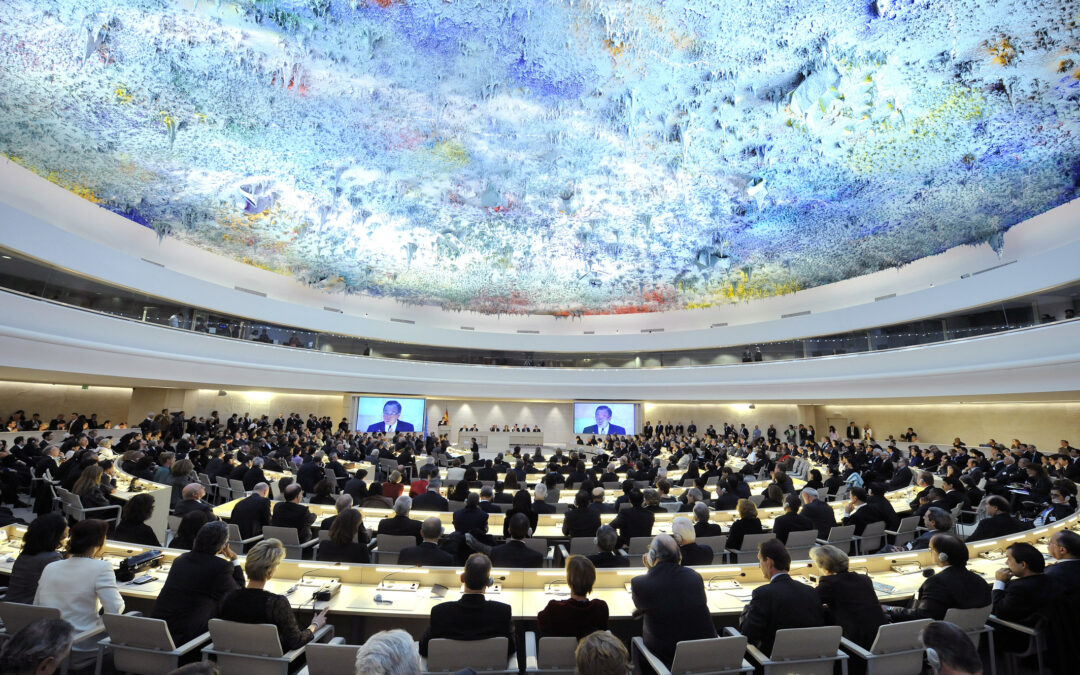
Iran’s extra-territorial targeting of journalists in the UK, Germany and across Europe has attracted criticism and concern at the 52nd session of the United Nations (UN) Human Rights Council in Geneva.

At a side event to the session on Friday 17 March, jointly hosted by BBC World Service and Deutsche Welle (DW), serious concerns were raised regarding Iran’s significant increase in threats directed towards BBC News Persian and DW staff since Mahsa Amini’s death in Iran in September 2022 and the subsequent protests seen across the country.  Escalating risks to journalists reporting on Iran, outside Iran, were discussed with State missions to the United Nations in Geneva.

Speaking by video at the event, the Special Rapporteur on the situation of human rights in the Islamic Republic of Iran, Professor Javaid Rehman, said that Iran’s actions against BBC Persian journalists violate the provisions of the international covenants, treaties and obligations, to which Iran is a state party and signatory: “I am extremely concerned that such attacks to silence journalists violate the fundamental rights of journalists and are an assault on the principles of transparency, democracy and accountability. It is also regrettable that, in these circumstances, there is a chilling effect that is produced on the work of other journalists in the Islamic Republic of Iran, and indeed elsewhere, who are reporting on the country, and may deter them from reporting on issues of public interest and of public importance.”

 In his video address, BBC World Service News Controller, Tarik Kafala, said that the pressures on the BBC Persian staff have never been greater and that there are constant attempts to undermine the audiences’ trust in BBC Persian and challenge the motivation for its work: “We stand with all of our BBC Persian journalists and we stand by their journalism.  We will not tolerate abuse, wherever it comes from. We will absolutely support our staff.  We object to any action by the Iranian authorities aimed at targeting them, their families and our journalism in the strongest possible terms. We welcome the UN’s consistent support for BBC Persian staff and their families and will continue to make our case to the world community until this completely unacceptable harassment ends.”

Head of DW Persian Service, Yalda Zarbakhch, said at the event: “We are extremely concerned about the safety of our staff at DW Persian working in Germany and their families living in Iran. Since DW has been put on the sanctions list by the Iranian government, classifying journalists as terrorists for doing their legitimate work, we have seen a new level of threats. Family members are brought in sometimes daily by the authorities for interrogations. Pressure on our staff is constant. DW urges to recognise the paramount importance of independent reporting out of Iran and for the Iranian people, and that the safety of journalists and the freedom of the media is non-negotiable.”  

Since 2017, BBC World Service has filed a number of UN complaints over the treatment of BBC News Persian staff and their families, represented by Caoilfhionn Gallagher KC and Jennifer Robinson at Doughty Street Chambers,  and supported by the National Union of Journalists (NUJ) and the International Federation of Journalists (IFJ).

Caoilfhionn Gallagher KC and Jennifer Robinson, counsel for BBC World Service, stated:  “The targeting of BBC journalists by Iran is unlawful and designed to stifle and censor independent and objective reporting on events in Iran. The death threats, arbitrary detention of family members and economic sanctions imposed on BBC News Persian journalists violate international law and should be condemned in the strongest possible terms. Iran’s targeting and harassment of journalists inside and outside of Iran has now spread beyond that directed at BBC News Persian, underlining the need for urgent action from the UN and UN member states.”

Jeremy Dear, IFJ Deputy General Secretary, stressed in his video address the need for the special rapporteurs to understand the societal impact of the Iranian regime’s action in denying citizens, at home and abroad, the right to independent information. “But also governments in the UK, Germany and other countries need to take more seriously too the threats to journalists and their families.” He pledged “the IFJ’s continued support for all those journalists at risk until they can report freely from London, from Bonn, or from Tehran.”

NUJ General Secretary, Michelle Stanistreet, comments: “The escalation in the targeting of UK-based journalists by Iran and the weaponising of their families is of enormous concern to the NUJ. It is having a profound impact on all journalists affected, impeding their daily lives and causing deep anxiety and strain for them and their loved ones. Iran’s strategic threats are clearly intended to send a collective message to journalists and media outlets that work hard to report and shine a light on events in Iran. The NUJ calls on the UN and its member states to act robustly to bring this targeting and abuse to an end.”

BBC News Persian is a multimedia news and current-affairs service with a weekly audience of 18.9m (BBC Global Audience Measure 2022). As part of BBC World Service,  it delivers accurate and impartial news, information and analysis from a global perspective to Persian-speakers around the world. 

[Source: BBC press release]

MBC GROUP extends licensing deal with NBCUniversal

MBC GROUP extends licensing deal with NBCUniversal

MBC GROUP extends licensing deal with NBCUniversal

MBC GROUP, the largest and leading media company in the Middle East and North Africa (MENA), has extended its licensing deal with NBCUniversal to continue bringing the best of Hollywood movies by Universal Pictures and DreamWorks Animation to audiences across the region.

This latest multi-year extension forms part of a 20+ year ongoing relationship between MBC GROUP and NBCUniversal.

Sam Barnett, CEO of MBC GROUP commented: “We are pleased to extend our licensing deal with NBCUniversal. This deal allows us to bring top Hollywood titles to our audiences in the region.

Through our collaboration, we are not only able to expand the reach of NBCUniversal content but also to work together to offer a range of films to different groups of people. We can bring major action and drama franchises, as well as family-friendly animations, to our various demographics.”

Belinda Menendez, President & Chief Revenue Officer for NBCUniversal Global Distribution, said “We are delighted to extend our longstanding relationship with MBC Group through this new licensing deal. As a result of this agreement, MBC Group can ensure that their viewers throughout the Middle East and North Africa will have a front row seat to watch NBCUniversal’s blockbuster films for many years to come. From animated movies to action-packed thrillers, there truly is something for everyone in the family to enjoy!”

MBC GROUP’s newly extended licensing deal with NBCUniversal results in the company securing rights to broadcast a range of titles by Universal Pictures and DreamWorks Animation on MBC2 – the leading English-language movie channel in MENA.

This includes the showcase of first run box office hits for a free-to-air TV channel, such as “F9: The Fast Saga,” “The Boss Baby: Family Business,” “The Croods: A New Age” and “The Invisible Man”. Also included are the film franchises of “Bourne,” “Despicable Me,” “Jurassic Park” and “The Mummy.”

The extended licensing deal also sees titles appearing on Shahid, the world’s leading Arabic platform by MBC GROUP. Focusing on family fun, featured titles include “Shrek,” “Shrek 2,” “Sing,” “Trolls,” “The Secret Life of Pets,” “Minions,” “Dr. Seuss’ The Lorax” and “Shark Tale.”

A GLOBAL HUB FOR THE MIDDLE EAST & BEYOND

In addition to its leading position in the MENA, MBC GROUP is also considered one of the world’s top media and broadcast organisations. Its award-winning streaming platform, Shahid, can be accessed across the world, including the United States, the United Kingdom, and Australia.

MBC GROUP is also at the forefront of spearheading international exchanges of knowledge and expertise by inviting international companies, talent, and producers to become involved in Arabic-language titles. It also works with global entities to offer support and opportunities to MENA talent and producers worldwide.

[Source: MBC press release]

USAGM expands Russian-language programming to Europe

USAGM expands Russian-language programming to Europe

USAGM expands Russian-language programming to Europe

In response to the growing need for reliable Russian-language news and information in Central and Eastern Europe, the U.S. Agency for Global Media (USAGM) announced it is expanding its satellite distribution of Current Time TV.

Current Time is a 24/7 Russian-language television and digital network, providing live news, robust debate, and fact-based reporting on local, regional, and international issues, aimed at audiences in Russia, the countries of Central and Eastern Europe, and around the world. It is produced by Radio Free Europe/Radio Liberty in collaboration with Voice of America.

“There is a growing appetite across Europe for a reliable and fact-based Russian-language alternative to Kremlin-controlled information,” said USAGM CEO Amanda Bennett. “I’m thrilled to be able to reach more audiences — including the Russian diaspora — with this award-winning programming.”

Demand for the mix of unique feature and documentary programming that Current Time offers is expanding in Russia, Ukraine, the Baltics, and beyond. In the months following Russia’s invasion, Current Time signed over 50 new media partners in countries like Estonia, Lithuania, and Moldova — just as media outlets in those countries were dropping Russia’s RT. Current Time television content is also complemented by a robust and popular digital component that engages and connects with global audiences via social media and other platforms. Since the war began in February 2022, Current Time’s online videos have been viewed an unprecedented 4 billion times.

Following an agreement with Luxembourg-based M7 Group, owned by CANAL+ Group and one of Europe’s leading pay TV providers, Current Time TV will be distributed free-to-air via both ASTRA 19.2 and Eutelsat E9B and will soon be available as a linear OTT channel via the M7 platforms in Hungary (Direct One) and Romania (Focus Sat), as well.

[Source: USAGM press release]

Image: mariait/Shutterstock