27 February 2015
Abubakar Jijiwa, the Director General of Voice of Nigeria, the country’s official international broadcasting network, is stepping down after over two decades of service. Jijiwa has been an active participant in the AIB and a judge of the AIB awards.
The following farewell was written by his colleague Abdul-Warees Solanke head of the VON Training Centre:
 In two weeks from now, the Director-General of Voice of Nigeria, Mallam Abubakar Bobboyi Jijiwa (MFR), will be exactly 22 years in the service of the Corporation, 10 years as its director general. Statutorily therefore, he will bow out from VON, an epoch deserving some sober reflection from this quintessential public manager and a rededication or commitment to work for the greater good of the country beyond life in VON.
In December last year, he similarly relinquished the chairmanship of the Broadcasting Organizations of Nigeria which he also led since 2004. His services as DG VON and Chairman BON has yielded huge dividends in the Nigerian broadcasting industry where players are more united, new grounds broken and talents nurtured due to his visionary and managerial disposition. Whenever there is an opportunity for assessment of his predecessors, Jijiwa always give them credit for providing the platform for his own achievements. All of them excelled within the circumstances they found themselves, he would always say.
Jijiwa came to VON in March 1993 from the News Agency of Nigeria where he was the Assistant General Manager (Enterprises). His sojourn in the federal government established media actually began at the Kaduna based-New Nigerian, where although he was employed as a senior accountant, he was drafted to the editorial board as a special correspondent because of his gift of the pen which he had been wielding as a regular contributor in the New Nigerian since his university days while studying accountancy at the University of Maiduguri.
Impressed by the brilliance and lucidity of his writings, the NN management felt it would be an under-utilization of talent consigning him to merely poring over cold figures instead of giving him the platform and the space on the pages to churn words and ideas to influence opinions. Since New Nigerian in 1984, Jijiwa has not looked back in providing leadership in the mass media, returning home briefly the invitation of the Gongola state government to serve as Secretary to the Fufor Local Government. After completing the Fufore assignment he returned to NN and shortly after in 1988, he picked an appointment with the News Agency of Nigeria as Ag. Chief Accountant, a position he held until 1989 when he was invited by his home government, Gongola to lead the state-owned radio station, Gongola Broadcasting Corporation.
In less than four years of heading GBC, later Adamawa Broadcasting Corporation, Jijiwa turned around the fortunes of the local radio station to an enviable one in the north east of Nigeria. ABC which had no permanent site and transmitting station, built one under Jijiwa. Then Jijiwa as the GM had been designated Director General and sole administrator of the corporation. With this feat, he was soon back at NAN as AGM enterprises in 1992 and in March 1993, he joined Voice of Nigeria as Director Finance and Supplies. But in-between his service in VON, he had the privilege of being invited home to serve as the Adamawa State commissioner for Budget, Economic Planning and Finance.
This rich experience jijiwa placed at the service of VON when he returned from his leave of absence and assumed office as Director Administration and Finance of the Corporation under Aremo Taiwo Allimi in 1999. Being the most senior director in VON when Aremo Allimi completed his single term in 2004, this rich experience also recommended him to the post of Ag. Director General. Again, this rich experience facilitated his confirmation as the substantive DG in March 2005 and secured him a reappointment in 2010.
As DG VON since the past eight years, Jijiwa has used this experience to pilot the affairs of the Broadcasting organizations of Nigeria (BON), the umbrella of all public and private broadcasting services in the country. Four of these eight years, he also used to etch Nigeria’s name on the Commonwealth Broadcasting Association hall of fame as he was elected CBA president in 2006 in the Indian capital, New Delhi for a two-year term, securing another CBA mandate in the Caribbean nation of the Bahamas in 2008.
Since relinquishing the CBA presidency in 2010, Jijiwa has dedicated himself to providing leadership in public service broadcasting globally as he is regularly invited to public service broadcasting forum worldwide as a lead speaker, authority and resource person. He has used broadcasting to confirm Nigeria’s eminence in all regions of the world: Asia and the Pacific, the Americas, Australia, Europe and here in Africa He is enriching broadcasting for Nigeria. He is mentoring a lot of leaders and managers in the Nigerian public service broadcasting firmament. He is contributing to to the growth and development of the Nigerian public information sector.
The Greatest beneficiary of course is the Voice of Nigeria which he has provided the leverage for global network and partnership, affording the staff of the corporation tremendous learning and development opportunities in countries like Germany, France, the Netherlands, the United States, Malaysia, Singapore, south Africa, Indonesia, Egypt, Angola etc. Name the country and you are likely to find one VON staff studying or working or participating in international conference, workshop or seminar on broadcasting there. Jijiwa facilitated these. This writer is a beneficiary in winning a Commonwealth Broadcasting Association Scholarship to pursue graduate studies in Public Policy and Administration at Brunei Darussalam’s premier university in Bandar Seri Begawawan.

From Jijiwa in VON in the past 22 years are so many lessons in leadership, service, comradeship, compassion and integrity. He readily gives credit to whom it is due, acknowledging every little effort of staff, colleagues and superior. Ask his predecessors in office, Mallam Yaya Abubakar and Aremo Taiwo Allimi. They are always full of superlatives in describing Jijiwa as a team player. Ayo Sulaiman, Ben Egbuna, kabir Muhammed Ahmed, Timothy Gyang, Sola Tijani, Okey Nwachukwu, Margaret Obanya, Frank Ilogu and others who worked with him on the VON Board of Management consider him a gift in leadership and Management of human resources.
Jijiwa’s uncommon leadership qualities and humility are to be traced to his humble background in rustic Fufore, via Yola Adamawa State, the grace he has enjoyed in his growing up years, the men of eminence he had served and the challenges imposed on him by his community which find him worthy of the title of Sardaunan Ribadu, a traditional title of prime ministerial status in Ribadu District of the Adamawa Emirate. But the most eminent is the national honor he was conferred with by President Goodluck Jonathan in 2010. He was honored with Member, Federal Republic (MFR). Successive Ministers of Information since 2005 found Jijiwa an asset in the information ministry under which VON falls as a parastatal. His colleagues regards him highly just as he respects all immensely.
As he bows out of VON, Jijiwa, established as a Gamji, would be leaving behind a worthy national heritage. Jijiwa continues in service of Nigeria as he returns to the to his primary constituency, Accounting. One unique feature of Sardaunan Ribadu is his limitlessly elastic patience, confounding belief in destiny and unusual spirit of sacrifice. With these, he just waits on God for direction on every step he makes. So, 22 years in the service of Voice of Nigeria, the authoritative choice, I can only wish Abubakar Bobboyi Jijiwa more of the blessings of the light of faith, wisdom, understanding, discernment, courage, fairness and justice. These are the essentials of success in public leadership. These are implied in the Nolan Principles of public life. Every leader or aspiring public office holder can also learn from Jijiwa.
24 February 2015
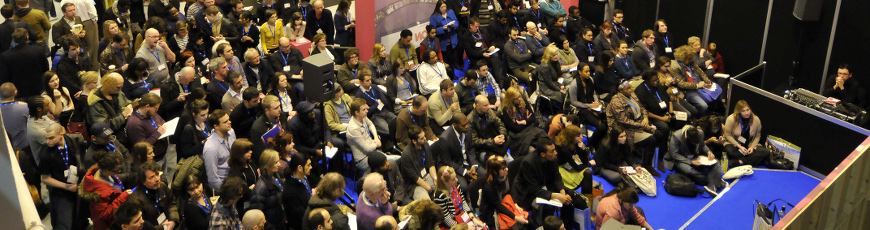
Today is opening day of Broadcast Video Expo 2015 at the ExCel in London. BVE is Europe’s second largest broadcast tradeshow (first place goes to the mighty IBC in Amsterdam) and is becoming a key event, not only in the UK production calendar, but increasingly in the international one. Whereas IBC has sometimes had difficulties incorporating its seminar programme into what has traditionally been a technology show, BVE’s seminars have gone from strength to strength and are drawing increasingly bigger names – this year’s show will feature actor/director Richard Ayoade (Submarine, The IT Crowd). And the show’s focus has expanded beyond the exhibition of kit to also incorporate knowledge sharing, education and networking.
The Association for International Broadcasting is also getting involved in BVE’s seminar programme, with AIB Chief Executive Simon Spanswick and Editorial Director Neal Romanek moderating and hosting sessions this week.
AIB had the pleasure of interviewing BVE’s Event Director, Alison Willis, about London’s biggest production event, where it came from and where it’s going:
 How old is BVE and how did it start?
There has been a broadcast-based exhibition in London for over 20 years, though its name and venue have changed several times (remember The Production Show at the Business Design Centre?). London – indeed the whole UK – is a major centre for the global creative industries, boasting talent and facilities that are the envy of the world. The UK content creation industry also contributes a significant amount to the economy; according to a new BFI report on media production in 2014, 222 films started principal photography in the UK in 2014 with a UK spend of £1,471m, while 87 high-end television shows began production with a UK spend of £615m.
How has BVE changed and grown over the years?
BVE and its predecessor shows have always represented an important date in the UK broadcast industry calendar as an opportunity to learn about new technology, see the latest products and network with peers. Every year we strive to reflect the state of the industry, ask the questions that people want answered, and look ahead to the next set of challenges.
BVE took place at Earl’s Court for many years. Have people warmed up to the ExCel location?
By and large, they have. It’s very well served by public transport, and we’re finding that once visitors are here they are staying much longer than before; at Earl’s Court it was easier to pop in and out, but people are now investing a day and planning their visit to catch more seminars, plan more meetings, and have time to look around properly. ExCeL is also much more accessible for international visitors with London City Airport close by – we’ve seen a rise of 12% for international visitors since the move. The new venue is also very easy for exhibitors to set up, the catering facilities and other show services are excellent, and there is plenty of space for the show to develop and grow.
How has BVE responded to changes in the broadcast industry, with digital and online content now competing with the traditional broadcast space?
The last couple of years have seen some major changes in what ‘broadcast’ means, from cinematic broadcasts of theatrical events to the growth of streaming video for corporates, and brands becoming broadcasters in their own right, not to mention multi-platform programming. BVE is putting an umbrella across the growing ‘broadcast’ sector, working in conjunction with our advisory panel to monitor broadcast trends and note who the key players are, as well as targeting experts that can make sense of the rapid rate of change. Our free seminar programme, offering over 120 hours of sessions, is more diverse than ever this year with representatives from organisations like the Victoria & Albert Museum, the Association of British Theatre Technicians, Leo Burnett and Arsenal FC TV speaking alongside traditional broadcast and production companies.
Does BVE see itself as a show for producers or for tech-heads?
Both! Producers need to be aware of technological trends and formats, for instance understanding the data storage and post-production implications of shooting in 4K; just as engineers need to have an understanding of what producers are trying to achieve. BVE offers an amazing opportunity for these seemingly disparate worlds to come together and understand that they are working towards the same goal of producing exciting, informative, creative content.
What are some of the highlights at this year’s BVE?
4K continues to be a hot topic across the industry, and BVE is delighted to present a keynote presentation from Bruno Mahe, Head of Technology at Illumination Mac Guff on ‘The future of computer-animation and the road to 4K’. Other highlights in the 4K Theatre include Minoru Yonezawa, CEO, Sky Perfect Broadcasting Co. presenting ‘How Japanese broadcasters are leading the way in 4K broadcast’ and a case study from Sky Deutschland on ‘Taking Live Music to 4K’.
The ‘connected world’ is also high on the agenda, and in the Connected Theatre visitors can learn about issues including multi-platform content, monetisation and rights. Jonas Anschütz, Business Affairs Manager, Red Arrow Media discusses his company’s experiences of working with the likes of Netflix, Amazon and Hulu on co-productions, while Kati Price, Head of Digital Media, Victoria and Albert Museum, reveals the museum’s multiplatform strategy and its use of apps to encourage interaction and engagement. The role of the second screen in maximising audience engagement is discussed by a panel including Neil Hall, Executive Product Manager for Sport, BBC Future Media and David Gibbs, Director of Digital Media, Sky Sports.
BVE 2015 is also doing its part to ensure that the UK stays at the forefront of global production, with a dedicated afternoon for the ‘Broadcasters of the Future’ taking place on Thursday 26 February. The tailored sessions across all the theatres will educate and advise students, recent graduates and young people starting out in the industry, highlighting the skills they need and how to get them. Confirmed seminars include the BBC Academy presenting File Service Delivery sessions; Bournemouth University showcasing their graduation show reel with its top students discussing the inspiration for and production of their individual pieces; and Ravensbourne facilitating a networking session with leading industry figures who can give real-world advice.
What do attendees want to see in a tradeshow? Are there too many industry tradeshows and conferences?
It’s increasingly important to have a UK event where people from all areas can converge to discuss their experiences, share their knowledge and learn from each other. The internet is great for research, but nothing beats actually meeting vendors who can explain their products in human terms or hearing industry experts sharing their experiences and being able to ask them questions. It’s also a chance to see pieces of equipment in action – we have over 260 exhibitors this year, 70 of them new to the show, and many product launches and exciting innovations.
With people pressed for time as never before, and budgets ruling out overseas travel for many, it’s essential that we as organisers ensure that BVE is relevant, informative and inspiring enough to warrant people taking the time to attend. We’re confident that our visitors will not be disappointed.
BVE is free to attend for production professionals and runs from 24-26 February. Learn more at the BVE website.
23 February 2015

AIB’s Simons Spanswick interviews Tom Roope, Creative Director of The Rumpus Room
On 18 and 19 February, AIB – the Association for International Broadcasting – hosted its first #iamabroadcaster Global Media Summit. The two-day-long conference, held at London’s Royal Institute of British Architects, was a global event, featuring speakers, panellists and delegates from over a dozen different countries, across five continents.
#iamabroadcaster featured seventeen conference sessions, balanced with ample networking and fine dining courtesy of RIBA, covering topics from the pros & cons of outsourcing, brands as content-makers, the search for new business models and new ways of storytelling in the digital age.
One of the key takeaways of the conference was the need – an urgent one – for broadcasters to expand their vision beyond the traditional broadcast space, and that new space is not just a technological and social space – but a physical space as well.
Africa is set to become the go to market for the 21st century. Still hampered by infrastructure challenges and local political uncertainties, the continent is growing in technical and business competence, tech development and hunger for media and information, promises explosive growth in the next decade. The continent’s potential was repeatedly referred to throughout the conference as an incubator, or a laboratory, for the next incarnation of the global media industry.

(L-R) AIB’s Ed Wilkinson, Patrick Martin of Strata Partners, CNN’s Greg Beitchman, Sony’s Neeraj Arora, and Mekki Abdulla of BZAF Entertainment Network prepare for a session
John Momoh, CEO of Nigeria’s Channels TV – one of the continent’s consistently top-rated networks – addressed the conference with some remarkable stats on Africa and its future. It is estimated that by 2020, Africa’s collective GDP will be $2.6 trillion with an estimated 600 million internet users. Momoh didn’t see the final switch to digital TV taking place in Africa for another five years, however. Often lacking the “last mile” in connectivity in rural regions, African media is dominated by mobile phone usage, with a higher percentage of “advanced” mobile use than other developing regions like South Asia. Momoh said of Africa’s mobile future, “Imagine what will happen to mobile television when there are more than 300 million users of smart phones and tablets.”
Leveraging this mobile use has already been the core strategy of Radar, whose founder, Libby Powell, spoke about the charity’s training of people from marginalised communities in SMS-based journalism. Powell showed footage of Radar journalists, some with extremely challenging physical handicaps, who have become respected journalistic voices locally. One of Radar’s mobile reporters was a principal early source for news in Sierra Leone on last year’s Ebola outbreak.
Tabitha Elwes of Prospero Strategy, in a thorough analysis of Netflix’s current positioning and how it acquired it, was enough to send a chill down most broadcasters spines. Netflix, a company with very little overhead compared to incumbent networks, has made a point of spending money on new content at a level that is impossible for the traditional broadcasters to match. It’s been said that the Cold War was won by America’s simply spending at a level the Soviet Union simply couldn’t compete with – Netflix might be adopting a similar strategy, but with a spend on premium content instead of arms. Elwes underlined in her address that the OTT market has proved far more volatile than the traditional space, and what goes up, can just as quickly come down. She noted that Netflix’s biggest streaming content competitor, Amazon, is still lagging behind the Netflix juggernaut. “But,” she said, “they’re Amazon. They’ll figure it out.”
#iamabroadcaster also featured a special video appearance by director Richard Curtis, calling for participation and partnership in his global Radio Everyone project. Radio Everyone will feature a 7-day online stream, beginning the week of 28 September, supporting and increasing awareness of the the UN’s Millennium Development Goals.
Throughout the conference, delegates were treated to a series of short vox pop collections, conducted by TIMA (The International Media Associates), asking young people in London, Paris, Washington DC and Teheran about their media consumption habits. To the amusement – and dismay? – of many delegates, appointments with the TV set were of extremely low priority in virtually every response. Universally, it seems, video content – call it “television” if you like – is consumed on computers, phones and tablets, at the time and place of the viewer’s choosing.
TIMA’s special onstage Q&A with a group of twenty-something media viewers confirmed that TV watching and linear broadcast are a secondary, or tertiary, viewing experience. Some of the young people on the panel didn’t even own a TV and rated buying one a low priority.
But rather than being a cause for despair, #iamabroadcaster showed that the media industry has blossomed from a single stalk into a bouquet of possibilities for reaching audiences. The theme of “opportunity” reappeared again and again, with a new future on offer to any broadcaster willing to reach out and get it.
The AIB website will offer complete coverage of the #iamabroadcaster Summit, in the coming weeks, including audio and video of the conference sessions both here at and at our YouTube page.
A selection of quotes from some of the #iamabroadcaster sessions:
“People have got very good filters for bullshit. Authenticity is becoming more important in content” – Tom Roope, Creative Director of The Rumpus Room
“Just adding wider color gamut and high dynamic range would substantially improve HD” – Michael McEwen, Director General of North American Broadcasters Association
“We’ve been shocked by how broadcasters have given away their streaming rights” – Lippe Oosterhof, CEO of Livestation
“I recently moved into a new flat and immediately wanted internet access. I didn’t even think about getting a tv” – participant in Young Person’s panel by TIMA
“The price point Netflix is willing to pay for original content has blown incumbent broadcasters out of the water” – Tabitha Elwes, Partner at Prospero Strategy
“I’ve been to countless conferences with men in their 50’s…and they continue to talk about traditional growth models” – Henrik Eklund, Founder & CEO of Newstag
“When we talk about changing media habits we usually talk about technology, but we need to also talk about relationships and story” – Holly Goodier, Director of Marketing and Audiences, Future media, BBC
22 February 2015
Presided over by ARABSAT CTO, Mr. Mueid Al-Zahrani, the 7th Arabsat Telecom Forum in Al-Jadidah, Morocco, was attended by over 115 delegates from the field of telecommunications, broadband service providers and Arabsat customers.
The Forum discussed the technical aspects, payload and coverage maps of future ARABSAT satellite missions and the latest technology for satellite telecommunications services. The Forum was an ideal platform for Magrib Area Satcom Officials to share their experience with ARABSAT and other experts from around the world.
ARABSAT CTO Eng. Mueid Al-Zahrani commented: “Active participation of TAQNIA Space, Cetel, MICT, Level 421, SNL etc have added more colors to the forum by presenting their Network Solutions on ARABSAT fleet and coming Ka-Band solution on-board Hellas-Sat-4 that will eventually create new business streams in GCC and beyond”.
Eng/ Khalid Balkheyour, President & CEO of ARABSAT, stated: “We are currently working on the design of our new satellite fleet ARABSAT 6A at 30.5 Deg.East and HS-4 in partnership with Taqnia Space on Hellas-Sat orbital position to develop broadcasting & telecommunications services and enhancing the possibility of utilizing these orbital positions to promote and develop the services offered by Arabsat to its customers not only in the European continent, but in the Middle East, MENA, South Africa and beyond.” (Source: ARABSAT press release)
20 February 2015
Vizrt Ltd. announced today a deal worth USD 406,000 for services and BG software licenses with a European broadcaster. The system is to be used for news productions, particularly for large broadcast events. The products are further extensions to their existing setup and will largely be supplemental for particular events.
The broadcaster has been a customer for many years, and has chosen Vizrt due to a successful long-time relationship, a trust in Vizrt´s products and the reliable service and support.
About Vizrt:
Vizrt provides real-time 3D graphics, studio automation, sports analysis and asset management tools for the broadcast industry – interactive and virtual solutions, animations, maps, weather, video editing and compositing tools. Vizrt’s products are used by the world’s leading broadcasters, including: CNN, CBS, Fox, the BBC, BSkyB, Al Jazeera, ITN, ZDF, Star TV, Network 18, TV Today, CCTV, and NHK. Furthermore, many world-class production houses and corporate institutions such as the Stock Exchanges in New York and London use Vizrt systems.

 In two weeks from now, the Director-General of Voice of Nigeria, Mallam Abubakar Bobboyi Jijiwa (MFR), will be exactly 22 years in the service of the Corporation, 10 years as its director general. Statutorily therefore, he will bow out from VON, an epoch deserving some sober reflection from this quintessential public manager and a rededication or commitment to work for the greater good of the country beyond life in VON.


