

BBC Eye – Ukraine survivors: Finding my abusers
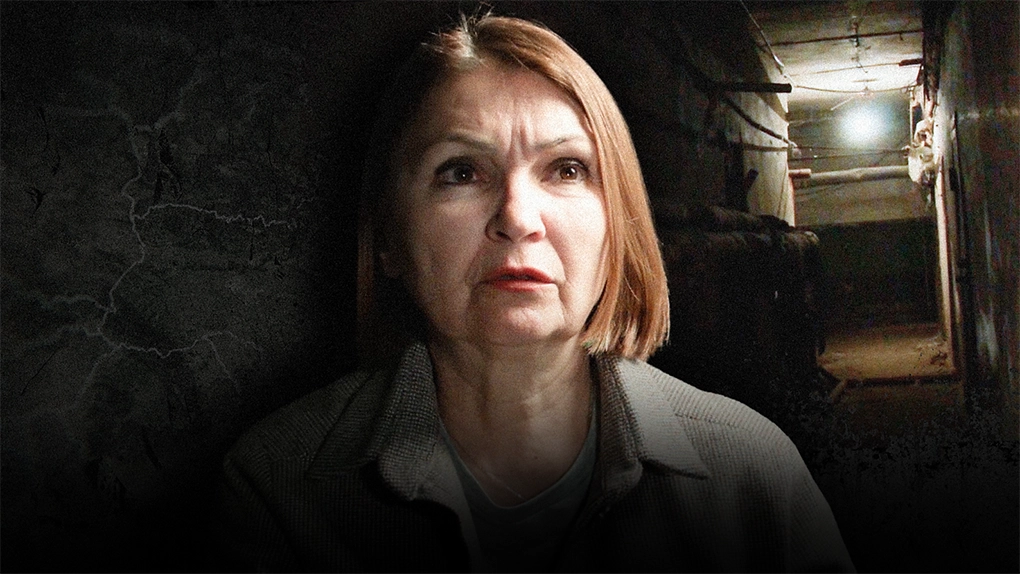
Ukraine survivors: Finding my abusers – a new documentary by the BBC World Service’s award-winning BBC Eye team and BBC News Ukraine – brings the testimonies of the Ukrainian survivors of abuse under Russian occupation and tracks down the prison guards, officials and soldiers likely responsible.
Since 2014 when Russia occupied parts of Ukraine, and escalating with the full-scale invasion in 2022, thousands of Ukrainian civilians have been held illegally, some for years, in Russian-run detention centres. Many were subjected to torture and sexual violence. Ukraine survivors: Finding my abusers tells the story of some of the survivors – and their search for justice.
Describing her “nightmare”, Liudmyla Huseinova – who was wrongly detained in October 2019 in the notorious Izolyatsia prison in Donetsk – says: “For three years and 13 days of my life, my soul and body were crippled.” BBC Eye has identified one of the men she says was involved in her abduction and who watched as she was sexually assaulted – Yurii Temerbek.
Shedding light on a system that operates almost completely out of reach of Ukrainian and international justice, the documentary uncovered details about two other men accused of abusing detainees – such as the guard at Izolyatsia, “Yermak”, later identified as Yeriomichev, who Liudmyla says once ordered her to eat uncooked food mixed with soil and rubbish. “I spat it out, but there was some left. The taste of this food will stay with me the rest of my life,” she says. She now finds the smell of food cooking unbearable and struggles to eat a normal diet.
To find out more about Temerbek, Yeriomichev and others accused of abuses, the BBC worked with two Ukrainian open-source investigators, Bohdan Kosokhatko and Vladyslav Chyryk, building on work they have done with the Ukrainian investigative organisation Truth Hounds. Some of the men they managed to identify appear to now be living ordinary lives with their families in Russia and occupied Ukraine.
The prisons these men helped run are part of a detention system in which the UN’s human rights office, OHCHR, says the torture and ill-treatment of civilians is “systematic and widespread”. It says former detainees describe beatings, electric shocks, mock executions and sexual violence, with civilians often detained arbitrarily, and families given little information. The Kremlin has accused the OHCHR of bias.
Russian-occupied areas of Ukraine are beyond the rule of law; international bodies have no free access. Ukrainian prosecutors have opened legal proceedings against dozens of people accused of mistreating Ukrainians in Russian-run prisons. A small number have been sentenced in absentia. Since Russia’s full-scale invasion in 2022, Ukraine’s prosecutor general’s office has documented more than 400 cases of conflict-related sexual violence against civilians. So far 85 people have been charged – of which 30 have been given prison sentences, most of them in absentia.
The BBC mapped the scale of the network of detention centres, cross-matching reports from media sources, investigators and human-rights groups – identifying 93 sites where civilians and prisoners of war were held in occupied Ukraine between 2023 and 2025, and another 102 in Russia. International organisations have not been allowed free access to them. Ukrainian prosecutors say 2,000 people have passed through such centres since Russia’s full-scale invasion in 2022.
One of them, 42-year-old sailor Oleksii Sivak, told the BBC he was among hundreds of civilians arrested in the wake of Russia’s capture of the southern Ukrainian city of Kherson in 2022, in what pro-Kremlin reports called a crackdown on terrorists. Oleksii, who worked on cargo ships, says that in the early months under occupation he helped cook for elderly people, as well as making banners and leaflets opposing the Russian presence: “I did what I could, resisted how I could.” He says he was arrested and taken to a former police facility in Kherson. “There was torture with objects,” he says. “On the genitals, electric current.”
In November 2022, the Ukrainian army re-took Kherson. Oleksii says Russian-backed forces took some detainees as they fled, but he escaped because they did not have enough space in their vehicles. Ukrainian prosecutors say the Kherson detention facility was run by Andrey Spivak, previously a policeman working in the prison system in the Russian city of Omsk. They have charged him with cruel treatment of the civilian population and violations of the laws of war. The investigators working with the BBC found that he is 40 and was born in the Omsk region. Images on social media suggest he enjoys fishing, hunting and travelling. Photos in recent years show him back in Omsk, at Russian interior ministry events. The investigators working with the BBC also found he has registered his car to work as a taxi driver.
Oleksii, Liudmyla and other survivors are keen to help hold perpetrators of abuse of detainees to account and see revealing their identities as a step towards holding them accountable. Liudmyla says that if the men she accuses of abuse aren’t found and imprisoned, “then, justice for me will be their names as criminals, and torturers, will be known to their children”. “For me, justice is not revenge,” she says. “For me, justice is the decree that these people intentionally, deliberately did what they did. I want them to be punished by law.”
The BBC tried to contact Temerbek, Yeriomichev, and Spivak about the allegations in this report but they did not respond. Asked about the allegations, the Russian Embassy in the UK said Russia had “consistently advocated respect for international law and the rule of law” and allegations of crimes during the Ukraine conflict “are documented and investigated”.
The BBC World Service documentary Ukraine survivors: Finding my abusers is available in the UK on BBC iPlayer. International audiences can watch the documentary on the BBC World Service YouTube channel. The Ukrainian version of the documentary is available via the BBC News Ukraine YouTube channel.
Read the story on the BBC News website – on bbc.co.uk in the UK; and internationally – on BBC.com, BBC Studios global digital news platform.