
AIB joins international call to protect independence of Seychelles public broadcaster
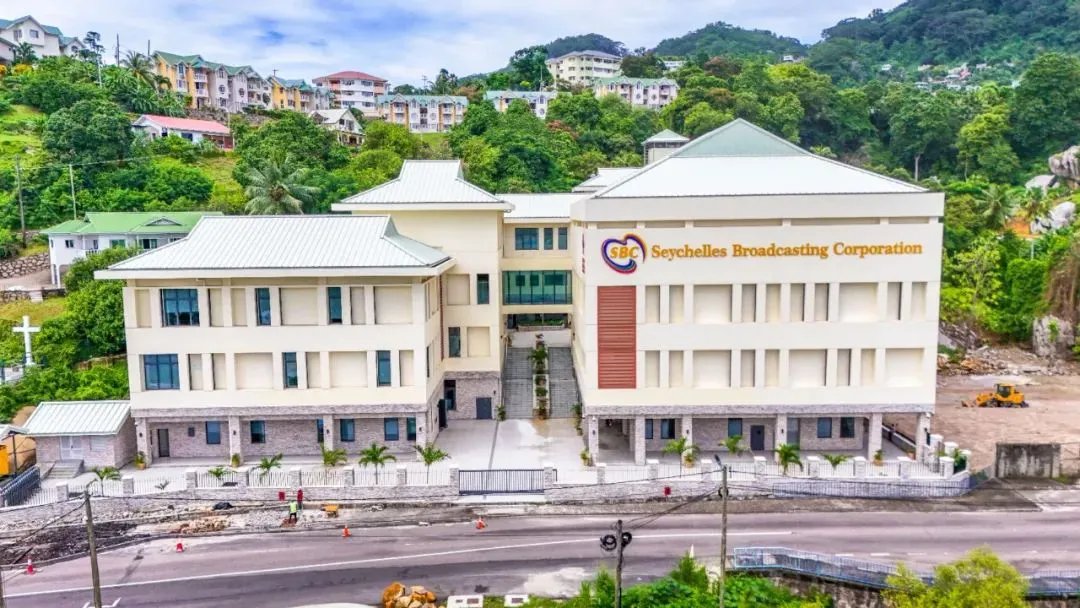
The Association for International Broadcasting (AIB) has joined a coalition of international organisations in calling on the Government of Seychelles to pause consideration of proposed legislation that would significantly alter the governance and funding arrangements of the Seychelles Broadcasting Corporation (SBC).
The joint letter, coordinated by the Public Media Alliance (PMA), expresses concern that provisions in the proposed Seychelles Broadcasting Corporation Bill 2026 could weaken the institutional independence of the country’s public service broadcaster.
The signatories recognise the stated aim of the legislation to establish a modern, editorially autonomous and financially sustainable public broadcaster. However, they argue that a number of provisions relating to governance, board appointments, executive appointments and funding arrangements risk reducing the safeguards that currently protect the SBC from political influence.
The letter calls on the Government of Seychelles and the National Assembly to suspend consideration of the bill in its current form and undertake a broader consultation process involving the SBC, the Seychelles Media Commission, civil society organisations, journalists’ representatives and international experts.
Among the concerns raised are proposals that would give the President greater influence over appointments to the SBC Board and senior executive positions, together with changes to the broadcaster’s funding arrangements. The signatories argue that strong protections for editorial, managerial and financial independence are essential if public service media are to maintain public trust and fulfil their role in serving citizens.
The letter also notes that the managerial and operational independence of the SBC is protected under Article 168 of the Constitution of Seychelles and argues that any reform should strengthen, rather than weaken, those constitutional guarantees.
Simon Spanswick, chief executive of the AIB, said:
“Independent public service media are a cornerstone of democratic societies. They must be able to serve audiences free from political pressure and with the confidence that their governance and funding arrangements support, rather than undermine, their editorial independence.
“The AIB is pleased to join colleagues from across the international media sector in urging the Government of Seychelles to undertake further consultation and ensure that any reforms to the SBC reinforce the broadcaster’s independence and public service mission.”
The AIB works with broadcasters and media organisations around the world to support media freedom, editorial independence, journalist safety and the sustainability of trusted journalism. The association believes that strong, independent public service media play a vital role in providing accurate and impartial information, reflecting the diversity of society and holding power to account.
The joint letter was signed by a coalition of organisations including the Public Media Alliance, the Media Institute of Southern Africa (MISA), Moxii Africa and the Association for International Broadcasting.
Read the full joint letter:
Dear Mr. Sebastien Pillay, Vice President of the Republic of Seychelles, and Minister of Information,
We, the undersigned international organisations dedicated to supporting media freedom, public service media and independent journalism, write to express our serious concern regarding the Seychelles Broadcasting Corporation Bill (SBC) 2026, which was gazetted in May 2026 and is currently under consideration by the National Assembly.
We welcome the stated ambition of the bill to establish a “modern, independent, editorially autonomous, and financially sustainable public broadcasting institution.” We also note with approval specific provisions aimed at codifying editorial standards and supporting digital transformation.
However, we are deeply concerned that, as currently drafted, the bill would significantly weaken the institutional independence it claims to protect, undermining the core principles that underpin its role as a public service media organisation. We align ourselves with the concerns expressed publicly by the SBC’s own Board of Directors, who have warned that several provisions “could weaken the institutional independence” of the Corporation.
Our concerns centre on three areas:
- Governance and appointments: The proposed Bill removes longstanding safeguards that have insulated the SBC from political pressure and leaves the system vulnerable to exploitation. For example, the replacement of the independent Constitutional Appointments Authority (CAA) with a president-appointed select committee raises serious questions over the independence and transparency of the process.
Combined with the President’s power to appoint five members of the Board, the proposed structure would result in presidential appointees holding a majority of voting positions on the Board. While elected representatives and government nominees may legitimately have a role in public media governance, international good practice is that such appointments should not constitute a controlling majority. Public service media must be protected from both actual political influence and the perception of political influence. The proposed arrangements risk creating both.
- Executive appointments: The bill would also grant the president sole authority to appoint the CEO and deputy CEO. This is of alarm as currently, the executives – involved in the day-to-day running of the public broadcaster – are appointed by the president in consultation with the speaker of the National Assembly and the Chief Justice. This new model risks undermining transparency and the operational and editorial independence of the SBC, under this, or any future governments.
- Financial autonomy: The proposed bill provides that the SBC be funded through appropriations approved by the National Assembly, without establishing a guarantee of adequate, reliable, and safeguarded funding. This could leave the SBC more financially vulnerable to political pressure.
Globally, media freedom organisations have observed an increasing tendency for funding mechanisms to be used as instruments to apply pressure and constrain critical journalism. Any credible, long-term funding framework must protect public media from this risk and ensure editorial independence. We call for any funding model to provide sustainable levels of funding so public media can fulfil their public mandate, while also guaranteeing its independence, and preventing opportunities for funding to be used as leverage against public media and their editorial decisions.
The funding and governance of public media are two foundational pillars through which governments can exert pressure, either directly or indirectly. Legislative frameworks, therefore, must contain effective safeguards that protect public media from such pressures, either from the current or any future administration, which may seek to use the national broadcaster as a means to advance its own political ends. We do not believe such safeguards are currently in place in this proposed bill, where they are in existing legislation.
The SBC’s managerial and operational independence is currently guaranteed in Article 168 of the Constitution of the Seychelles. We are concerned that the proposed bill does not uphold this guarantee, as it would provide the government of the day too much control and influence over the management of the SBC, at board and executive level. For audiences to maintain trust and confidence in public service media as editorially independent organisations that hold power to account on their behalf, protecting their institutional independence across governance and funding mechanisms is essential.
The Seychelles has built a strong reputation as a country that upholds press freedom, as reflected in its constitutional guarantees, its participation in the Media Freedom Coalition, and its standing in international press freedom indices. It also has a responsibility under Principle 13 of the African Commission Declaration of Principles on Freedom of Expression and Access to Information in Africa to ensure that public media are governed and transparently constituted, with a diverse board protected against political or commercial interference.
As one of Africa’s strongest performers on media freedom and democratic governance indicators, the Seychelles has an opportunity to demonstrate regional leadership by adopting a public media framework that reflects the highest standards of independence, accountability and public trust.
We respectfully call on the Government to pause consideration of the bill in its current form and to initiate a consultative process with the SBC, the Seychelles Media Commission, civil society, and international experts before it proceeds. We stand ready to contribute to that process and to offer expertise on how governance, appointments, and funding frameworks can be structured to genuinely strengthen the SBC’s independence and long-term sustainability.
Signed by:
Public Media Alliance (PMA)
Media Institute of Southern Africa (MISA)
Moxii Africa (Formerly Media Monitoring Africa)
Committee to Protect Journalists (CPJ)
The Association for International Broadcasting (AIB)
Reporters Without Borders (RSF)
IFEX
International Press Institute (IPI)