Russia closes CBC bureau in Moscow

Russia closes CBC bureau in Moscow

Russia closes CBC bureau in Moscow

Russia cancelling visas of CBC journalists

The Russian Foreign Affairs Ministry has announced that it is to close the Moscow bureau of the Canadian Broadcasting Corporation (CBC). It will also withdraw visas for CBC journalists. The move follows the banning of Russia’s international TV channels RT English and RT France in March from being distributed in Canada. 

“With regret we continue to notice open attacks on the Russian media from the countries of the so-called collective West who call themselves civilised,” Russian Foreign Ministry spokesperson Maria Zakharova said.

“A decision has been taken to make retaliatory, I underscore retaliatory, measures in relation to the actions of Canada: the closure of the Moscow bureau of the Canadian Broadcasting Corporation, including the annulation of the accreditations and visas of their journalists.”

In April, Russia imposed sanctions against Catherine Tait, President of CBC and Michael Melling, VP News at CTV News, preventing them – and a range of politicians and business people – from visiting Russia.


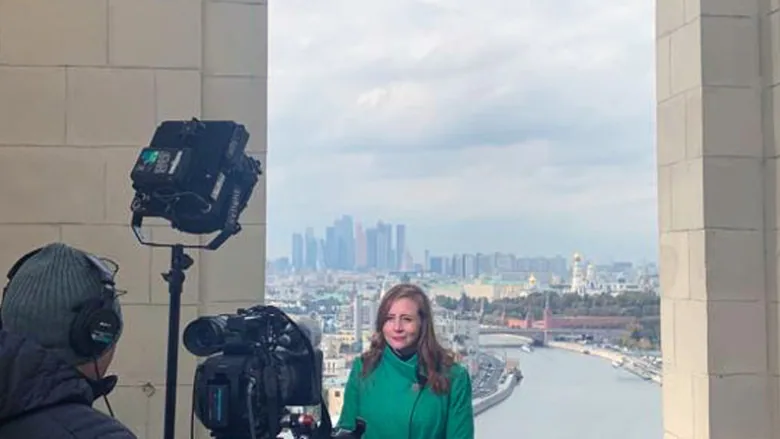
Photo: CBC correspondent Briar Stewart on the rooftop of CBC’s Moscow bureau on Oct. 5, 2021. (CBC)

Russia labels Deutsche Welle a ‘foreign agent’

Russia labels Deutsche Welle a ‘foreign agent’

Russia labels Deutsche Welle a ‘foreign agent’

Russia’s Justice Ministry on Monday placed Germany’s international broadcaster Deutsche Welle (DW) on a list of “foreign agents.”

“This decision was made based on the documents received from the authorized state authorities,” the ministry said in a statement. The statement didn’t elaborate on the documents or authorities in question.

In response, DW Director General Peter Limbourg said: “This latest, arbitrary decision by the Russian authorities was unfortunately to be expected. It is a further attack on press freedom and a fresh attempt to cut the Russian population off from free, independent media. It started with the forced closure of our studio in Moscow at the beginning of February, then our website in all languages was blocked in Russia. There then followed the gradual restriction of social media services and now DW has been labeled a ‘foreign agent.’ This will not stop us from continuing to provide comprehensive and independent coverage of Russia and the region from our new studio in Latvia and from Germany.”

DW in Russia

On February 3, the Russian Foreign Ministry said it would take “retaliatory measures against the German media” working in Russia after German authorities banned the state-run Russian TV channel “RT DE.”

This included “recognizing DW as a foreign media outlet fulfilling the functions of a foreign agent,” the Foreign Ministry said in a statement.

DW was forced to shutter its Moscow office and its journalists in Russia had to relinquish their accreditation, making it impossible to work in Russia.

In early March, DW’s website was  blocked by state communications regulator Roskomnadzor.

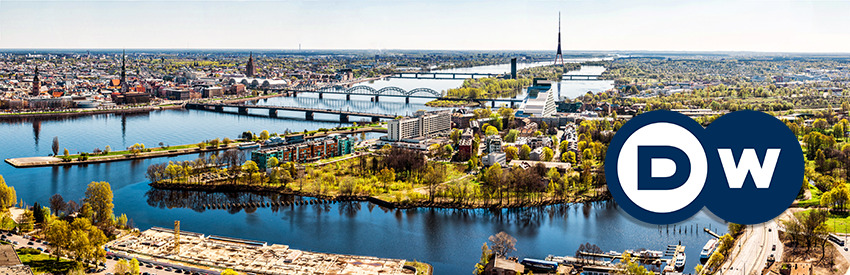
Shortly after, DW moved its Moscow office to the Latvian capital Riga.

“The Russian government has seemingly declared an ‘information war’ on DW,” said Christian Trippe, DW Director of Russia, Ukraine and Eastern Europe. “Our journalists will continue with our work and deliver reliable information to our target audience in Russia.”

DW (Deutsche Welle) is Germany’s international public broadcast service. It is tax-funded and produces freely accessible journalism in 32 languages.

The Federal Republic of Germany’s Broadcasting Council — an independent, non-partisan body free of government influence — oversees DW’s compliance with its legal mandate to supply people around the world with independent information. DW employs roughly 4,000 individuals, most of whom work at studios in Bonn and Berlin.

What is the ‘foreign agent’ list?

Since 2012, the list has been used to curtail the operations of international media outlets as well as non-profits that receive foreign funding, particularly those that are active in politics or report on corruption.

It requires that all publications on the list be marked as coming from a “foreign agent,” and submit a report on their activities every 6 months.

Over 100 media outlets and individuals are currently on the list, including US public broadcasters Voice of America and Radio Free Europe/Radio Liberty as well as Amnesty International and Human Rights Watch.

[Source: DW press release]

NHK WORLD-JAPAN’s English TV broadcasts go dark in Russia

NHK WORLD-JAPAN’s English TV broadcasts go dark in Russia

NHK WORLD-JAPAN’s English TV broadcasts go dark in Russia

NHK’s international English language television service, NHK WORLD-JAPAN, has been off the air in Russia since early morning on March 8th, 2022, Japan Standard Time.

NHK WORLD-JAPAN provides news and other programs to the world 24 hours a day. In Russia, its service has been available to about 18 million households via satellite, cable TV, and IPTV distributors through a local contractor.

The contractor informed NHK that it has no choice but to suspend distribution. NHK WORLD-JAPAN continues to deliver the latest news and information to Russia on the internet and overseas radio service. NHK’s international television service in Japanese, NHK WORLD PREMIUM, remains available through satellite distribution.

NHK WORLD-JAPAN is accessible within Russia in the following ways.

ONLINE NHK WORLD-JAPAN website and app in English, Russian, and other languages www.nhk.or.jp/nhkworld/

English TV live streaming (24 hours) www.nhk.or.jp/nhkworld/en/live/

English news site www.nhk.or.jp/nhkworld/en/news/ 

Russian site www.nhk.or.jp/nhkworld/ru/

RADIO (Russian language service)

Shortwave Western Russia and parts of Europe 4:30–5:00 (UTC)

Far East Russia 5:30–6:00 / 11:00–11:30 (UTC)

Medium wave Western Russia and parts of Europe 3:30–4:00 / 17:30–18:00 (UTC)

For more information on how to listen and watch, please check the following website: https://www3.nhk.or.jp/nhkworld/upld/thumbnails/en/information/english_nhkworldjapan_pressrelease_russiahowtowatch.pdf

DW locates Moscow bureau to Latvia

DW locates Moscow bureau to Latvia

DW locates Moscow bureau to Latvia

Deutsche Welle (DW) is relocating the journalistic operations that were based in Moscow to Latvia following the closure of its Moscow studio and the withdrawal of its staff’s accreditation by the Russian government.

Infrastructure for DW’s broadcasting operations will be set up over the coming weeks in the capital city of Riga. Yuri Rescheto, previously DW Bureau Chief Moscow, will be head of DW’s new foreign location.

DW Director General Peter Limbourg: “We continue to take all the technical and organisational measures possible to provide our audience in Russia and around the world with critical information. We remain committed to providing independent and objective reporting. Even though our website and most social media channels have been blocked by the Putin government in recent days, people in Russia can find a variety of ways to circumvent censorship.”

DW Editor-in-Chief Manuela Kasper-Claridge: “From Germany, Ukraine, neighboring European countries and now soon also from Riga, we provide our audience in Russia with comprehensive and sustainable information about the war in Ukraine. Latvia offers geographical proximity to Russia, and the vibrant media landscape in the Baltic countries now creates optimal conditions for our team and reporting.”

On February 3, 2022, the Russian government banned DW from broadcasting in Russia, citing as a reason Germany’s ban on the German-language channel of Russian state TV network RT DE. The following day, staff at DW’s Moscow studio had to hand in their press accreditations. The Russian Foreign Ministry also announced an investigation into whether DW should be classified as a foreign agent.

BBC increases access to news on Ukraine and Russia

BBC increases access to news on Ukraine and Russia

BBC increases access to news on Ukraine and Russia

BBC News is increasing access to its independent journalism on the invasion of Ukraine.

From today it will make a daily half hour news bulletin (broadcast at 2000 GMT) available free of charge to other broadcasters who are members of the European Broadcasting Union (EBU).

Audiences will get the chance to watch Outside Source, normally presented by Ros Atkins, from Monday to Thursday, and a BBC News bulletin from Friday to Sunday. Given the current news agenda we expect the news to focus on Ukraine and related stories.

BBC News is also launching Tik Tok accounts exclusively dedicated to videos about the war, in Russian and in English, from today. The handles are @bbcnews and @bbcnewsrussian. Tik Tok has fast become a crucial platform for information (and disinformation) about the war in Ukraine.

Although Tik Tok has suspended new content and livestreaming in Russia, we know that audiences find ways of getting to, and sharing, the content.

Jamie Angus, Senior Controller, News Output and Commissioning, says: “Access to trusted, impartial and independent news is never more crucial than in times of conflict. We are always looking to find ways to ensure our news is available to those who need it most, on the platforms where they are. We welcome trusted European public broadcasters who want access to this daily bulletin via our partners at the EBU.”

These moves come amid a large increase in audiences for BBC News. Audiences to the BBC News channel were up 57% last week (w/c 28 February, compared to an average week in 2021). 

Updated figures show that in the last week of February, 200 million people turned to the BBC World Service’s digital news in languages other than English. Reach on social media in Russian tripled (with the biggest gains on Facebook) and in Ukrainian more than tripled.

Access to news in Russia is becoming increasingly difficult, so the BBC is continuing to explore ways to make its trusted, impartial news and information available in as many ways as possible.

A guide to accessing BBC sites via circumvention is available here

[Source: BBC press release]