RNZ fires-up new transmitter to cover the Pacific

RNZ fires-up new transmitter to cover the Pacific

RNZ fires-up new transmitter to cover the Pacific

RNZ went live on 1 August with its new RNZ Pacific shortwave transmitter.

The commissioning of the transmitter was officiated by the Minister of Foreign Affairs, the Rt Hon Winston Peters, at RNZ House in Wellington.

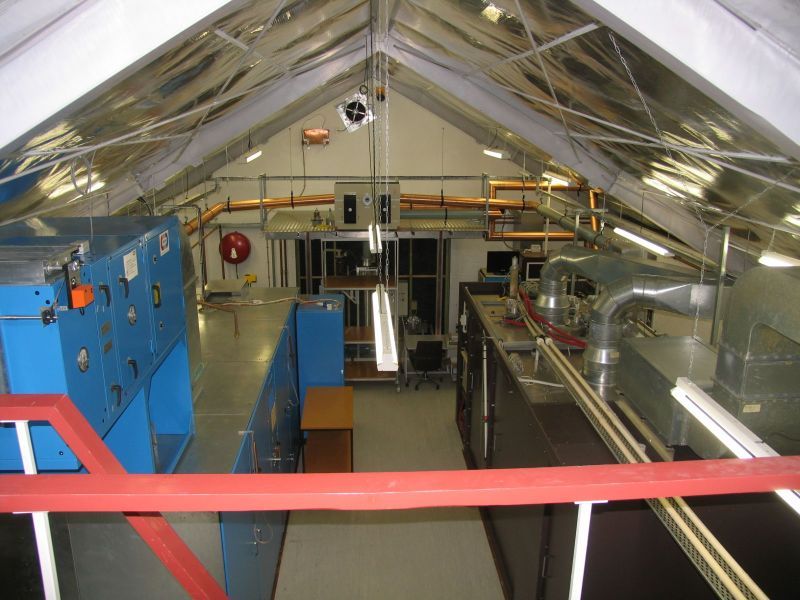
In a NZ$4.4-million-dollar project, RNZ has installed a new Swiss-made Ampegon shortwave transmitter, capable of both digital and analogue signal, to replace its old transmitter.

Chief Executive and Editor-in-Chief Paul Thompson said it’s a significant infrastructure upgrade and secures the future of the RNZ shortwave service into the wider Pacific.

RNZ Pacific broadcasts into the wider Pacific on shortwave 24 hours a day, broadcasting in English and Pacific languages, in collaboration with 22 broadcasting partners across the region.

“The attraction of the shortwave service is that it delivers our unique voice and content to all parts of the Pacific via a signal which can carry over great distances, and achieve good audiences,” said Thompson.

“RNZ Pacific is an essential source of information, especially so during the cyclone season or during a crisis such as the Tonga eruptions,” he said.

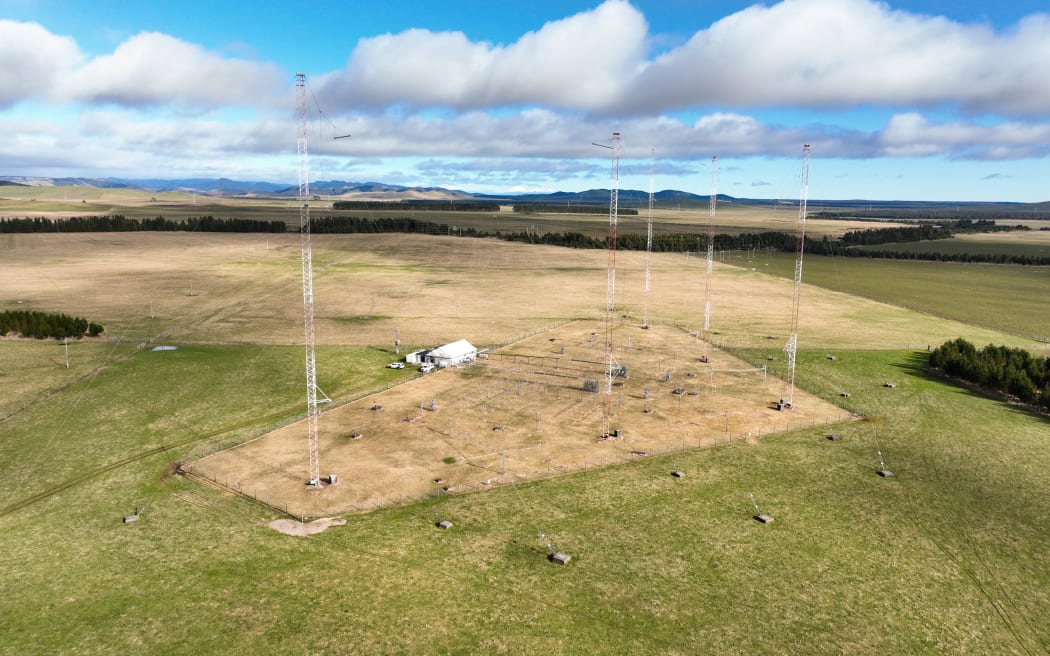
RNZ’s Transmission Engineer Specialist Steve White said the project to replace the 34-year-old transmitter at the Rangitaiki broadcast site near Taupō had gone smoothly – being on budget and achieved without disruption to service. “We have appreciated the close working relationship with Ampegon for the new transmitter installation,” he said.

RNZ Pacific Manager Moera Tuilaepa-Taylor said for the past 75 years RNZ had been broadcasting into the Pacific via the shortwave service. “This marks the next chapter in our proud legacy of sharing all of our unique stories across the Pacific,” she said.

RNZ’s Charter includes the provision of an international service to the South Pacific in both English and Pacific languages. As part of Budget 2022, the Government announced NZ$4.4m dollars capital funding for a new transmitter.

RNZ Pacific broadcasts into the wider Pacific on shortwave 24 hours a day, collaborating with 22 broadcasting partners across the region. Its current primary transmitter is nearing end of life, and its other transmitter has in effect already been retired.

Image: RNZ

NZ government boosts RNZ Pacific capabilities

NZ government boosts RNZ Pacific capabilities

NZ government boosts RNZ Pacific capabilities

New Zealand’s government has announced an NZ$4.4 million capital grant for RNZ Pacific

The grant is to provide capital funding for a new shortwave transmitter for New Zealand’s international broadcasts to the Pacific. RNZ Chief Executive and Editor-in-Chief Paul Thompson has welcomed the budget investment in RNZ Pacific shortwave transmitters.

RNZ Pacific broadcasts into the wider Pacific on shortwave 24 hours a day, collaborating with 22 broadcasting partners across the region. Its current primary transmitter is nearing end of life, and its other transmitter has in effect already been retired (it is mothballed, for use in the event of the failure of the main transmitter).

“The value of the RNZ Pacific service can’t be underestimated. Our voice reaches all parts of the Pacific, at times with critical information such as cyclone warnings. During the Tonga eruption, when the undersea cable was cut, RNZ Pacific short wave was a lifeline source of information,” said Thompson.

This investment secures a productive future for our unique voice. The attraction of the shortwave service is its robustness, and the ability to have the signal travel great distances, and achieve good audiences,” he said.

RNZ Pacific broadcasts enhance the Government’s Pacific strategy as we share our history, culture, politics and demographics. The strategy is underpinned by the building of deeper, more mature partnerships with Pacific Island countries, and by supporting their independence and sustainable social and economic resilience.

Since the ABC ceased its shortwave broadcasting the only other shortwave broadcaster in the region is China Radio International. Thompson says RNZ can now start work on its infrastructure development with a new transmitter likely to take approximately 12 months to get in place, subject to further project planning.

The current primary transmitter is a 100kW DRM-capable shortwave transmitter, operating from the Rangitaiki transmitting station on New Zealand’s North Island (176 25’ 47.02” E 38 50’ 33.35” S). The transmitter, manufactured by Thomson Broadcast, was installed in 2005. The site is fed by a digital link from the Wellington headquarters of RNZ, 400km south of the transmitting site. The site has antennae manufactured by TCI. Read more at https://www.rnz.co.nz/international/technical

30 years of broadcasting to the Pacific

30 years of broadcasting to the Pacific

30 years of broadcasting to the Pacific

On 24 January 1990, Radio New Zealand International beamed into the Pacific, on a new 100 kilowatt transmitter.

New Zealand has had a short-wave service to the Pacific since 1948. The station broadcast on two 7.5kw transmitters from Titahi Bay, which had been left behind by the US military after the Second World War.

In the late 1980s, following growing political pressure to take a more active role in the Pacific area, the New Zealand government upgraded the service.

A new 100kw transmitter was installed and, on the same day the Commonwealth Games opened in Auckland, the service was re-launched as Radio New Zealand International.

“What we were able to understand was how important radio was and still is in the Pacific, where as here radio had become a second cousin to television… different thing in most of the countries we worked with,” said RNZ International’s first manager Ian Johnstone, from 1990 to ’93.

Mr Johnstone said news of a dedicated Pacific service into the region was welcomed by Pacific communities.

He also said it was important for New Zealanders to remember that New Zealand was part of the Pacific.

“One of the nice things is we say we are part of the Pacific, we are the southern corner of Polynesia, and let’s remember that.”

Linden Clark was manager from 1994 to 2016. She said the strength of the service had been its connection with Pacific people in New Zealand and the region.

“The history of of RNZI – RNZ Pacific – is absolutely marked by fantastic contributions from a whole range of people – not only employed people – but those who have given their time in all sorts of ways – both of the Pacific region and the Pacific communities here in New Zealand.

“That is the history of the station and I think that’s partly why it means so much to everybody who has had something to do with it.”

She said RNZ Pacific had built strong relationships over the years.

“We have always been about trying to support and partner with those Pacific media, radio stations, individuals and journalists, rather than broadcast and talk to them.

“We want to talk with them and use their expertise and develop that and that’s been really satisfying.”

Adrian Sainsbury, who’s RNZ Pacific’s frequency manager, said in the early days, it was difficult to get Pacific stations to take bulletins as the Australian Broadcasting Corporation’s Radio Australia was the dominant broadcaster in the Pacific.

“And we built up, over time an extensive network. And as I say, from a handful, of possibly two or three, we are now right up to 20 now, across the Pacific, stretching right up to Micronesia,” he said.

Sainsbury said RNZ Pacific was now the only dedicated Pacific broadcast service on short-wave across the region.

The signal can sometimes be heard as far away as Japan, North America, the Middle East and Europe.

Changing media landscape in the region

“In many ways, the development seen in the Pacific this century has been much faster than elsewhere – television has made a late entry to be quickly followed by an explosion of social media – just like everywhere else,” according to Walter Zweifel, former News Editor for over 20 years.

He said the internet has built information bridges in the region that were simply not there two decades ago. Gone are the days of the fax but distances are still a challenge.

Given the geography and the cost of running a media outlet, he said radio had remained resilient and vital.

“Small countries, for example in Micronesia, are still struggling to develop their local media and technological change has brought little benefit,” he said.

“In more populous countries, multi-media output has flourished. Like elsewhere, the printed press has faced steep challenges. Fiji lost one of its daily papers as did French Polynesia, which now only has one daily left.”

 And challenges remain for journalists in the region.

“There has been a professionalisation in my view. There seem to be more and better trained journalists in the field and at the same time more gatekeepers and communicators around decision-makers.”

“Depending on the country, access is now more difficult while there is more information in terms of releases and statements. Also depending on the country, journalism can be frustrated. While places like the US-affiliated territories and countries accept free media, others have clamped down on liberties known earlier. Fiji is an example of the latter,” he said.

“Pressure on individual journalists has continued, with cases of overt and covert threats popping up in many places.

“Variations throughout the region are however huge. Restrictions are still widely in place for outsiders wanting to report from Indonesia’s Papua region, and Nauru nowadays all but bans foreign reporters. In the French Pacific, there has been an improvement as the media lost some of the timidity of the Lafleur and Flosse era.”

Thirty years later the service has developed and established itself as the region’s most comprehensive and reliable source of regional news and is relayed daily by over twenty Pacific radio stations.

It broadcasts on a range of platforms including analogue and digital short-wave, satellite, and online and has an estimated audience of 1.8 million people in the Pacific.

The RNZ Pacific website attracted nearly eight million page views in 2019.

Koro Vaka’uta has been RNZ Pacific’s News Editor for the past year. He said it was awe-inspiring looking back at what had been achieved over the past 30 years and in some way it just added to the responsibility of what the current team was doing.

“With so much of the media landscape changing there is also an onus on RNZ Pacific to be dynamic and progressive in its approach now and in the coming years, while maintaining its core news role with integrity,” he said.

“While that’s probably one of the biggest challenges, there is also an increasing awareness of the importance of telling Pacific stories through culturally appropriate lenses and we will seek to do that through our growing Pasifika staff numbers and through being a vehicle for people on the ground or whenua itself to have a voice.”

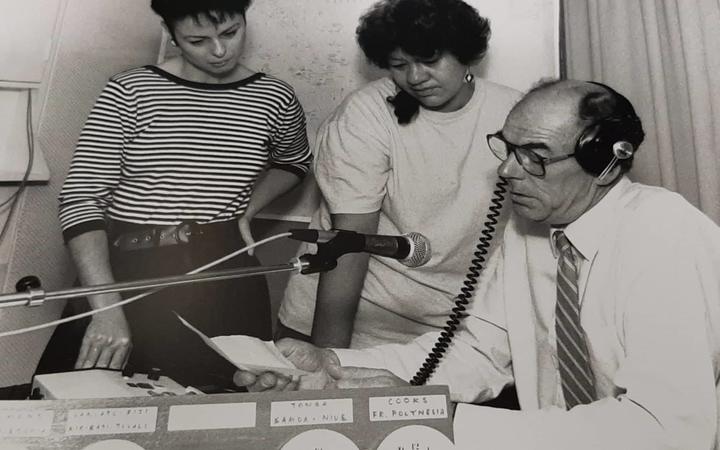
Top image: (L-R) Linden Clark, Elma Maua and Ian Johnstone preparing for the launch of RNZ International – now RNZ Pacific – in 1990. Photo: RNZ Pacific


France Télévisions and ABC International strengthen their co-operation in the Pacific

The Pacific’s largest media companies, France Télévisions – Overseas Network 1st and ABC International have signed an agreement that will see increased coverage of Pacific events across the two networks.


The Pierre Riant Memorandum of Understanding 2015, named after the recently-deceased French journalist who presented 24 in the Pacific, was signed by representatives of both organisations in Papeete today (Friday, February 6, 2015) as part of the Oceanian International Documentary Film Festival (FIFO).


The MOU aims to build on the relationship between ABC International’s Radio Australia service and France Télévisions that began in 2005.  It will see a growing exchange of Pacific content between the two broadcasters to all of the Pacific’s French-speaking territories.


Listeners in New Caledonia, Wallis and Futuna and Tahiti will now have access to a weekly seven-minute Pacific roundup 24 Hours in the Pacific as well as a three-and-a-half minute Pacific update produced by Radio AustraliaRadio Australia will also produce for France Televisions a weekly three-to-four minute program plus two video reports per month which will be broadcast on the first Outremer Network.


The MOU was signed by the CEO of Outremer 1st Network, Michael Kops and the Head of Pacific and Mekong for ABC International, Domenic Friguglietti.


Radio Australia’s French content is produced by Caroline Lafargue and can be heard on RA’s partner rebroadcasters in the Pacific and online at www.radioaustralia.net.au/french.  France Télévisions – Network Overseas 1st is available in the Pacific on multi platforms across satellite and terrestrial television, radio and online.

Asia Pacific Broadcasting Union

Asia Pacific Broadcasting Union

Established in 1964 as a non-profit, non-government, professional association to assist the development of broadcasting in the region, the ABU promotes the collective interests of television and radio broadcasters and encourages regional and international co-operation between broadcasters. 

The ABU, which celebrates its 50th anniversary in 2014, has more than 255 member broadcasters large and small spread across the region’s 63 countries, from Turkey in the west to Samoa in the east, and from Russia in the north to New Zealand in the south.