UN Special Rapporteur on Iran “deplores” the persecution of BBC Persian staff and their families

UN Special Rapporteur on Iran “deplores” the persecution of BBC Persian staff and their families

The UN Special Rapporteur on the situation of human rights in Iran, Professor Javaid Rehman, has presented his first report to the United Nations Human Rights Council.

In his address, Professor Rehman raised with concern the ongoing persecution and harassment of BBC News Persian staff and their families by Iran.

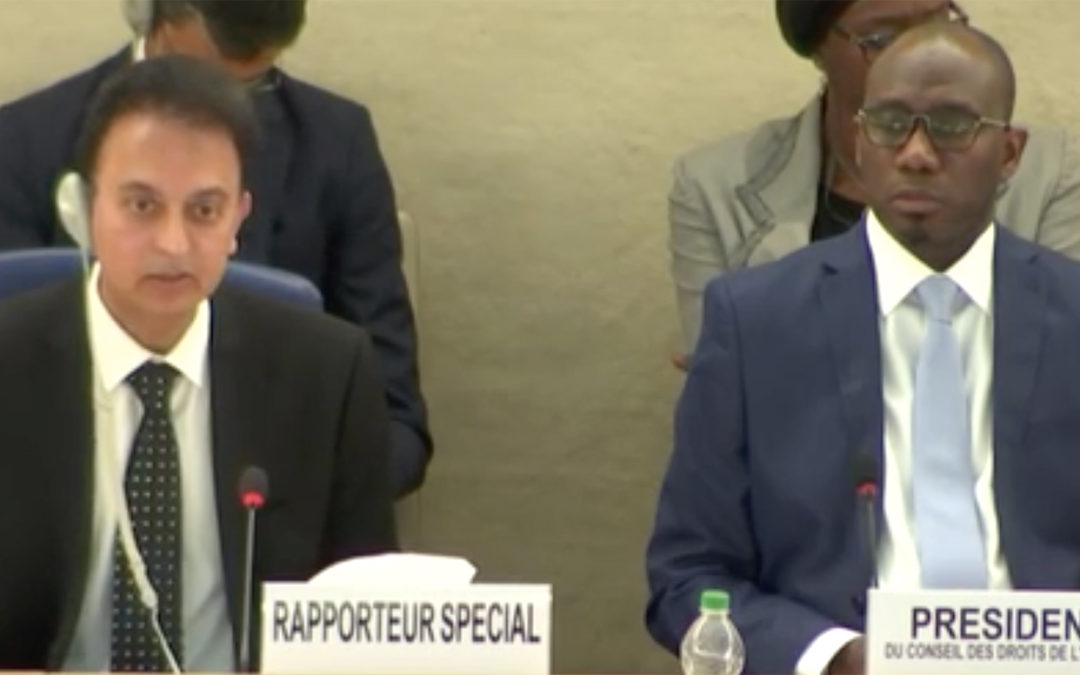
Professor Rehman (pictured addressing the UN Human Rights Council in Geneva on 11 March 2019) said he “deplores” the harassment of BBC Persian staff. His remarks raised concern about the ongoing, collective criminal investigation of BBC Persian staff and the asset-freeze which affects them and their families in Iran. He reiterated the seriousness of the persecution, which was also raised by his predecessor Asma Jahangir, including arbitrary detention and interrogation of family members in Iran. Professor Rehman also raised concern about the attacks on BBC Persian journalists in Iranian state media, in particular with fake and defamatory news being published to undermine their reputations.

The BBC made its unprecedented urgent appeal to the UN in late 2017. It is the first time in BBC history that the BBC has engaged with the UN over the protection of its journalists. Both the UN Special Rapporteur and the UN Secretary-General Antonio Guterres raised concern about the persecution of BBC Persian in their reports to the 40th session of the Human Rights Council.

The UK government mission to the United Nations raised concern with the “deteriorating” situation for freedom of expression in Iran. The UK highlighted that the “judicial harassment of BBC Persian staff and their families continues” and called upon Iran to cease the criminal investigation into BBC journalists and the harassment of their families.

Rana Rahimpour, a BBC Persian presenter (pictured in Geneva with AIB CEO Simon Spanswick), addressed the Council about her personal experience of the persecution, explaining how her father was subjected to a travel ban to prevent him from visiting her after her first child was born. She thanked the UN Secretary General for raising the case and raised concern about the reprisals against BBC Persian staff, explaining that “my colleagues have been warned against participating in our UN advocacy work by the Iranian authorities.”

International counsel for the BBC World Service, Caoilfhionn Gallagher QC and Jennifer Robinson, have filed a further UN complaint over the reprisals BBC Persian journalists have faced for engaging with the UN. They said, “Reprisals against BBC Persian journalists and their families for engaging with the UN is not just an attack on freedom of expression, but an attack on the integrity of the UN system. Such reprisals must be condemned in the strongest possible terms.”

Michelle Stanistreet of the National Union of Journalists said: “The Iranian authorities have been systematically targeting BBC Persian journalists in the UK, and their families in Iran, since the service launched satellite television in 2009. Our campaign to stop the harassment will persist until the authorities stop targeting NUJ members for simply for doing their jobs. Both the asset freeze and criminal investigations into the activities of journalists and other staff working for BBC Persian should be dropped.”

An event was held today at the Human Rights Council co-hosted by the BBC, the International Federation of Journalists and Doughty Street International to discuss the broader implications of the persecution of BBC Persian.

Simon Spanswick from the Association for International Broadcasting – a network of broadcasters that reach one billion viewers and listeners each week – explained how the persecution of BBC Persian is “among the worst cases globally” and is indicative of a worrying trend of harassment of journalists and broadcasters in their network.

At the event, the UK Permanent Representative to the UN in Geneva, Julian Braithwaite, said “UK calls on Iran to cease the harassment of BBC Persian staff and their families – and the persecution of all independent journalists whether affiliated with the BBC or not”. He condemned the reprisals faced by BBC Persian staff.

Referring to the recent media freedom initiative announced by Foreign Secretary Jeremy Hunt, Ambassador Braithwaite said: “This case is one of the reasons we are making press freedom a particular focus for the UK. Iran’s treatment of BBC journalists will be a key part of our upcoming media freedom summit.”

The UN Special Rapporteur Professor Rehman reiterated at the event in Geneva on 12 March: “I will continue to urge Iran to cease its harassment of BBC Persian staff and their families.”

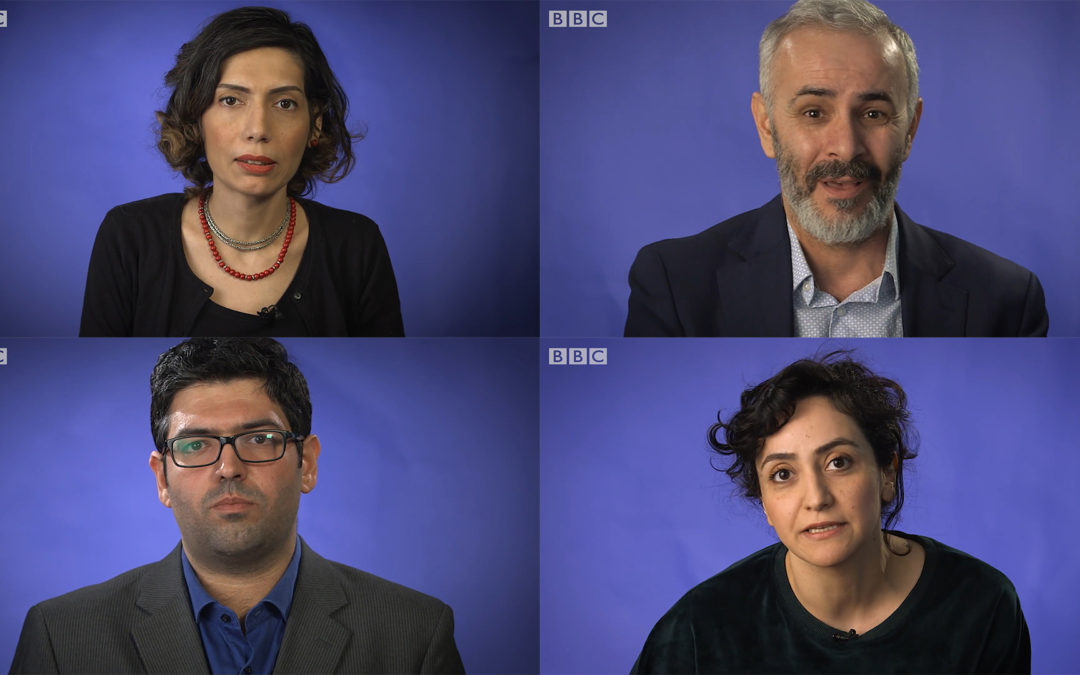
BBC lodges complaint to UN over treatment of Persian Service staff

BBC lodges complaint to UN over treatment of Persian Service staff

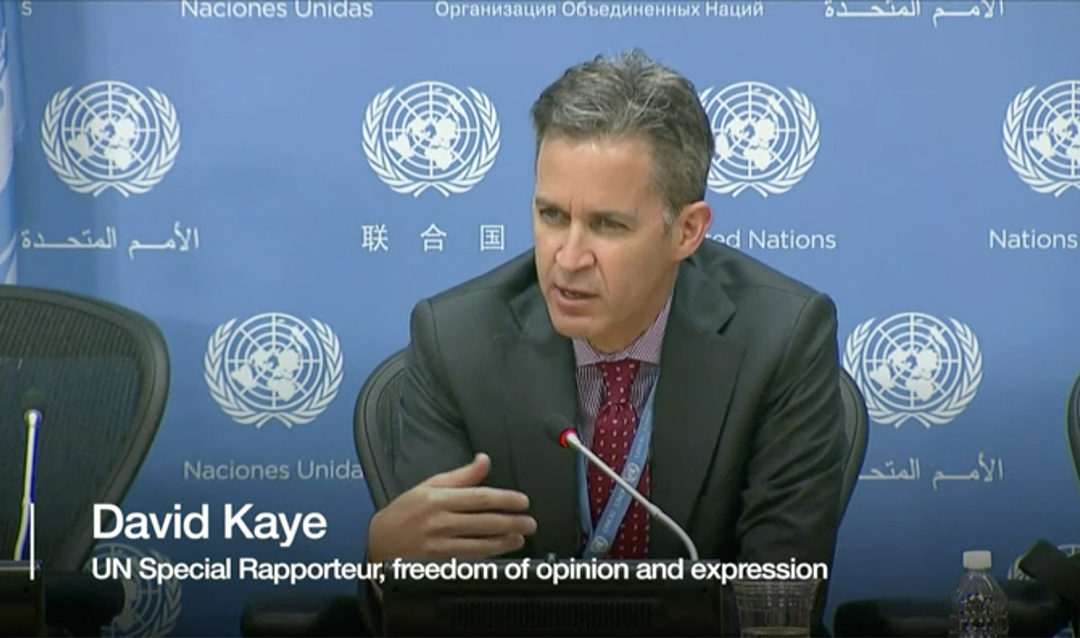
The BBC has filed an urgent complaint to David Kaye, UN Special Rapporteur on the promotion and protection of the right to freedom of opinion and expression, on behalf of the staff of its BBC Persian service.  The urgent complaint has also been sent to Asma Jahangir, UN Special Rapporteur on human rights in Iran, who will on Wednesday during her statement to the UN raise her concerns about the harassment of BBC Persian staff and their families.

The appeal comes after the Iranian authorities initiated a criminal investigation into 152 BBC Persian staff, former staff, and contributors, for “conspiracy against national security” in Iran and abroad. A subsequent court order freezes the assets of BBC Persian staff, meaning they cannot inherit family assets and preventing them and their families from selling assets, like property or even cars, in Iran.  This is a deprivation of human rights which is against the Iranian constitution.

This is the latest in a sustained campaign of harassment and persecution which is designed to pressure journalists against continuing their work for the BBC. The campaign includes cases of the arbitrary arrest and detention of BBC Persian staff’s families, the confiscation of passports and travel bans on family members leaving Iran to prevent them from seeing their relatives working for the BBC Persian Service, ongoing surveillance and harassment, and the spread of fake and defamatory news stories designed to undermine the reputation of BBC Persian staff and their families.

Tony Hall, Director General of the BBC, said:

“The Iranian government is conducting what appears to be a politically motivated investigation into 152 BBC Persian staff, former staff and contributors, accusing them of conspiracy against national security in Iran.  This is an unprecedented collective punishment of journalists who are simply doing their jobs. This is not just a campaign against BBC Persian staff but against fundamental human rights, and the BBC calls on the government of Iran to end this legal action immediately.

“BBC Persian provides independent, fair, and impartial news to a huge number of people in Iran and beyond, thanks to the dedication and professionalism of its staff. I would like to pay tribute to them and their families for their resilience in the face of years of concerted intimidation from the Iranian authorities.

“The BBC, on behalf of its staff, will use all available legal avenues to challenge this order and we call on the international community to use their own influence in Iran to persuade the authorities that this completely unacceptable treatment must end.”

Since the disputed 2009 presidential elections – when the Iranian government accused foreign powers of interference – BBC staff and their parents, siblings and friends have suffered at the hands of the Iranian authorities. Examples include:

  • The sister of a journalist was held in Evin prison for 17 days and forced to plead with the journalist via Skype to stop working for the BBC or spy on colleagues
  • Many elderly parents have been interrogated, including being questioned late at night
  • A child under ten years old was called in for questioning because of their relationship to a staff member

Many BBC Persian staff have not been able to visit their dying parents for fear of imprisonment or being prevented from leaving Iran.  Reputations have been attacked in the press and on social media with false and defamatory allegations. Many staff have been subjected to fake news accusing them of sexual impropriety or sexual acts which are illegal in Iran, including those which attract the death penalty.

The BBC’s complaint to the UN cites numerous severe breaches of Iran’s obligations under various international treaties to which it is a signatory.

The Association for International Broadcasting has written to the Iranian Ambassador in London protesting about the attacks on BBC Persian staff.

BBC calls for Iran to reverse asset freeze of staff

BBC calls for Iran to reverse asset freeze of staff

BBC World Service has called on the Iranian authorities to reverse a new order which appears effectively to freeze the assets of BBC staff in Iran, preventing them from selling or buying property, cars and other goods.
BBC World Service Director Francesca Unsworth said: “We deplore what appears to be a targeted attack on BBC Persian staff, former staff, and some contributors. It is appalling that anyone should suffer legal or financial consequences because of their association with the BBC.

“We call upon the Iranian authorities to reverse this order urgently and allow BBC staff and former staff to enjoy the same financial rights as their fellow citizens.”

The BBC’s Persian Service is banned in Iran and BBC Persian staff and their families routinely face harassment and questioning from the authorities.

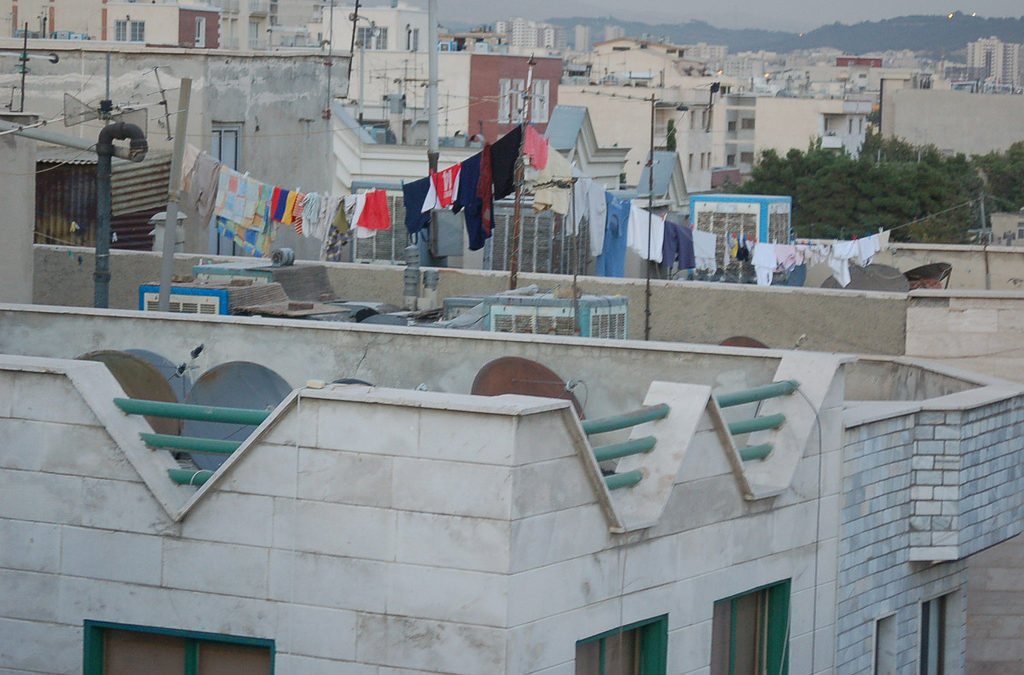
Reception of foreign TV and radio via privately-owned satellite dishes is banned in Iran, although there is widespread flouting of this rule. Dishes are often hidden on balconies and below rooftop parapets, as the image above from BBC Persian shows.

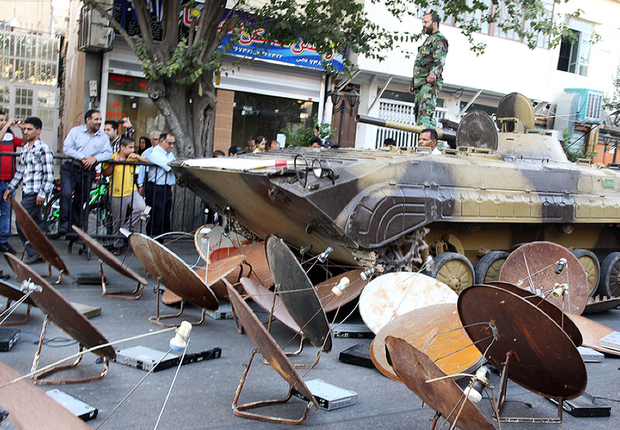
In July 2016, authorities seized and destroyed a reported 100,000 satellite dishes and receivers. According to media reports from Iran, General Mohammad Reza Naghdi, the head of Iran’s Basij militia, oversaw a destruction ceremony in Tehran after the equipment was confiscated and warned of the impact that satellite television was having in the country.

“The truth is that most satellite channels… deviate the society’s morality and culture,” AFP news agency reported him as saying. “What these televisions really achieve is increased divorce, addiction and insecurity in society.”

Naghdi claimed that a total of one million Iranians had already voluntarily handed over their satellite dishes to authorities. Iranian conservatives regularly denounce the channels as an attempt to corrupt Iranian culture and Islamic values and the police regularly raid neighbourhoods and confiscate dishes from rooftops. Under Iranian law those who distribute, use, or repair them can be fined up to $2,800.

Despite the ban on the BBC, the latest figures show the BBC World Service has an audience of 13m in Iran, making it BBC News’ seventh biggest market worldwide.

Iranian Interior Minister asks media for election help

Abdolreza Rahmani-FazliIranian Interior Minister Abdolreza Rahmani-Fazli has called on media outlets to help the government conduct a “healthy election”, Fars news agency reported on 7 March.

“I call on media outlets to help us hold healthy elections [the upcoming Majlis election], and inform us whenever they see any violations, leveraging, or God forbid, any fraud,” Interior Minister Rahmani-Fazli was quoted as saying.

Rahmani-Fazli was also quoted as saying: “After all the Interior Minister is a family, consisting of 31 governor-generals, 400 governors, and four thousand district governors, who might make some violation during the election process and we may not be informed of it. I ask them to inform us and be confident that I will deal with it immediately and I will not allow this issue to be dealt with by [some] committee. We should assure people that healthy elections will be held. All these things that we are doing are considered political.”

According to the report, Rahmani-Fazli also said that the government is a moderate government. “[President] Rouhani is not a reformist either. All of us [in the government] follow moderation,” Interior Minister Rahmani-Fazli was quoted as saying.

Later it was observed that Fars news agency deleted this report.

Source: Fars News Agency website, Tehran, in Persian at 0601 GMT 07 Mar 15