Threats to BBC News Persian journalists continuing

Threats to BBC News Persian journalists continuing

Threats to BBC News Persian journalists continuing

The BBC has issued this statement:

There has been a sharp and deeply troubling escalation in the persecution of BBC News Persian journalists in the UK and their families in Iran over recent months. This campaign of intimidation, orchestrated by the Iranian authorities, has intensified in both scale and severity.

BBC News Persian journalists – alongside other Iranian journalists based in the UK and around the world – face serious extraterritorial threats from the Iranian authorities. These threats have consistently extended to their families in Iran, who have been subjected to a sustained campaign of intimidation. However, the BBC is now witnessing a surge of arbitrary interrogations, travel bans, passport confiscations, threats of asset seizures directed at the family members of BBC News Persian journalists  – marking a significant and increasingly alarming escalation.

Tim Davie, BBC Director-General, says: “In addition to enduring personal security threats from Iranian state actors operating beyond Iran’s borders, BBC News Persian journalists are now witnessing a disturbing rise in the persecution of their family members inside Iran. These acts are clearly designed to exploit family ties as a means of coercion – pressuring our journalists to abandon their work or return to Iran under false pretences.

“We call on the Iranian authorities to immediately cease this campaign of intimidation and to stop targeting journalists with violence, threats, and psychological warfare. This persecution is a direct assault on press freedom and human rights. It must end now.”

The BBC is preparing to lodge a new complaint with the UN Human Rights Council Special Procedures mandate-holders, calling on Iran to cease its campaign of persecution of BBC journalists and their families.

BBC World Service files urgent appeal to UN over abuse of national security and counter-terrorism laws against BBC News Persian journalists

BBC World Service files urgent appeal to UN over abuse of national security and counter-terrorism laws against BBC News Persian journalists

BBC World Service files urgent appeal to UN over abuse of national security and counter-terrorism laws against BBC News Persian journalists

The BBC World Service has submitted an updated complaint to its urgent appeal filed with the UN and requested urgent action.

The action follows recent developments, including the publication of documents in late February 2024 by a hacking group, which appear to reveal that a number of current and former BBC News Persian journalists were convicted in absentia by a court in Tehran in February 2022 for “propaganda against the Islamic Republic”. This comes after sanctions were imposed on Iranian officials by the UK and US in January this year for threats towards Iranian journalists in London.

The updated complaint was sent to five Special Procedures mandate-holders with whom it was first filed in December 2020 and updated in February 2022: the Special Rapporteur on the Promotion and Protection of the Right to Freedom of Opinion and Expression; the Special Rapporteur on the Situation of Human Rights in the Islamic Republic of Iran; the Special Rapporteur on Extrajudicial, Summary or Arbitrary Executions; the Special Rapporteur on Violence Against Women, its Causes and Consequences; and the Working Group on Arbitrary Detention.

The new complaint was also addressed, for the first time, to the Special Rapporteur on the Promotion and Protection of Human Rights and Fundamental Freedoms while Countering Terrorism, citing “the relevance of historic and recent events” to this UN Special Rapporteur’s mandate, including the sanctioning of BBC News Persian by Iran, as well as the mass national security criminal investigation of BBC News Persian staff and the associated asset freeze.

In the appeal, submitted on behalf of the BBC by counsel for BBC News Persian, Caoilfhionn Gallagher KC and Jennifer Robinson, and presented by them as “extremely urgent”, the UN experts are requested to issue:

  • a new communication to Iran, raising both Iran’s inadequate response to their previous communication in 2022, and the recent developments; and
  • a public joint statement from UN experts condemning the ongoing targeting and harassment of BBC News Persian journalists.

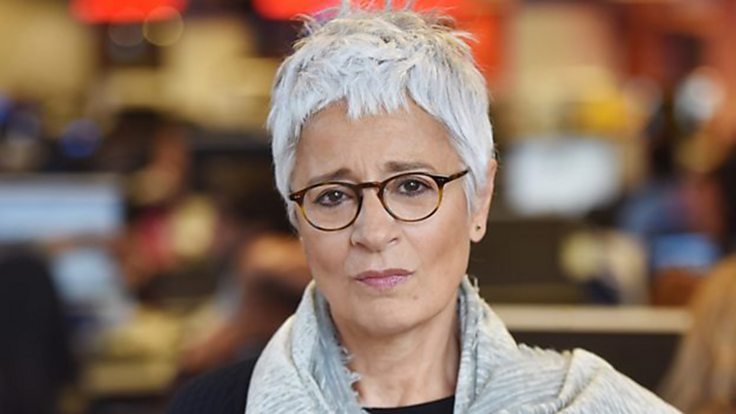
Liliane Landor, Director, BBC World Service (pictured), says:  “Recent developments have amplified the severe situation facing our BBC News Persian staff on a daily basis. They are being penalised for their journalism and professionalism.

“As we look to World Press Freedom Day next month, we are urging UN experts to robustly condemn the Iranian authorities’ harassment and to hold the regime to account.”

Michelle Stanistreet, NUJ general secretary, said: “Journalists must not be targeted for doing their job. Speaking truth to power and covering the news without fear or favour must be the cornerstones of journalism, but BBC News Persian and other Iranian journalists are today suffering for doing just that. We fully support this intervention from the BBC and encourage the UN to exercise its influence to bring safety and justice for Iranian journalists and their families who are targeted so heartlessly.”

Caoilfhionn Gallagher KC and Jennifer Robinson, said: “Iran’s abuse of national security and counter-terrorism laws against the BBC and the convictions in absentia for BBC News Persian journalists for ‘propaganda’ against the state for their independent reporting on Iran are designed to intimidate and silence the BBC’s journalism about Iran. It must stop. We call on the UN to denounce these unlawful actions in the strongest possible terms.”

These recent developments come in the context of comprehensive targeting and intimidation of BBC News Persian staff and the harassment of their families, which escalated dramatically from September 2022 in the aftermath of the mass protests and increased tension in Iran, which BBC News Persian has reported extensively on. This was the subject of the UN Independent International Fact-Finding Mission on the Islamic Republic of Iran whose final report issued earlier in 2024 documented the continuing threats and harassment of BBC News Persian staff.

The ongoing harassment is also documented in a 2024 survey of BBC News Persian staff where half of the respondents said they had received online threats or been harassed online for working for the BBC. The work of the BBC journalists continues to cause harassment of their families or friends, with over 60% of the respondents having been harassed, threatened or questioned in Iran. Nearly 70% said that they hadn’t been able to say goodbye to one or both their parents before they passed away in Iran.

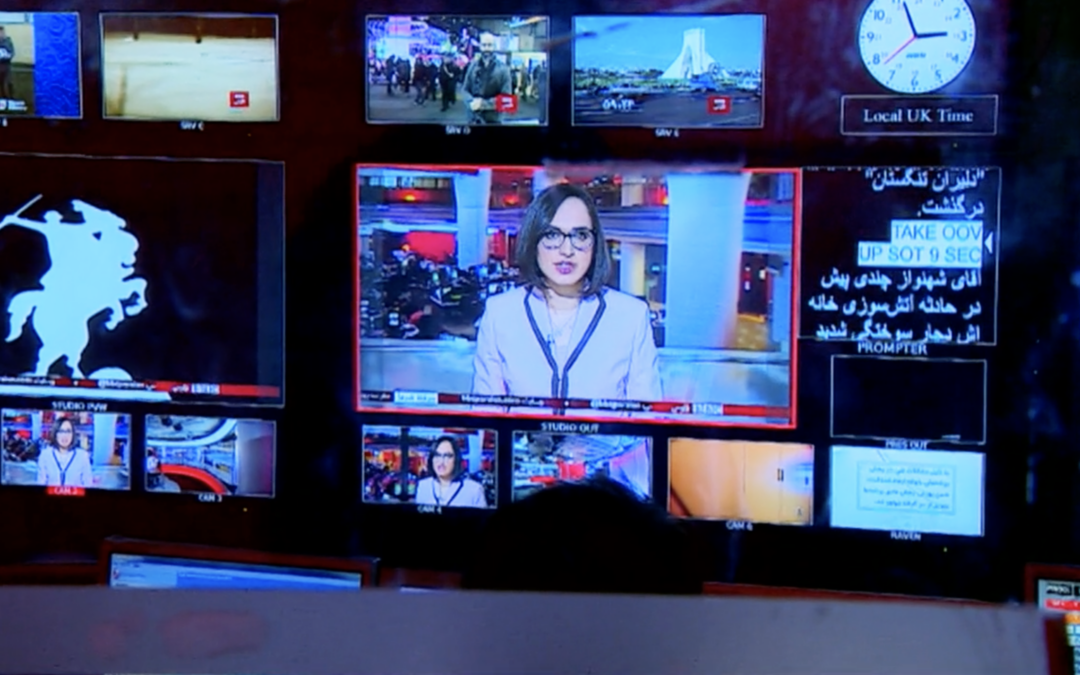
BBC News Persian is part of the BBC World Service.

[Source: BBC press release]

UN Fact-Finding Mission on Iran reports on the threats faced by BBC News Persian journalists and their family members

UN Fact-Finding Mission on Iran reports on the threats faced by BBC News Persian journalists and their family members

UN Fact-Finding Mission on Iran reports on the threats faced by BBC News Persian journalists and their family members

The report published today by the UN Human Rights Council’s Independent International Fact-Finding Mission on the Islamic Republic of Iran raises concern that the Iranian authorities “harassed, threatened and intimidated journalists and other media employees working outside the country”, including those working at BBC News Persian, and for including BBC News Persian on a list of sanctioned organisations.

The Fact-Finding Mission was set up by the UN Human Rights Council on 24 November 2022, to investigate “the deteriorating situation of human rights in Iran, especially with respect to women and children” and human-rights violations in Iran related to the protests that began on 16 September 2022. The BBC World Service filed a submission highlighting Iran’s harassment of BBC News Persian journalists and their families in Iran and has been engaging with the UN Fact-Finding Mission in relation to its mandate. 

Focusing on Iran’s treatment of journalists working for Persian-language media outside Iran, the report says: 

“The mission has further established that the State authorities harassed, threatened and intimidated journalists and other media employees working outside the country, including those working at the BBC Persian service, Iran International television, Voice of America, IranWire and Deutsche Welle. The Iranian authorities summoned, threatened and in some cases arrested, detained and charged the family members of those journalists and media workers in an apparent effort to exert pressure on them and prevent them from reporting on the country. On 19 October 2022, the Ministry of Foreign Affairs sanctioned the BBC Persian service and Iran International television, and imposed asset freezes on their staff. Journalists also received serious threats, including to their lives and personal safety, leading to the involvement of the police in some countries. Journalists, in particular women journalists, faced heightened online vilification, harassment and attacks.” 

Recently the BBC became aware, through the publication of leaked documents, that a number of current and former BBC News Persian journalists have reportedly been secretly convicted in absentia in Iran of the crime of “propaganda against the Islamic Republic”.  

This has obvious, significant implications for these individuals, and earlier today, BBC Director-General, Tim Davie, said: 

“These developments add a new, even more sinister dimension to the threats and harassment our BBC Persian journalists have been exposed to for decades as punishment for doing their job. Instead of taking heed of the repeated calls from the UN and other international organisations to stop the horrendous multi-faceted harassment of Persian-language journalists, the Iranian authorities have been devising even more means of persecution using the Iranian judiciary. The Iranian authorities must stop harassing our journalists and their families.”

Since 2017, the BBC World Service has filed a number of UN complaints over the treatment of BBC News Persian staff and their families, represented by Caoilfhionn Gallagher KC and Jennifer Robinson at Doughty Street Chambers, and supported by the National Union of Journalists (NUJ) and the International Federation of Journalists (IFJ).

Michelle Stanistreet, NUJ General Secretary, said: 

“Iran’s all-out war on Iranian journalists abroad is a cowardly attempt to hide the truth by silencing its conveyors. For more than a decade, NUJ members and their families have been subjected to increasingly more harassment and threats, be it by Iranian authorities abusing legal system of the country or even by hiring criminals to directly target journalists on UK soil. This must be stopped now.  Every country and international organisation that believes in democracy or the rule of law needs to call Iran out. Failure to confront the Islamic Republic of Iran would be a green light to other authoritarian regimes to follow suit.”

Counsel for the BBC News Persian service, Caoilfhionn Gallagher KC and Jennifer Robinson, said:

“Iran has long attempted to silence journalists within its borders, but as the UN Fact-Finding Mission on Iran makes clear, Iran is now resorting to ever more extreme measures to try to silence journalists reporting on Iran, wherever in the world they may be. These drastic and dangerous tactics come at a time when independent reporting about Iran is needed more than ever – and particularly after the protests following the death of Mahsa Amini. The UN Fact-Finding Mission has today acknowledged and highlighted the harassment that BBC News Persian journalists face simply for doing their jobs. Journalism is not a crime, and Iran must be held to account for treating it as one.”

In a recent survey conducted internally among the BBC News Persian staff, half of the respondents said they had received online threats or been harassed online for working for the BBC. The work of the BBC journalists continues to cause harassment of their families or friends, with over 60% of the respondents having been harassed, threatened or questioned in Iran.  Nearly 70% said that they hadn’t been able to say goodbye to one or both their parents before they passed away in Iran. 

New BBC documentary offers a candid look at BBC Persian journalists at work

New BBC documentary offers a candid look at BBC Persian journalists at work

New BBC documentary offers a candid look at BBC Persian journalists at work

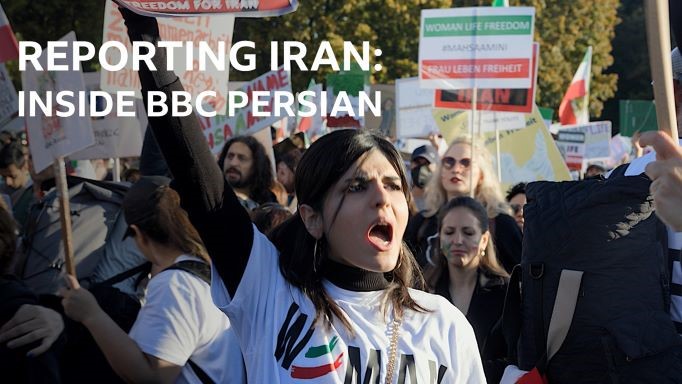
Reporting Iran: Inside BBC Persian – a new documentary offers a candid look at BBC Persian journalists at work

For the first time the BBC has lifted the lid and gone behind the scenes with the BBC News Persian team, showing the work that goes into reporting Iran while the BBC is banned from the country, and the struggle and turmoil faced by staff.

Produced, directed and filmed by the BBC’s Namak Khoshnaw, Reporting Iran: Inside BBC Persian is available via BBC iPlayer and the BBC News YouTube channel from Thursday 12 January.  It will be broadcast by BBC News and BBC World News TV channels from Saturday 14 January.

The documentary takes viewers into the heart of BBC Persian’s newsroom in London as the team covers the unrest in Iran. BBC Persian presenters, reporters and producers talk about the complexities and challenges of carrying out their journalism despite being banned in Iran, and the personal sacrifices they make to do it.

Opening on the day of special reporting marking four weeks following the death of Mahsa Amini – the 22-year-old whose death in police custody has triggered national protest – the documentary shows the work of a presenter who is told while on air that Mahsa’s father is on the line.  As she asks the grieving father about the official report just released, stating the cause of his daughter’s death, the line keeps breaking just as he tries to say what he thinks the truth is.

Showing the challenges of reporting despite all the attempts by the Iranian government to hide the truth, the documentary zeroes in on the work of the BBC Persian social-media team.  BBC journalists can’t be sent to Iran, and in order to report and counter the disinformation, the team checks information to verify events, people, locations and meta-data.

Similar forensic work goes into the reporting of the disappearance and death of the 16-year-old Nika Shakarami who was among the protesters. The verification process – from confirming the exact locations of the video clips, analysing the officially released video, to talking to eyewitnesses and Nika’s family, to checking the authenticity of the document stating the cause of death – takes the team a few days. One team member compares the work to puzzles they have to put together to build up an accurate picture of events.

In an emotive narrative of Reporting Iran: Inside BBC Persian, the reporting of the dramatic and tragic events unfolding in Iran is intertwined with the personal drama and sacrifice by the BBC journalists whose persecution and harassment by Iranian authorities has been the subject of multiple protests by the BBC and the UN.

The Iranian authorities are not the only source of harassment and abuse suffered by the BBC journalists. The film portrays their treatment by some participants of an opposition rally in Berlin, who taunt and slam BBC Persian for giving platform, in their view, to pro-government figures. It also talks about a presenter who is accused of sympathising with the Iranian security forces, and is subjected to trolling.

Reporting Iran: Inside BBC Persian is full of poignant details that bring to the fore the personal dimension of the journalists who are reporting the country they come from.  It closes “With thanks to the staff of BBC Persian, those who appeared in the film and those who chose not to. And with respect to all journalists harassed and intimidated for doing their jobs, in pursuit of the facts.”

BBC News Persian is part of BBC World Service.

[Source: BBC press office]

Deutsche Welle: Broadcasting Council protests against actions taken by Iranian authorities

Deutsche Welle: Broadcasting Council protests against actions taken by Iranian authorities

Deutsche Welle: Broadcasting Council protests against actions taken by Iranian authorities

At its meeting on 25 November, the DW Broadcasting Council discussed coverage of the war of aggression against Ukraine, improvement of DW programming accessibility and threats against journalists from DW’s Persian service.

In late October, the DW Persian service, along with other media and public figures in Europe, were placed on a list by the Iranian regime of supposed supporters of terrorism. In so doing, the regime is providing itself a flimsy legitimation of the action it is taking against critical voices outside of Iran.

The threats and attempts to intimidate employees of the DW Persian service have been going on for years. DW employees and their relatives have repeatedly been interrogated when entering or leaving the country for family visits. This is why employees actively working in the editorial service haven’t been back to Iran for some time. The threats are unmistakable. If the critical coverage were to continue, there could be no guarantees for the well-being of the relatives of DW employees located in Iran.

Since the protests began, Iran has been increasing the pressure on journalists living abroad. Agents working for the regime have contacted people in Iran who follow a DW employee on Instagram. The people were told both on the phone and during interrogations to unfollow the account if they want to avoid reprisals against themselves and against their relatives. Our employee was referred to as an enemy of the state during some of the interrogations. Enemies of the state receive the death penalty in Iran.

The Broadcasting Council condemned the actions taken by Iranian authorities. “We protest against this treatment of journalists,” says Prelate Karl Jüsten, chairman of the Broadcasting Council. “We very strongly condemn these blatant threats and attempts at intimidation as a reaction to our coverage of the peaceful protests. We would like to thank the DW Persian service. Despite these threats, the journalists are doing amazing work and showing the world what is happening in Iran.”