BBC News launches Africa Eye in French across 27 markets

BBC News launches Africa Eye in French across 27 markets

BBC News launches Africa Eye in French across 27 markets

For the first time BBC Africa Eye will become available in Algeria, Benin, Burkina Faso, Burundi, Central African Republic, Cameroon, Chad, Comoros, Congo, DR Congo, Côte d’Ivoire, Djibouti, Guinea, Equatorial Guinea, The Gambia, Gabon, Mali, Mauritania, Mauritius, Morocco, Niger, Rwanda, Senegal, Seychelles, Sierra Leone, Togo and Tunisia.

EDAN is a pan-African TV station which targets women and the youth across the continent. Founded in 2015, the station is available on Canal Plus Afrique, a satellite subscription-based service broadcasting to 27 countries across Africa. The channel features movies, music and documentary programmes targeted to African audiences across Sub Saharan Africa.

BBC Africa Eye is the award-winning investigative strand that has created a network of trained investigative journalists across the continent to deliver high-impact investigations. Launched four years ago the investigative series has become known for holding power to account.

Evelyn Accrombessi, CEO EDAN, says: “EDAN viewers will now be able to watch BBC Africa Eye, a high-quality BBC programme which will be a great addition to our schedule. We are delighted and very satisfied with the discussions with the BBC teams, their availability and their responsiveness in setting up this partnership. We hope that this is the first step of a long collaboration between the BBC and EDAN.”

Anne Marie Nwaobasi , Business Development Manager, Francophone Africa, BBC World Service says: “This partnership reaches new audiences across Francophone Africa giving them access to BBC’s primetime investigative series.

“BBC Africa Eye features original and high-impact BBC investigations from across Africa. Audiences in more locations across Africa can now watch this award-winning programme on EDAN.”

BBC Africa Eye will be aired on the following days:

  • Tuesday 2130 GMT
  • Wednesday 0730 GMT
  • Wednesday 1300 GMT
  • Wednesday 1630 GMT
  • Wednesday 2230 GMT
  • Saturday 1800 GMT
  • Sunday 1300 GMT
Podcasts coming of age?

Podcasts coming of age?

Podcasts coming of age?

The explosion in the number of podcasts over the past few years has given audiences an immense range of choice of stories and opinions from a huge number of perspectives.

The growth has been fuelled by the pandemic, as people across the world found themselves with a little more time on their hands or have wanted greater varieties of diversions.

Advertisers have started to notice, and marketeers are now moving more of their media spend to podcasts and to podcast platforms.

At the same time, platforms are acquiring podcast creation companies – in June it was announced that Sony has bought Somethin’ Else, the largest independent producer of radio and audio programmes in the UK (and a regular finalist in the AIBs). Sony has said that its acquisition of Somethin’ Else is designed to expand its international podcast division.

Throughout 2020 a number of mergers and acquisitions took place as big players like Amazon, Apple and Spotify sought to position their platform at the fulcrum of the growth of the podcasting revolution. Spotify’s share price rose 72 per cent during 2020 as the market took note of podcast deals with former First Lady Michelle Obama and Kim Kardashian.

Alongside the big corporates, small independent producers are actively creating large and often loyal audiences for niche, and not so niche, output. Presenters with an existing following on traditional broadcasting are now fronting podcasts and bringing their fanbase with them, aiding rapid growth in audience numbers.

Others are growing their own, fresh audiences who may be looking for new content that supplements, or replaces, their traditional media. The sheer variety that is on offer is one of the key attractions, alongside the ability to easily download a podcast for consumption at a time that suits the listener.

Attracting big hitters

The increasing pervasiveness of podcasts is equally appealing to those in the news, or who might want to improve their public image. A current example is Carlos Ghosn, the disgraced former boss of Nissan who escaped from Japan in an elaborate plot at the end of 2019. He’s currently doing the rounds of major broadcast interviews, appearing on Business Daily on the BBC and Conflict Zone on DW – an interview he walked out of after less than ten minutes.

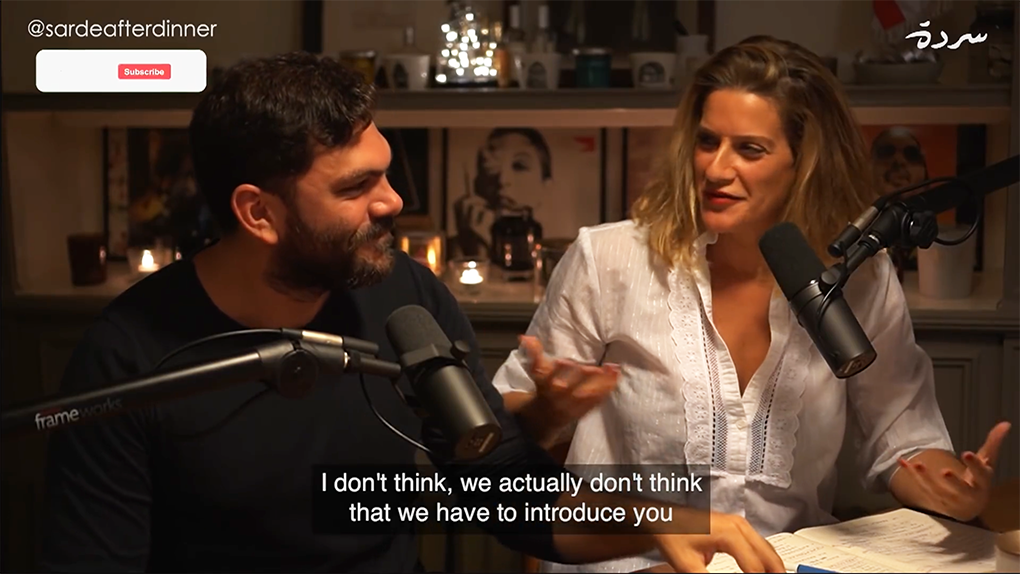
But he devoted over 90 minutes for an informal and far-reaching conversation with the hosts of Lebanon-based podcast Sarde After Dinner, Médéa Azouri and Mouin Jaber.

This podcast was established in early 2020 and is named after a colloquial Middle Eastern term of “letting go and kicking off a stream of consciousness and a rambling narrative”. The interviews take place in a cosy living room, with candles burning on a sideboard behind the hosts, presenting a sense of peace and tranquility.

The approach to the discussion is in marked contrast with the hard-hitting technique of interviewers such as Tim Sebastian, host of Conflict Zone (and the original host of the BBC’s Hard Talk), being more of a conversation among friends instead of interviewer and interviewee. It’s a formula that can often get more from the subject than an interrogation and in the case of the Ghosn conversation, this certainly appears to be the case. This follows the example of the late interviewer Sir David Frost of whom one British politician said had a “way of asking beguiling questions with potentially lethal consequences.”

It may be that audiences want less aggression, particularly after the past 18 months of pandemic. Sarde After Dinner might be one formula that works and that linear broadcasters should seek to replicate.

Facts, links and more

Sarde (noun), [Sa-r-de]: A colloquial term used in the Middle East to describe the act of letting go & kicking off a stream of consciousness and a rambling narrative.
The Sarde After Dinner Podcast is a free space based out of the heart of Beirut, Lebanon, where Médéa Azouri & Mouin Jaber discuss a wide range of topics (usually) held behind closed doors in an open and simple way with guests from all walks of life.
New episodes released weekly on Sunday at 1700 GMT

Interview with the hosts of Sarde After Dinner: https://www.lorientlejour.com/article/1229175/avec-medea-et-mouidepuis-plus-de-5-mois-medea-azouri-et-mouin-jaber-animent-sardeh-un-podcast-en-ligne-qui-fait-deja-de-nombreux-adeptes-sur-une-table.html

In the Sarde edition with Carlos Ghosn, the hosts discussed:

  • His legacy with the alliance between Nissan, Renault and Mitsubishi
  • Why he believes countries banded together to bring him down
  • His notorious arrest and the accusations that followed, including Versailles
  • A detailed breakdown of his escape, the box and his newfound freedom
  • Why he came, of all places, to Lebanon
  • His thoughts on the current economic situation of Lebanon

According to Orbelo

  1. There are currently 850,000 active podcasts and over 30 million podcast episodes.
  2. More than half of all US consumers above the age of 12 listen to podcasts.
  3. 65 percent of podcast listeners tune in using portable devices such as smartphones and tablets.
  4. Nearly three out of every four podcast listeners in the US say they tune in to learn new things.
  5. 32 percent of Americans listen to podcasts on a monthly basis.
  6. 90 percent of podcast listeners listen to podcasts from the comfort of their own home.
  7. More than half of listeners are at least somewhat more likely to consider buying from a brand after hearing its advertisement on a podcast.
  8. Podcast advertising revenues are expected to surpass $1 billion in 2021.
  9. 4 percent of podcast listeners spend more than seven hours a week listening to podcasts.
  10. The average weekly podcast listener subscribes to an average of six shows and listens to seven shows per week.


BBC brings ‘Once upon a time in Iraq’ to 11 countries

BBC brings ‘Once upon a time in Iraq’ to 11 countries

BBC brings ‘Once upon a time in Iraq’ to 11 countries

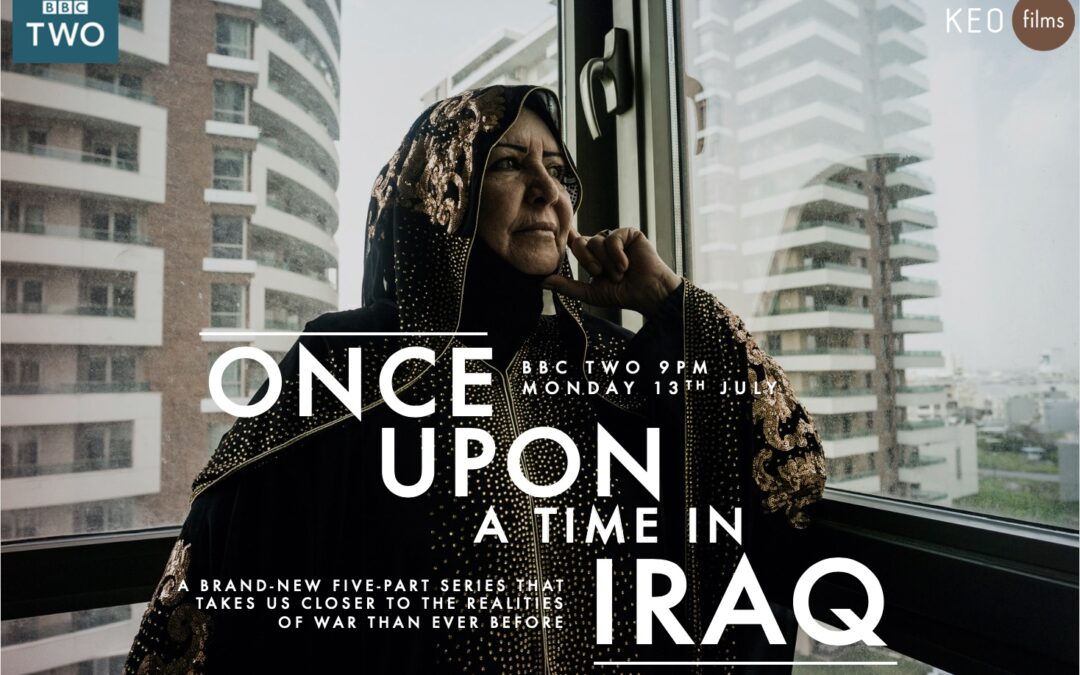
BBC News Russian audiences in 11 countries will be able to watch a Russian-language edition of the award-winning docuseries, Once Upon a Time in Iraq. From Monday 26 April, the five-part documentary will be published with Russian voiceover for audiences in Russia and ten other countries – Armenia, Azerbaijan, Belarus, Kazakhstan, Kyrgyzstan, Moldova, Tajikistan, Turkmenistan, Ukraine and Uzbekistan – via the BBC News Russian YouTube channel, its website bbc.com/russian and its channels on the social networks VKontakte and Odnoklassniki.


Premiered on the BBC platforms in the summer of 2020, Once Upon a Time in Iraq was produced for the BBC by Keo Films and directed by award-winning director James Bluemel. Illustrated with unique material from personal archives, the gripping documentary traces years of chaos and bloodshed following the 2003 invasion of Iraq by the US-led coalition. The story of the war that changed the world is told by the Iraqis and Americans who lived it.


James Bluemel is known for his Bafta-winning docuseries about the Syrian migrant crisis, Exodus: Our Journey to Europe. Talking about his work on Once Upon a Time in Iraq – which, in 2020, won two Rose d’Or awards – Bluemel says that he hadn’t expected much interest in the series. However, meeting and speaking to Iraqis or Americans, who were in Iraq over those years, he had the most fascinating insights and moving personal stories which hardly had been heard before.


He says: “I think people assume they know the story of the Iraq war and that there is nothing left to say. However, when the films were eventually shown on the BBC, the response was overwhelming. People engaged with the subject and characters, they began to think of the war in a more humanised, empathetic way. It remains a huge surprise that the films have had the reaction they have had. And now to know that they will be seen in Russia and 10 other countries is absolutely fantastic. I hope the series has a similar effect of bringing a more nuanced and empathetic response to what Iraqis have had to endure since 2003.” 


BBC News Russian Editor, Jenny Norton, adds: “Once Upon a Time in Iraq is a thought-provoking docuseries, offering a very frank and honest portrayal of the true impact of the US-led coalition’s intervention in Iraq. Unsparing on every level, this documentary by British film-makers is the kind of journalism that the BBC wants to bring to its Russian-speaking audiences.”


Each episode of Once Upon a Time in Iraq is dedicated to one or several people or events. In Episode One – The War – heavy-metal musician Waleed Nesyif who, like many Iraqi teenagers then, was infatuated by the West and saw life under Saddam as oppressive, tells about the Baghdad youths’ anticipation of the hostilities, and what the first weeks of the invasion brought about.


Episode Two – The Insurgency – about the following stage of the war when Iraq was gripped by waves of insurgency against the occupation, is told by US Lieutenant Colonel Nate Sassaman who found himself unprepared for the hostility they were faced with, and Allaa Adel who, as a 12-year-old in Baghdad, was hit in the face by shrapnel from a roadside bomb intended for the American military.


In Episode Three – Falluja – the story of the war’s most intense battle is told through the tragedy lived by embedded freelance photographer Ashley Gilbertson who, along with reporter Dexter Filkins, was working for New York Times, and by Falluja resident Nidhal Abed who, on the fateful day of 4 November 2004, had to take her two-year-old son Mustafa to the doctors.


In Episode Four – Saddam – the story of the fallen dictator is told by the CIA senior analyst John Nixon who interrogated him, a volunteer translator Samir Al Jassim who was involved in his capture, and the military policeman Brandon Barfield who accompanied him on his way to the gallows.


In Episode Five – The Legacy – the invasion’s outcomes are judged by Omar Mohamed, a Mosul university professor who authored an anonymous blog bearing witness to three years of the city’s life under ISIS. Waleed Nesyif, now a university-graduate Canadian citizen, and Um Qusay, a Sunni who risked her life by giving shelter to Shia soldiers fleeing an execution by ISIS, return to the film’s narrative.


Selected quotes from the documentary:


Dexter Filkins: “Ultimately war it’s a kind of laboratory of the human condition in extremis. You see the best of people and you see the worst. You see moments of incredible heroism and also hatred and irresponsibility.”


Nate Sassaman: “War as an institution is pure evil.”

“This is really the sole reason I’m sitting in this chair. Is that when we get to 2038 and there’s a whole other generation of lawmakers, instead of us rushing into things, like I feel like we rushed so badly. That we sit back, and we go through a whole bunch of other options before we set the before we set the force in action, because once the force is put into action, you can’t pull it back.”


Allaa Adel: “I hope that what happened to Iraq happens to America. I’ve never wished harm on anyone, but I wish it upon them.”


Omar Mohamed: “Can the Americans say they did something good in Iraq? I want them to look into my eyes and tell me this. They didn’t bring freedom. They brought chaos.”


Once Upon a Time in Iraq will be available for viewing on the BBC News Russian website and YouTube channel, as well as via VKontakte and Odnoklassniki. Each new episode will be published every day from Monday 26 April 2021.


BBC News Russian regularly brings to its audiences the best of the BBC’s documentaries.


BBC News Russian also connects with its audiences via FacebookInstagram, Telegram and Twitter.


BBC News Russian is part of BBC World Service.

[Source: BBC press release]

Global Task Force for Public Media speaks out on China BBC ban

Global Task Force for Public Media speaks out on China BBC ban

Global Task Force for Public Media speaks out on China BBC ban

The following is a statement by the Global Task Force for public media:

The Global Task Force for public media is deeply concerned by the decision of the government of the People’s Republic of China to ban BBC World News from broadcasting in the country. The ban was announced on February 11, 2021 by the National Radio and Television Administration, China’s media regulator.

RTHK, Hong Kong’s public broadcaster, also announced that it will no longer carry BBC World Service or BBC News Weekly in Cantonese, as of February 12, 2021.

Taken together, these actions severely restrict access to trusted sources of news and media freedom within the region. Access to independent journalism is a basic right and critical for citizens everywhere to be informed.

Signed, Global Task Force for public media

David Anderson, Managing Director, ABC (Australia)
Thomas Bellut, Director General, ZDF (Germany)
Delphine Ernotte Cunci, President & CEO, France Télévisions (France)
Jim Mather, Chair of the Board, RNZ (New Zealand)
Hanna Stjärne, Director General, SVT (Sweden)
Catherine Tait, President & CEO, CBC/Radio-Canada, GTF Chair (Canada)
Yang Sung-dong, President & CEO, KBS (South Korea)

About the Global Task Force
The Global Task Force exists to promote and defend the values of public media—access, accuracy, accountability, creativity, impartiality, independence and high standards of journalism—all of which underpin an informed and healthy democracy.

China bars BBC World News; RTHK ceases BBC World Service relay

China bars BBC World News; RTHK ceases BBC World Service relay

China bars BBC World News; RTHK ceases BBC World Service relay

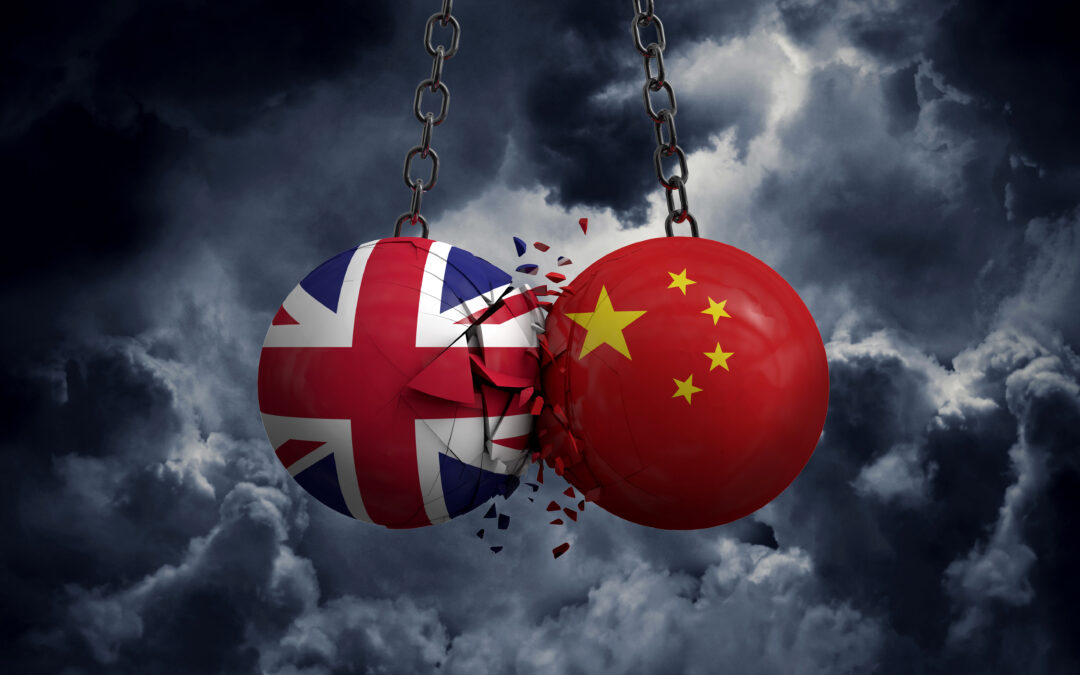
BBC World News, the international news and current affairs television channel, has been banned from broadcasting in the People’s Republic of China. China’s National Radio and Television Administration, the country’s media regulator that is under the direct control of the State Council, made the announcement on Thursday 11 February.

According to media reports, the regulator said that reports carried on BBC World News had “violated requirements that news should be truthful and fair”. The Administration said that the broadcasts had harmed the country’s interests and undermined national unity. It provided no evidence to support the claims.

The Chinese government has accused the BBC of reporting “fake news”, in particular around the country’s response to the coronavirus pandemic and treatment of the Uighur minority.

British Foreign Secretary, Dominic Raab, called the decision “an unacceptable curtailing of media freedom”.

“China has some of the most severe restrictions on media and internet freedoms across the globe, and this latest step will only damage China’s reputation in the eyes of the world,” he said.

In its daily press briefing, US State Department spokesman Ned Price answering a question on the ban, said: “We absolutely condemn the PRC’s decision to ban BBC World News. The PRC maintains one of the most controlled, most oppressive, least free information spaces in the world. It’s troubling that as the PRC restricts outlets and platforms from operating freely in China, Beijing’s leaders use free and open media environments overseas to promote misinformation. We call on the PRC and other nations with authoritarian controls over their population to allow their full access to the internet and media.

“Media freedom, as we’ve said, is an important right, and it’s key to ensuring an informed citizenry, an informed citizenry that can share their ideas freely amongst themselves and with their leaders.”

The BBC said that it is “disappointed” by the ban. “The BBC is the world’s most trusted international news broadcaster and reports on stories from around the world fairly, impartially and without fear or favour,” it said.

AIB condemns the ban

The Association for International Broadcasting has condemned the move by the Chinese authorities. “The ban on BBC World News in China is an egregious act that has no place in the international rules-based system,” said AIB chief executive, Simon Spanswick. “China has for decades sought to restrict access by Chinese citizens to information from outside the country. It has consistently jammed Mandarin-language programming from overseas, and frequently interfered with English-language broadcasts. It has never permitted international news channels to be broadcast freely across the country. The Association for International Broadcasting calls on the Chinese government to allow BBC World News to broadcast in the country with immediate effect.”

The AIB is lodging a protest with the Chinese Ambassador in the United Kingdom and will raise the matter within the Advisory Network of the intergovernmental Media Freedom Coalition.

Chinese citizens prevented from accessing international news

It is notable that BBC World News, like all other international news services, has never been available to all Chinese citizens. Instead, distribution has been limited to international hotels and to compounds housing expatriates. Programming from the BBC’s Mandarin-language service has been prevented from reaching audiences in the country by the “Great Firewall of China” that restricts access to many websites from outside China, and to a range of social media platforms.

Programmes from western broadcasters directed towards China have repeatedly suffered from jamming by the Chinese government. The BBC’s Mandarin-language service no longer broadcasts towards China on shortwave.

Shortly after the ban was announced, RTHK – Hong Kong’s public broadcaster – announced that it was ceasing relays of BBC radio services. This caused concern in the former British colony, with the head of the University of Hong Kong’s journalism and media studies centre, Keith Richburg, saying it’s “surprising” that RTHK has pulled the plug on its live relay of BBC World Service. His remarks were quoted on RTHK here.

BBC Global News is a Member of the Association for International Broadcasting