BBC temporarily suspends work of journalists in Russia

BBC temporarily suspends work of journalists in Russia

BBC temporarily suspends work of journalists in Russia

In an unprecedented move, the BBC has announced that it is temporarily suspending the work of its journalists in Russia. 

It follows the approval of a law in the lower chamber of the Russian parliament that allows the imposition of jail sentences up to 15 years for those convicted of spreading “fake” information.

Reacting to new legislation passed by the Russian authorities, BBC Director-General Tim Davie says:

“This legislation appears to criminalise the process of independent journalism. It leaves us no other option than to temporarily suspend the work of all BBC News journalists and their support staff within the Russian Federation while we assess the full implications of this unwelcome development.

“Our BBC News service in Russian will continue to operate from outside Russia.

“The safety of our staff is paramount and we are not prepared to expose them to the risk of criminal prosecution simply for doing their jobs. I’d like to pay tribute to all of them, for their bravery, determination and professionalism.

“We remain committed to making accurate, independent information available to audiences around the world, including the millions of Russians who use our news services. Our journalists in Ukraine and around the world will continue to report on the invasion of Ukraine.”

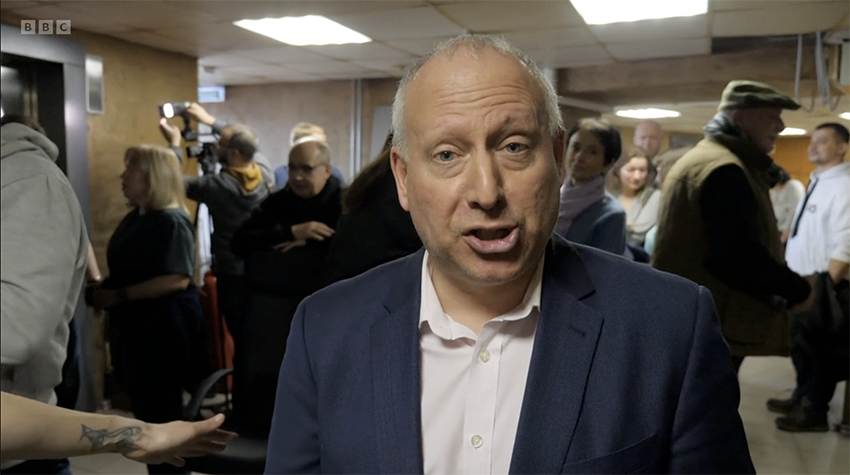
Picture: BBC Moscow correspondent Steve Rosenberg reporting on the closure of Ekho Moskvy radio

Surge in Russian audiences for BBC News

Surge in Russian audiences for BBC News

Surge in Russian audiences for BBC News

The audience for the BBC’s Russian language news website more than tripled its year-to-date weekly average, with a record reach of 10.7m people in the last week (compared to 3.1m).

In English, bbc.com visitors in Russia were up 252% to 423,000 last week.

Digital live pages, giving people updates, explanation, and reports from expert journalists on the ground, are proving hugely popular. The live page in Russian covering the invasion was the most visited site across the whole of the BBC World Service’s non-English language services, with 5.3m views.

Audiences for the Ukrainian language site more than doubled year-to-date, with a reach of 3.9m in the past week (compared to 1.7m) and the audience for bbc.com increased 154% in Ukraine.

These numbers represent direct traffic to BBC websites, and are likely to rise significantly when social media audience figures are factored in.

In total, 77.4m unique visitors consumed BBC online coverage of Ukraine in English in the first five days of the invasion, with almost 200 million views of the live page on Ukraine.

Tim Davie, BBC Director-General, says: “It’s often said truth is the first casualty of war. In a conflict where disinformation and propaganda is rife, there is a clear need for factual and independent news people can trust – and in a significant development, millions more Russians are turning to the BBC.

“We will continue giving the Russian people access to the truth, however we can.”

As part of its resilience operation to ensure news is available in Ukraine and Russia, the BBC has also stepped up services on other platforms. It has launched two new shortwave frequencies in the region for four hours of World Service English news a day. These frequencies can be received clearly in Kyiv and parts of Russia.

Tim Davie paid tribute to journalists working in Ukraine and Russia, saying: “Brave and committed journalists – from a range of news organisations – are doing vital work reporting events in Ukraine. Not only those who have travelled there to report, but journalists for whom Ukraine is home, including our talented colleagues in the BBC’s Ukrainian service. Events are moving quickly. We want to ensure the BBC’s output continues to reach people in Ukraine, Russia and beyond. Trusted news has never been more vital.”

Additional shortwave frequencies are: 15735 kHz 16:00 – 18:00 GMT and 5875 kHz 22:00 – 00:00 GMT

BBC services in Russia include news updates on Telegram, a wealth of video and text-based content on Instagram and Facebook, hugely popular video explainers and round ups on YouTube, and regular editions of popular news podcast What Just Happened.

In Ukraine, the BBC provides digital content via the BBC News Ukraine website bbc.ua, its YouTube channelFacebook, Twitter @BBC_uaInstagramTelegram and Viber, the BBC News Ukraine Monday to Friday TV news programme rebroadcast by Espreso TV in Ukraine (at 1700-1730 and 2100-2130 local time), and the BBC’s other news services including BBC World News TV, the website bbc.com/news and other language services.

BBC files urgent complaint to UN against Iranian harassment against BBC News Persian staff

BBC files urgent complaint to UN against Iranian harassment against BBC News Persian staff

BBC files urgent complaint to UN against Iranian harassment against BBC News Persian staff

Escalating security concerns see BBC file urgent complaint to UN against Iran’s ongoing harassment of BBC News Persian journalists and their families

The BBC has today filed an urgent complaint against Iran with the United Nations over ongoing harassment and sanctions against BBC News Persian journalists and their families in Iran. The urgent complaint is made amid escalating security concerns after a year in which Iran has conducted unlawful, extra-territorial operations against journalists and dissidents.

The urgent complaint comes as Liliane Landor, Senior Controller of BBC International News and Director of World Service, and Rozita Lotfi, Head of BBC News Persian, today address the Third Global Conference for Media Freedom being held in Tallinn, hosted by the Estonian Ministry of Foreign Affairs.

For more than a decade Iran has targeted BBC News Persian journalists and their families. Journalists have not been able to return to Iran for fear of arrest, while family members have been subjected to travel bans, interrogated and arbitrarily detained.

Based on interviews with staff members about incidents in the last year, including since the new Iranian President Ebrahim Raisi took office, the new UN complaint filed today reveals a concerning increase in harassment and security risk. The BBC has reported to the UN:

  • Increased security concerns for BBC News Persian journalists in the light of extra-territorial threats, including in the UK and in third countries;
  • Increased harassment of family members in Iran;
  • Increased financial pressure from the ongoing asset freeze, which operates as a blunt financial sanction against BBC News Persian journalists and their extended families;
  • Increased intelligence and counter-intelligence activity aimed at undermining the professional reputation of BBC News Persian and its journalists;
  • Increased and continued online attacks and online violence, particularly directed at women journalists;
  • The BBC has requested urgent action from UN experts, that the matter be communicated to Iran and that the protection of BBC News Persian journalists be raised at the UN Human Rights Council.

Liliane Landor, Senior Controller of BBC News International Services and Director of World Service said: “We appeal to the UN and the international community to continue to condemn Iran for their unacceptable treatment of our BBC News Persian colleagues. There have been escalating actions and threats, including an asset freeze which penalises the journalists and their families, online harassment, gendered attacks on women journalists and death threats. It must stop. The BBC will continue to speak up for its journalists who should be free to carry out their jobs without fear of threats or intimidation towards them or their families in Iran.”

Caoilfhionn Gallagher QC and Jennifer Robinson (Doughty Street Chambers), Counsel for BBC World Service, said: “We know from Iran’s past actions that it is willing to take cross-border and deadly action to silence its critics, and that it perceives independent journalism about Iran as a risk to their power. Our clients from BBC News Persian receive threats of death and violence simply for doing their jobs – simply for being journalists. We call on the United Nations experts and the Human Rights Council to take swift, robust action to hold Iran to account and ensure that BBC News Persian journalists can report without fear.”

The NUJ’s national broadcasting organiser, Paul Siegert, said: “It is a sad state of affairs that in 2022 these kind of attacks and abuse against individuals are still an ongoing problem. Journalists and their families are being threatened just because of the job they do. It has to stop. Our members will not be silenced and will not stop doing their jobs. We once again call on the Iranian government to put a halt to this unacceptable behaviour.”

Deborah Turness appointed CEO, BBC News and Current Affairs

Deborah Turness appointed CEO, BBC News and Current Affairs

Deborah Turness appointed CEO, BBC News and Current Affairs

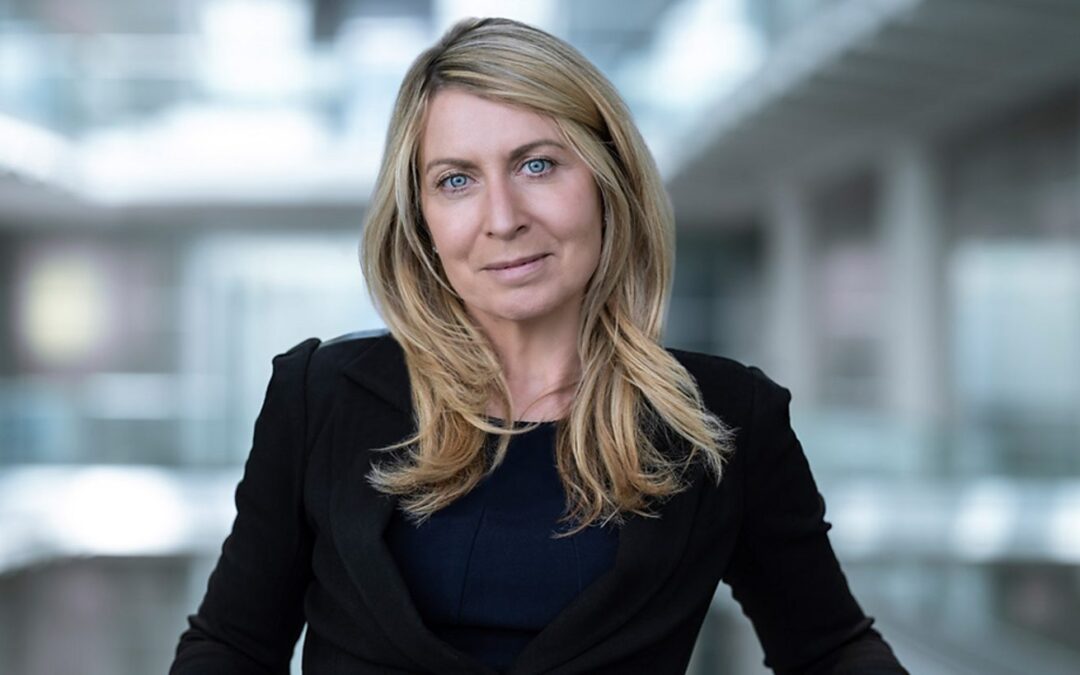
The BBC has announced that Deborah Turness has been appointed as CEO, BBC News and Current Affairs. Deborah will join the BBC from the UK’s ITN, where she is CEO.

Tim Davie, BBC Director-General, says: “I’m delighted Deborah Turness is joining the BBC as our CEO for BBC News and Current Affairs. Deborah brings a wealth of experience, insight, first-class editorial judgement, and a strong track record of delivery. She is a passionate advocate for the power of impartial journalism and a great believer in the BBC and the role we play, in the UK and globally. She will do a brilliant job of leading our news and current affairs as we deliver on the BBC’s public service mission in the digital age.”

Deborah Turness says: “In the UK and around the world there has never been a greater need for the BBC’s powerful brand of impartial, trusted journalism. It is a great privilege to be asked to lead and grow BBC News at a time of accelerated digital growth and innovation, when its content is reaching more global consumers on more platforms than ever before.”

As CEO of BBC News, Deborah will have responsibility for a team of around 6,000 people, broadcasting to almost half a billion people across the world in more than 40 languages. The BBC is consistently rated the world’s most trusted international news provider, and record numbers of people have turned to BBC News during the coronavirus pandemic. The latest figures show that eight out of ten UK adults use BBC News every week. 

Her title of CEO reflects the BBC’s ambition to continue to build the BBC’s global news brand and continue to grow its news services, which are now reaching a record 456 million people worldwide. Deborah will also be nominated to join the BBC Board.

Her appointment follows a competitive recruitment process. She replaces Fran Unsworth, who is retiring and leaves the BBC at the end of January.

To mark Human Rights Day, the BBC calls on Iran to end harassment of BBC News Persian staff

To mark Human Rights Day, the BBC calls on Iran to end harassment of BBC News Persian staff

To mark Human Rights Day, the BBC calls on Iran to end harassment of BBC News Persian staff

The BBC has today (10 December) marked International Human Rights Day by calling upon Iran to end the escalating cross-border harassment and threats towards BBC News Persian journalists and staff.  The call to end the harassment of BBC News Persian journalists comes as the Nobel Peace Prize is awarded to journalists at risk, Maria Ressa and Dmitry Muratov, “for their efforts to safeguard freedom of expression, which is a precondition for democracy and lasting peace.”

For over a decade, Iran has conducted a campaign of harassment and intimidation towards BBC News Persian journalists and their families in Iran. This has included death threats towards BBC journalists and their families in London, an asset freeze, as well as online harassment and gendered attacks on women journalists. Their family members in Iran have been arbitrarily detained, held in degrading conditions, interrogated and ordered to tell their relatives to stop working for the BBC, and faced other forms of discrimination because their relatives work for the BBC.

In the past year, threats against BBC News Persian staff and Persian-speaking journalists outside Iran have escalated. Death threats and threats of extra-territorial harm have been made towards BBC News Persian staff in London, leading to police involvement and protection. Journalists working for other organisations, and others perceived to be critics of the Iranian authorities have been abducted from other countries and returned to Iran, to be imprisoned and (in at least one case) to face the death penalty.

Liliane Landor, Senior Controller of BBC News International Services and Director of BBC World Service, said:

“It was after the escalation of persecution in 2017, when the Iranian judiciary imposed a freeze on all assets of BBC News Persian staff in Iran, that the BBC initiated its first ever UN complaint in relation to the protection of BBC journalists, and has continued to engage with UN Special Mechanisms since. This asset freeze has served to deprive BBC News Persian staff and their families of property, including their ability to sell or rent assets. The asset freeze serves as a financial sanction and penalty on BBC News Persian staff for doing their journalistic work, and it also sanctions their families.”

Concern has been raised about Iran’s treatment of BBC News Persian by the UN Secretary-General and successive UN Special Rapporteurs. For example, in March 2020, a group of UN experts made a joint statement condemning Iran’s harassment of BBC, raising concern of indications that:

“… the Iranian authorities are prepared to use force extra-territorially, in violation of international law. Harassment, surveillance, death threats against journalists, within and outside domestic boundaries violate international human right law, including the right to physical integrity, the right to life and the right to freedom of expression.”

Caoilfhionn Gallagher QC and Jennifer Robinson (Doughty Street Chambers), Counsel for BBC World Service, said:

“Today marks a historic moment, with the Nobel Peace Prize being awarded to journalists for their work. Our clients from BBC News Persian receive threats of death and violence simply for doing their jobs, and we know from Iran’s past actions that it is willing to take cross-border and deadly action to silence journalists. Many more BBC News Persian journalists are enduring other forms of systematic harassment, including their families being targeted, their assets frozen, and abuse online. We call on the international community to take immediate, robust action to ensure Iran is held accountable, and BBC News Persian journalists can report without fear.”

Michelle Stanistreet, NUJ general secretary, said:

“The continuing campaign of harassment against journalists at BBC News Persian and their families by the Iranian authorities is despicable and must stop. It is not only completely unacceptable for them to face such vicious personal intimidation, it is also a direct attack on press freedom. Journalism is not a crime, and journalists must be free to do their jobs. This year the Nobel Prize committee singled out Maria Ressa and Dmitry Muratov for their courage, adding that they were representatives of all journalists, such as those working for BBC News Persian, who stand up for freedom and democracy.” 

BBC News Persian reaches a weekly global audience of nearly 22 million people, including around 13 million in Iran. It is part of BBC World Service which delivers news content in English and 41 other language services, on radio, TV and digital. The BBC attracts a weekly global audience of 489 million people to its services available internationally, including BBC World Service, BBC World News television channel, bbc.com/news, BBC Studios and the international charity, BBC Media Action.