BBC statement on detention and deportation of Mark Lowen

BBC statement on detention and deportation of Mark Lowen

BBC statement on detention and deportation of Mark Lowen

This morning (27 March) the Turkish authorities deported BBC News correspondent Mark Lowen from Istanbul, having taken him from his hotel the previous day and detained him for 17 hours. Mark Lowen was in Turkey to report on the recent protests. He has been told he was deported for ‘being a threat to public order’.

BBC News CEO Deborah Turness said: “This is an extremely troubling incident and we will be making representations to the Turkish authorities. Mark is a very experienced correspondent with a deep knowledge of Turkey and no journalist should face this kind of treatment simply for doing their job. We will continue to report impartially and fairly on events in Turkey.”

On arrival to London this morning (27 March), Mark Lowen said: “To be detained and deported from the country where I previously lived for five years and for which I have such affection has been extremely distressing. Press freedom and impartial reporting are fundamental to any democracy.”

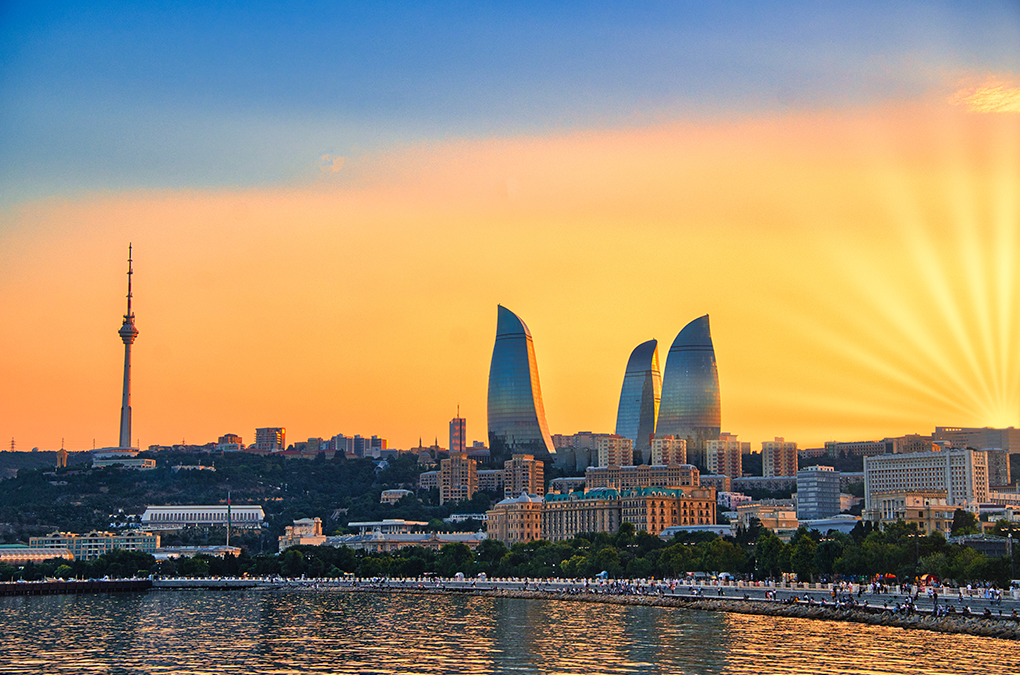
BBC Baku operation closed

BBC Baku operation closed

BBC Baku operation closed

The BBC issued this statement on 20 February:

Following verbal instructions from the Ministry of Foreign Affairs of Azerbaijan, the BBC has made the reluctant decision to close its office in the country and to suspend the activities of our excellent journalists in Baku.

We deeply regret this restrictive move against press freedom, which will hinder our ability to report to and from Azerbaijan for our audiences inside and outside the country. Each week around 1million people get trusted impartial news from BBC News Azerbaijani.

We are in contact with the Azerbaijani government to clarify their instruction and to try to resolve the situation.

We will continue our news services in Azerbaijani.

It is unclear what has prompted this move by the Azerbaijan government. The BBC launched its Azeri radio service in 1994, moving to digital platforms where it continues to attract upward of a million users each week – one tenth of the country’s population. BBC Monitoring, which watches and listens to television and radio services globally, operated an office in Baku monitoring Central Asia media outlets. 

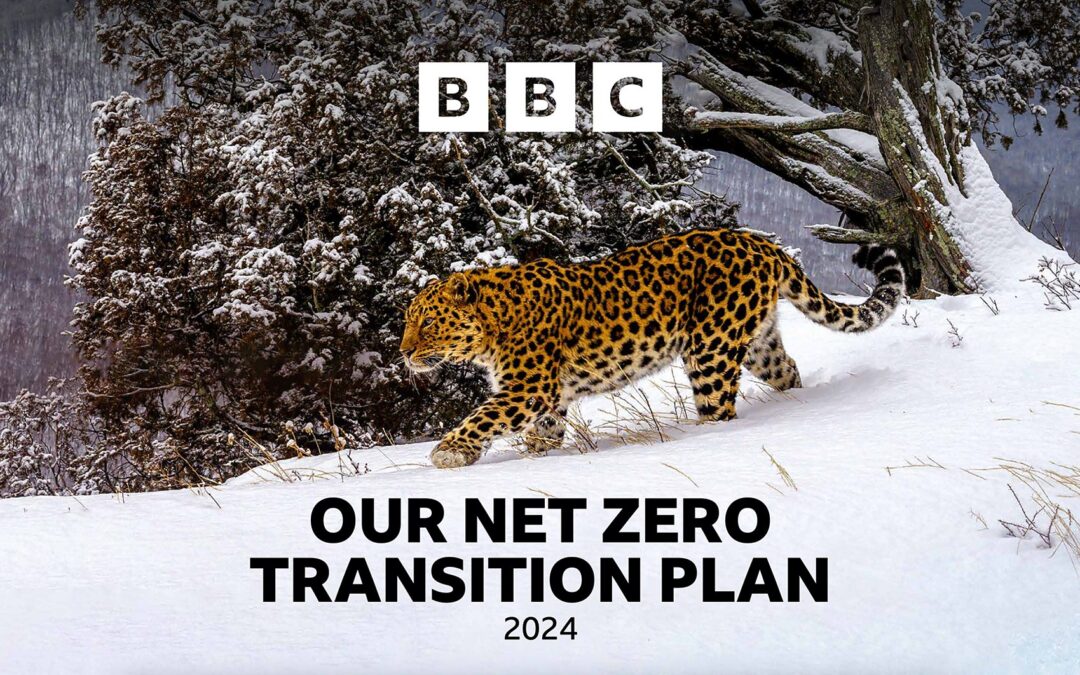
BBC publishes Net Zero Transition Plan

BBC publishes Net Zero Transition Plan

BBC publishes Net Zero Transition Plan

The BBC has published its first Climate Transition Plan, detailing how it intends to be Net Zero by 2050. This forms part of the Corporation’s commitment to building a sustainable BBC and wider media industry.

The BBC has been making significant progress towards its science-based targets, aligning a commitment to world-renowned natural history programming with ambitious and tangible actions off-screen.

From reducing emissions on acclaimed drama Blue Lights by replacing diesel fuel with HVO in generators and production trucks, to replacing refrigeration chillers and gas-fired boilers with heat pumps in its offices, the BBC is committed to driving decarbonisation across the BBC Group.

Its first Transition Plan, developed in line with the Transition Plan Taskforce (TPT) Disclosure Framework, sets out the BBC’s Ambition, Action and Accountability in reaching Net Zero, including:

  • Reducing, optimising and innovating its energy to low-carbon solutions;
  • Developing the skills and competencies across the business to drive action within operations, editorial and content production teams, and;
  • Playing an important role in contributing to the industry and economy-wide transition.

The BBC recognises that climate change and bio-diversity loss are real, serious and urgent, and this plan details the strategy it is putting in place to reduce its environmental impact.

Earlier this year, the globally-respected Science-Based Targets initiative (SBTi) approved the BBC’s Long-Term Targets to reduce all emissions by at least 90% by 2050, building on its existing Near-Term Targets to halve emissions by 2030.

This Transition Plan explains how the BBC will reach this target, and how Net Zero is one of the three pillars of the BBC’s Sustainability strategy, along with Nature Positive and People Positive.

These pillars underpin and shape the BBC’s climate ambitions for the future, aligned with the its mission to inform, educate and entertain all audiences, and the broadcaster’s Value for All strategy.

The BBC expects to update its Transition Plan and will continue to review its approach to ensure that it always meets the highest standards in sustainability practice, reporting and disclosures.

Danielle Mulder, Director of Sustainability, says: “This Transition Plan will support the BBC’s journey to Net Zero and is a hugely important milestone as we commit to a low-carbon future.

“Given the importance of climate change and biodiversity loss, we know our commitment to Net Zero matters to our staff, our suppliers and our audiences. We invite everyone we work with to get involved as we reduce our environmental impact.”

The BBC, as a member of the Association for International Broadcasting, takes part in the AIB Sustainability working group that brings together AIB member organisations across the world to share intelligence and experience on sustainability issues across their whole businesses.

BBC protests “foreign agent” designation of two of its journalists

BBC protests “foreign agent” designation of two of its journalists

BBC protests “foreign agent” designation of two of its journalists

The BBC has said that it strongly rejects the decision by the Russian authorities to designate Ilya Abishev and Elizaveta Fokht as “foreign agents”. BBC News Russian journalists have been singled out, following earlier designations of Ilya Barabanov, Anastasia Lotareva, Andrey Kozenko, and Olga Ivshina.

BBC News Global Director and BBC Deputy CEO, Jonathan Munro, says: “It has now become a routine exercise for the Russian authorities to add BBC News Russian journalists to their list of ‘foreign agents’. The BBC wholly condemns this ongoing attempt to intimidate and silence our journalists. Aimed at having a disruptive and damaging effect, these arbitrary designations can’t stop our journalists doing their jobs. Journalism is not a crime, and our reporters will continue serving our Russian-speaking audiences just as they have done for almost 80 years: independently, fairly, and fearlessly. We are proud of all our journalists. We will challenge these actions by the Russian authorities in the courts. These journalists have our total support.”

Part of BBC World Service, BBC News Russian is a key provider of impartial and independent news to the Russian-speaking world, reaching its audiences across a range of digital platforms.

BBC World Service to provide people of Syria with enhanced services

BBC World Service to provide people of Syria with enhanced services

BBC World Service to provide people of Syria with enhanced services

Following the rapid developments in Syria, the BBC World Service will offer enhanced services to audiences across the country.

Broadcast on medium wave and FM, an enhanced audio service will provide the people of Syria and surrounding countries with a trusted source of independent news when audiences need it the most, particularly as local media and digital services are disrupted.

Broadcasting news and information in Arabic, the service will air BBC News Arabic bulletins throughout the day including the BBC News Arabic’s World at One and BBC News Arabic’s Newsnight. It will also feature packages from the Gaza Lifeline service and contributions from correspondents such as Feras Kilani as well as the BBC’s wealth of reporters based across the region.

There will also be an English offer on the network, curated from World Service English, for those Syrians who speak the language.

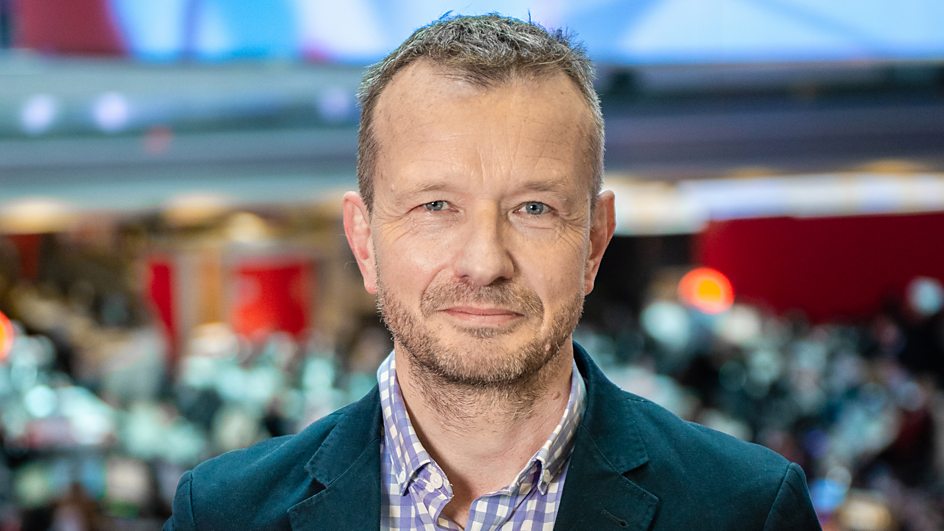
Jonathan Munro, Global Director, BBC News (pictured), says: “As we have all been watching, listening to and reading about the dramatic changes that have swept through Syria, the Syrian population have been left without essential access to reliable and independent news about the events taking place. The BBC World Service’s enhanced services will bring them the latest breaking news and analysis from Syria, the Middle East and the rest of the world.”

The Syrian radio network will go out  on medium wave, 720kHz and 639kHz, and on 93.0 FM.

The BBC World Service has a history of responding to emergency situations globally. Most recently, in Nov 2024, we launched an emergency radio service for Gaza – which remains on air – and in May 2023 during the conflict in Sudan, BBC News Arabic began an emergency radio service. In February 2022, the BBC News Ukraine service extended TV bulletins following the invasion of the country.

BBC News has responded to the events in Syria with special programming across the week. World Service English amended their schedules on Saturday 7 and Sunday 8 December in response to the fast-developing story, there have been additional episodes of the BBC Global News podcast and correspondents including Barbara Plett-Usher, Lyse Doucet and BBC News Arabic’s Feras Kilani, have brought audiences breaking news across BBC outlets.

[Source: BBC press release]