International Public Service Media’s essential role in global fight against the COVID-19 pandemic

International Public Service Media’s essential role in global fight against the COVID-19 pandemic

International Public Service Media’s essential role in global fight against the COVID-19 pandemic

Since the beginning of the global health crisis linked to the Covid-19 pandemic, the seven members of the DG7 group of international public service media (comprising France Médias Monde, Deutsche Welle, BBC World Service, USAGM, NHK World, CBC/Radio-Canada and ABC Australia) have recorded strong audience increases, illustrating the confidence of global audiences in the reliable and independent information they deliver on television, radio and digital media, in a large number of languages, on all continents.

The organisations have adapted to the consequences of the crisis and their teams – journalists, technicians, correspondents, part time workers and employees – have mobilised to pursue their mission tirelessly, informing people about the new coronavirus and helping to combat its spread by delivering prevention messages, in conjunction with the health authorities.

The international public service media in the seven countries have opened their platforms to the best scientific experts and specialists, to major political and economic leaders, on all aspects of the worst pandemic the world has seen in decades.

The fight against the proliferation, particularly on social networks, of fake news about the disease and its treatments has mobilised all the DG7’s editorial offices, which are used to cooperating in this field at a time when, more than ever, reliable information is protecting lives.

The international media are on the front lines, in all languages, even in the remotest corners of the globe to deliver reliable information, but also to entertain by bringing culture to life and artists to express themselves, or to educate by ensuring, through dedicated programmes, a mission of educational continuity for children and their parents.

The humanist values of solidarity that underpin our action have led the DG7 media to join in the worldwide drive to pay tribute to healthcare personnel, researchers and all frontline workers, and to pay special tribute to women, whose role has often been crucial at all levels of society. They have also sought to raise awareness of the increase in domestic and family violence in times of lockdown and how to prevent it.

The DG7 content is global and universal, but it is also local, thanks to their multilingualism, which makes it possible to reach the citizens of the world in their mother tongues, and to the hundreds of reports produced on the ground every day by their networks of correspondents in all countries.

DG7 leaders say that this period should encourage us to draw lessons about the way the world works and changes, about social relations, about the importance of public services and access to information. Their media contribute to the international reflection and debate needed to build the post-pandemic future and make the most of it.

This common mission at the service of the general interest, democratic values and freedom of expression, which brings us together, is particularly illustrated in the light of the health crisis. DG7 say they will do their utmost to build on on this public confidence in our media, which is more precious and greater than ever.

With more than one billion weekly users, DG7 media play a major role in the world in the service of free information.

All DG7 broadcasters are members of the Association for International Broadcasting.

DG7 members :

  • Marie-Christine Saragosse, Chairwoman and CEO, France Médias Monde
  • Peter Limbourg, Director General, Deutsche Welle
  • Jamie Angus, Director, BBC World Service Group
  • Grant Turner, Chief Executive Officer and Director, USAGM
  • Takai Takaaki, Managing Director, NHK World-Japan
  • Catherine Tait, President and Chief Executive Officer, CBC/Radio-Canada
  • David Anderson, Managing Director, ABC Australia
BBC publishes Annual Plan and registers record-breaking performance

BBC publishes Annual Plan and registers record-breaking performance

BBC publishes Annual Plan and registers record-breaking performance

The BBC’s Annual Plan published today reveals people across the UK have turned to the broadcaster in record numbers as a source of news, entertainment and companionship during the Covid-19 pandemic.


New figures show that as many as 94% of the UK adult population – and 86% of younger people – have turned to the BBC in some weeks, with the vast majority rating the BBC’s response highly and official figures showing it remains by far the most trusted source of news.

The BBC issued the following statement:

The plan is being published later than originally envisaged because our primary focus in recent weeks has been on keeping services on air and, like other organisations, responding to the significant challenges posed by the pandemic.  Our aim has been to serve the nation to the best of our ability and use all of our resources to keep the nation informed, educated and entertained. We have used our airwaves for everything from exercise classes for older people to religious services and recipes and advice on food for those on low incomes. We have created the biggest education offering in the BBC’s history to help children, parents and teachers get through school closures. And we have launched an essential arts and culture service – Culture in Quarantine – to keep the arts alive in people’s homes and support the arts sector during challenging times.


We have had to change and adapt what we had planned for the months ahead. Some of the things we have done during this time – for instance around health and wellbeing – may be things we retain once we are past the pandemic.


Our annual plan outlines what the BBC has achieved so far, how we will manage the months ahead, and creates a strong foundation for the future – albeit one which leaves the BBC facing increased financial challenges.


Sir David Clementi, BBC Chairman, said:


“Like many organisations, the BBC faces some very real financial challenges in the year ahead, but I am delighted that our services are performing so strongly and making a real difference to the public during a challenging time. I am proud of the job the BBC has done informing, educating and entertaining the UK at this unprecedented time and the response from audiences has been humbling. I would like to thank our staff for their performance and for everything they have done.”


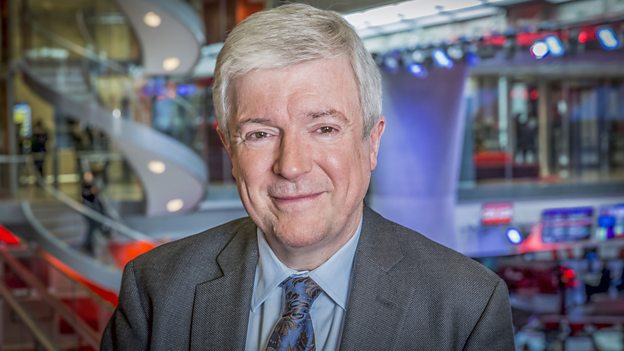
Tony Hall, BBC Director-General, said:


“The pandemic has had far reaching consequences for most organisations. The BBC is no different. In our response, we have always tried to put the public first and deliver our public service remit in its truest sense. The response from audiences has been remarkable.


“We have seen a huge leap in the usage of our services, particularly among young people. The digital improvements we’ve made over the past year mean the BBC is well placed to embrace the future. We can now give audiences the BBC they want – a better iPlayer with more quality programmes available for longer, and a BBC Sounds that is innovating and performing.


“No organisation from the smallest shop to the largest multinational will be unchanged by this pandemic, but I believe this is a moment where the BBC can do more than ever for the UK and help us out of this crisis.


“None of us have all the answers today. But I honestly believe that the BBC has demonstrated its unique value to the country, and future change – in whatever form – should always be guided by the values and principles that founded the BBC. They have more than stood the test of time.”


Our annual plan shows that:


  • The BBC is the most used media organisation in the UK. As a result of our strong performance – and even at the height of lockdown when VOD growth was sharpest – the BBC is roughly 24% of all UK video, audio and online time spent by the average adult in a week – including YouTube, social media, general browsing, shopping and search. By contrast, Netflix is around 3% of that time. Even within linear and on-demand TV, we estimate the BBC is around 31% of time compared to around 9% for Netflix.
  • Viewing of BBC TV has been nearly 50% higher than last year in some weeks, while viewing figures for TV news have hit their highest levels since 2003.
  • 77% of the public think the BBC is currently effective at the moment in informing, educating and entertaining the UK, with a similar percentage for young adults.
  • Investing in digital services means the BBC is better meeting the demands of audiences, particularly younger people:
    • iPlayer has had a succession of record-breaking days, with news programmes, Killing Eve, The Nest and Normal People driving huge numbers of requests
    • BBC Sounds has grown to have significantly more users than iPlayer Radio, hitting 3.6m users in a week.
  • We have improved our performance with young adults in this period – we are reaching as many as eight out of ten young people. Far from “turning their backs on the BBC”, as some have suggested, they have been embracing our news and shows such as Normal People.
  • BBC Three has delivered some of the BBC’s biggest performing programmes, with Normal People now having more than 38m requests to watch it on BBC iPlayer.
  • Record numbers have been using our education offering while schools are closed. Within the first week the number of browsers coming to Bitesize was 5.2m, a new record week for the site and three times the equivalent figure last year.
  • Through Culture in Quarantine we have been hosting regular pop-up ‘festivals’ with partners including Museums from Home, the Big Book Weekend and Get Creative at home, while also supporting independent artists through offering funding for projects across all nations of the UK.


What Next


It is clear the BBC can help support the country as it emerges from this crisis. Today, we are supporting more parts of the media industry than any other provider. We have joined forces with other broadcasters and the independent production sector to help restart production safely. We will be using our commissioning budgets to invest in creativity across the whole UK and to increase the diversity of our output, led by our plans for BBC Three. We will focus our local and regional portfolio to do more in the Midlands and the North of England. We will offer a platform to new talent, to diverse voices and to artists who cannot reach audiences live. We will be redoubling our efforts to reach the hard-to-reach, the less secure, and the young.


While the BBC has been showing live programming, much of our production work has been on hold.  The BBC is now ready to return to programme production within weeks should conditions and government advice allow. Filming on EastEnders and Top Gear is due to start again by the end of next month.


We will step up our commitment to better serve young audiences who currently get less value from the BBC.  BBC Three has been a hit machine.  Such is its performance, we will consider the merit of restoring it as a linear channel. While young people would continue to predominately watch BBC Three content online, we believe that with the depth of content we now have available, there are still more people we could reach through a linear channel.


While we cannot know our full financial picture, we also hope to double the amount we spend on BBC Three commissions over the next two years.  This money would have to be found from elsewhere in BBC content budgets.


While BBC TV news audiences during the crisis are at their highest for many years, our strongest growth has been in digital news where browsers have been nearly 60% higher than the previous record just five months ago. Our new story-led approach to increase the impact and quality of our digital journalism is more important than ever.


Local radio has yet again proved its worth during this pandemic, with more than 640,000 interactions with its Make a Difference campaign. But it cannot stay as it is. We need to have an increased focus on areas the BBC has traditionally served less well in the Midlands and North of England, such as Bradford, Sunderland, Wolverhampton, Blackpool and Peterborough. We are still developing these plans. We will continue to shift more activity across the UK, commissioning more content outside London and developing a new tech hub in Newcastle.


The financial challenges facing the BBC are real and acute. They cannot be addressed within the context of this annual plan for the simple reason that there are still many uncertainties. We will have a better understanding in the autumn.


The report also sets out more detail on plans for the coming year including:


  • Developing BBC News Online to promote and amplify fewer, but more relevant and important, stories. BBC News will also use podcasts as a vehicle for investigative journalism, such as increasing Panorama podcasts on their key investigations on BBC Sounds.
  • Celebrating major music events including 50 years since Glastonbury began and programming across the BBC to mark the 250th anniversary of Beethoven’s birth.
  • Launching Tiny Happy People, an ambitious parent-facing campaign to help tackle the UK’s ‘word gap’ by helping build children’s vocabulary.
  • An explosion of comedy from female writers on BBC Two.
  • Reinvigorating what we do over the next year across the nations and regions to ensure we are in touch with diverse communities right across the UK.
  • Building on the progress already made in making the BBC a more diverse place to work, including a Creative Diversity Festival later in the year and a virtual event in July to celebrate and promote talent from Black and Ethnic Minority backgrounds.




Public Media Serving in the time of a pandemic…

Public Media Serving in the time of a pandemic…

Public Media Serving in the time of a pandemic…

The year 2020 will be forever etched in our minds. No matter where we live, we share common experiences of fear, grief and the suffering that comes with uncertainty.

And yet in this time of crisis, we are seeing communities come together as never before. We are discovering an even deeper respect for our health workers and other first responders, as well as for the many unsung heroes who are putting the needs of others ahead of their own, often at considerable risk.

Rarely has the role of public service media been of greater importance than it is now. That is why we, the members of the Global Task Force for public media, would like to add our salute to the essential service being provided at this time by public broadcasters around the world.

Our countries may differ by culture and language, but we all share the common duty to Inform, Educate and Entertain. Our engagement with audiences of all ages across a range of broadcast and online services is critical to our success in serving them whenever, wherever and however they want.

We are seeing audiences turn to public media in record numbers for the trusted news and reliable information that is our hallmark – and that has become a matter of life and death. As with all organisations, we have had to adapt to cover COVID-19 in depth. Each of us is also playing an important role for our democracies and holding our public institutions and politicians to account, to ensure there is transparency in their actions.

The Global Task Force is particularly proud of the speed with which public media across the world have responded to the challenge of supporting the education of children who are learning at home by bringing together brilliant partners from across the public and private spheres. Public service media is uniquely placed to play this role.

Meanwhile our promise to entertain helps keep spirits up, especially among our older audiences who are the most vulnerable. We continue to support the performers and creative talent who inspire us and help define our cultures, bringing us closer in a time of social distancing.

To achieve these aims, our employees, our freelancers, our creative industry partners, and of course our private media colleagues, have shown unwavering commitment to provide essential services in these difficult times. The audio, film and television production sectors are a vital and growing part of our economies. Policy makers must take steps to protect the long-term health of this sector.

For all these reasons, we, the members of the Global Task Force, urge policy makers and politicians to support and defend the independence of public media and of journalism more broadly. Truly independent public service media has never been more precious to democracies around the world. Together, we will get through the current crisis.

We thank you, our public, for your continued support and for inviting us into your homes and lives.

Signed, Global Task Force for public media

David Anderson, Managing Director, ABC (Australia)
Thomas Bellut, Director General, ZDF (Germany)
Delphine Ernotte Cunci, President & CEO, France Télévisions (France)
Tony Hall, Director General, BBC (United Kingdom)
Jim Mather, Chair of the Board, RNZ (New Zealand)
Hanna Stjärne, Director General , SVT (Sweden)
Catherine Tait, President & CEO, CBC/Radio-Canada, GTF Chair (Canada)

BBC sets out plan to inform, educate and entertain during unprecedented times

BBC sets out plan to inform, educate and entertain during unprecedented times

BBC sets out plan to inform, educate and entertain during unprecedented times

The BBC issued this statement on 18 March
Today the BBC is setting out how it will ensure it keeps the nation informed, educated, and entertained in unprecedented times.

Director-General Tony Hall says: “We all know these are challenging times for each and every one of us. As the national broadcaster, the BBC has a special role to play at this time of national need.

“We need to pull together to get through this. That’s why the BBC will be using all of its resources – channels, stations and output – to help keep the nation informed, educated and entertained. We are making a series of changes to our output to achieve that.

“We will continue to deliver all the essential news and information – with special programming and content.

“We also will do everything from using our airwaves for exercise classes for older people, religious services, recipes and advice on food for older people and low-income families, and should schools close, education programming for different age groups. We will also be launching a whole new iPlayer experience for children. And of course there will be entertainment – with the ambition of giving people some escapism and hopefully the odd smile.

“Clearly there will be disruption to our output along the way, but we will do our very best.

“It will take time to emerge from the challenges we all face, but the BBC will be there for the public all the way through this.”

The BBC is announcing a wide-ranging package of measures today.

Our core role is to bring trusted news and information to audiences in the UK and around the world in a fast-moving situation, and counter confusion and misinformation.

In particular:

  • We will do everything we can to maintain Breakfast, the One, Six and Ten and ensure they continue to perform a vital role on BBC One
  • We will broadcast a weekly prime-time Coronavirus special on Wednesdays on BBC One, and move Question Time to 8pm on Thursdays, with call-in audiences and remote guests.
  • We will record a daily edition of the Coronavirus podcast, and film it where possible for News channel use in the UK and abroad.
  • We will bring listeners the most up-to-date information on Coronavirus through 5 Live. 5 Live will be answering listeners’ questions with regular phone-ins.
  • We will focus local radio breakfast and mid-morning output on news, open phone lines and expert advice for local communities between 6am and midday.
  • Under the umbrella Make A Difference, every local radio station will join up with local volunteer groups to help co-ordinate support for the elderly, housebound or at risk, making sure people know what help is available in their area.
  • We will keep Newsround bulletins on air throughout the day on CBBC.
  • We will delay the planned closure of the Red Button text news and information service.

We will help people in the UK deal with the impact of the crisis on their own lives, by providing advice, education and support.

Initiatives include:

  • Using The One Show as a consumer programme show for all aspects of the crisis. This will include health and well-being advice, keeping fit and healthy eating tips, as well as links to other BBC output that can help and support.
  • In BBC One daytime, Health Check UK Live will directly address the concerns of viewers who are in isolation, offering tips on how to keep healthy and happy at home.
  • Making BBC Homepage the BBC’s bulletin board supplying clear information – the answers to all the key questions, with public information, health advice and recipes.
  • Launching a virtual church service on Sunday mornings across local radio in England, led initially by the Archbishop of Canterbury.
  • Subject to outside broadcast capacity and our partners, we will aim to broadcast a weekly Sunday morning church service on BBC One, and explore how to support other religions and denominations, including in the run-up to Ramadan.
  • We will work with partners to get older age group exercise routines and other fitness programming into people’s homes on TV or radio.
  • We will retarget the BBC Food website around collections of recipes and advice on what can be made with essentials, especially for older people, and for low-income families.

In the event that schools are shut down, and subject to further work and discussions with the Department for Education, devolved administrations and schools, we are exploring:

  1. A daily educational programme for different key stages or year groups – with a complementary self-learning programme for students to follow, broadcast on BBC Red Button and made available on demand on BBC iPlayer.
  2. Expanding BBC Bitesize content, with our social media running daily troubleshooting Q&As focusing on a different subject each day.
  3. Increasing our educational programming on BBC iPlayer, bringing together the best from BBC Bitesize, BBC Teach and the wider BBC portfolio where educationally appropriate.
  4. Creating two new daily educational podcasts for BBC Sounds, one for primary and one for secondary.
  5. BBC Four and BBC Red Button devoting a block of programming each weekday evening to show programmes that support the GCSE and A Level curriculum. In Scotland, the Scotland channel will support the Scottish NQs and Highers in daytime.

We will keep people entertained, providing laughter, escapism, companionship, shared experiences and a sense of connection to the outside world.

Initiatives include the following:

  • We will bring back many favourite shows, allowing people of all ages to escape into some top-quality entertainment both on our channels and on BBC iPlayer. New boxsets going up shortly include Spooks, The Missing, Waking The Dead, French And Saunders, Wallander and The Honourable Woman, as well as more from BBC Three.
  • We will be launching an exciting new iPlayer experience for children, offering a wide range of entertaining and educational series. It will be easy to use and easy for them to find what’s relevant to them.
  • Radio 1, Radio 2 and Radio 4 will provide the information, explanation and escape that millions rely on. On Radio 4, we will dig into our rich archive of drama with such well-loved titles as The Complete Smiley, all of the novels by the Bronte Sisters, film noir classics by Raymond Chandler, and reassuring favourites as Rumpole and Wodehouse. We will be sharing popular podcast dramas with a wider radio audience for the first time by broadcasting the award-winning Forest 404 and The Whisperer In Darkness. We will also hope to provide some joy and laughter by running classic editions of I’m Sorry I Haven’t a Clue and Just A Minute.
  • We will do the same in BBC Sounds, looking at bringing back classic sport, comedy and drama, as well as exploring using the BBC’s programme index to allow audiences to search thousands of online archive radio programmes.
  • We will aim to create live fund-raising events, to raise money for coronavirus good causes.
  • At a time when British culture is having to close its doors, the BBC, through iPlayer and Sounds, can give British culture an audience that can’t be there in person. We propose to run an essential arts and culture service – Culture in Quarantine – that will keep the Arts alive in people’s homes, focused most intensely across Radio 3, Radio 4, BBC Two, BBC Four, Sounds, iPlayer and our digital platforms, working closely with organisations like Arts Council England and other national funding and producing bodies. This will include guides to shuttered exhibitions, performances from world-class musicians and comedy clubs, new plays created especially for broadcast featuring exceptional talent, poetry and book readings.
BBC News sets out its coronavirus output arrangements

BBC News sets out its coronavirus output arrangements

BBC News sets out its coronavirus output arrangements

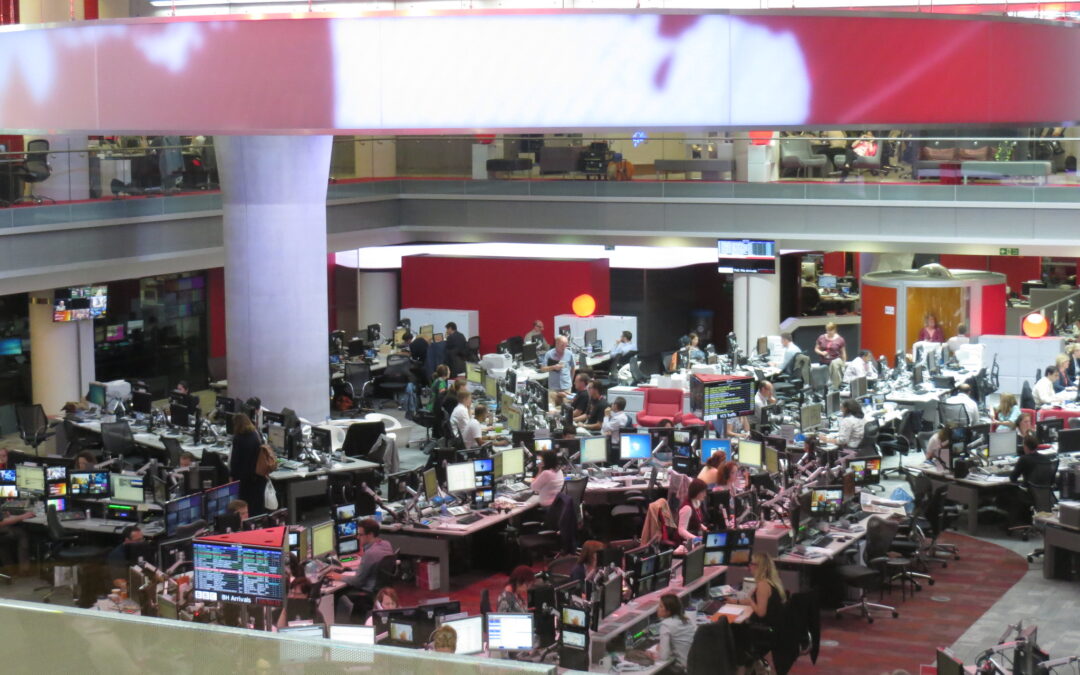
BBC News has outlined its initial plans for how it will continue to offer its audiences trusted and accurate news throughout the Coronavirus crisis.

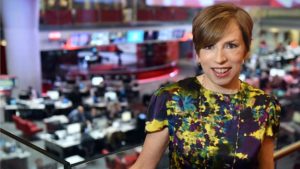
Director of News, Fran Unsworth (pictured), says: “These are unprecedented and difficult days. Trusted, accurate information is vital in a public health emergency and the BBC has a key role to play. We will continue offering our audience a continuous news service on TV, radio and online but this will look a bit different in the weeks ahead.

“Like many organisations we are unable to have all our staff on site due to the Coronavirus outbreak. We are therefore making some changes to what we do to streamline our output to ensure we can work with fewer people and protect the staff who are at work.”

Television

We will be making some visible changes to our output to focus on the latest news, information, live events and audience questions in the coming days. Breakfast, News At One, News At Six and News At Ten will continue to perform a vital role on BBC One, while we make some changes to support our continuous news channels.

We will be making some visible changes to our output to focus on the latest news, information, live events and audience questions in the coming days.

From tomorrow we will be moving to a core news service on the BBC News channel in the UK – with fewer branded programmes. This core service will replace some scheduled programmes on BBC Two including Politics Live and Victoria Derbyshire. We will be talking to these teams about how they can support the core operation, which will also provide live coverage of major news conferences and government briefings to BBC iPlayer, TV and News online.

There will also be a reduction in branded programmes on BBC World News – and more integrated working across live TV output behind the scenes. Some Persian TV programmes will be suspended.

Newsnight and The Andrew Marr Show will remain on air but will be operated by fewer technical staff; while The Andrew Neil Show, Newswatch and The Travel Show will be suspended. HARDtalk will also be suspended from next week.

Question Time will be broadcast at 8pm every Thursday without a studio audience for a period. From next Thursday it will be broadcast from a fixed location each week. Audiences will submit questions and we are particularly keen to hear from those in vulnerable groups.

Radio

We believe we can protect much of our regular, trusted output at this point – though we are keeping the situation under close review and will be making some initial changes.

On World Service English, The World This Week will be suspended from tomorrow, with World Update and Weekend suspended from next week.

In the UK, radio summaries on BBC Radio 2, 3, 4 and 5 live will be brought together into a single output from 1am on Friday, with 6 Music using the same script. There will be shared production and output on Asian Network and Newsbeat from tomorrow. The Week In Westminster on Radio 4 (Saturday mornings) will be suspended after 21 March. We are making some other changes to radio studio usage and working methods to protect our staff.

Digital

Over the last few weeks we have seen unprecedented use of our digital news services in the UK and around the world – with high consumption of our live pages, explanatory journalism and in-depth reporting. We will be making some changes to the way our teams are organised to sustain these vital services – and to ensure we can distribute important information via social media.

As a result of this we will be focusing content on the accounts that reach the widest number of people, drawing in effort from across the BBC to support our social media activity, and suspending posts on some smaller accounts over the coming days.

Podcasts

Newscast will change into a daily edition of The Coronavirus Podcast. Americast, Beyond Today and The Next Episode podcasts will be suspended.