80th anniversary of iconic de Gaulle broadcast commemorated

80th anniversary of iconic de Gaulle broadcast commemorated

80th anniversary of iconic de Gaulle broadcast commemorated

Thursday 18 June marks the 80th anniversary of General Charles de Gaulle’s historic first broadcast to occupied France from the BBC’s Broadcasting House.

Just days after Paris surrendered to the invading Nazis, General de Gaulle made on the BBC his first broadcast to France, in which he called on the French soldiers and officers, military engineers and workers in the armament industry, who were or would be on the British soil, to rally under his command in London. “I ask you to believe me when I say that the cause of France is not lost… For, remember this, France does not stand alone… Whatever happens, the flame of French resistance must not and shall not die.”

The BBC’s Director General, Tony Hall, says: “Eighty years ago today, the BBC gave its airwaves to General Charles de Gaulle to address the people of occupied France. He called on them to keep the ‘flame of resistance’ alive. Although the world is very different today, there are still many places where media freedom is under threat. I’m proud that it is still the BBC World Service which allows people to speak freely to their compatriots.”

The broadcast, L’appel du 18 juin, became a defining moment of the French history. This and the following BBC broadcasts by de Gaulle – for which he was condemned in France to death for treason against the Vichy regime – helped to rally the French resistance movement and lift morale in the occupied country.

After the war, to thank the BBC for its singular World War Two broadcast contribution, the French government presented the BBC with a specially commissioned tapestry ‘Le Poète’ [pictured] made by Jean Lurçat, inspired by a poem by Paul Éluard, ‘Liberté’. A metaphor for the role of the Resistance in fighting against Nazism, but also for the importance of broadcasting and freedom of speech, it hangs in the Artists’ Lobby at the BBC’s Broadcasting House.

Photo credits: BBC

BBC News sets out its coronavirus output arrangements

BBC News sets out its coronavirus output arrangements

BBC News sets out its coronavirus output arrangements

BBC News has outlined its initial plans for how it will continue to offer its audiences trusted and accurate news throughout the Coronavirus crisis.

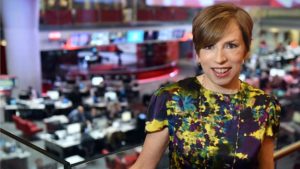
Director of News, Fran Unsworth (pictured), says: “These are unprecedented and difficult days. Trusted, accurate information is vital in a public health emergency and the BBC has a key role to play. We will continue offering our audience a continuous news service on TV, radio and online but this will look a bit different in the weeks ahead.

“Like many organisations we are unable to have all our staff on site due to the Coronavirus outbreak. We are therefore making some changes to what we do to streamline our output to ensure we can work with fewer people and protect the staff who are at work.”

Television

We will be making some visible changes to our output to focus on the latest news, information, live events and audience questions in the coming days. Breakfast, News At One, News At Six and News At Ten will continue to perform a vital role on BBC One, while we make some changes to support our continuous news channels.

We will be making some visible changes to our output to focus on the latest news, information, live events and audience questions in the coming days.

From tomorrow we will be moving to a core news service on the BBC News channel in the UK – with fewer branded programmes. This core service will replace some scheduled programmes on BBC Two including Politics Live and Victoria Derbyshire. We will be talking to these teams about how they can support the core operation, which will also provide live coverage of major news conferences and government briefings to BBC iPlayer, TV and News online.

There will also be a reduction in branded programmes on BBC World News – and more integrated working across live TV output behind the scenes. Some Persian TV programmes will be suspended.

Newsnight and The Andrew Marr Show will remain on air but will be operated by fewer technical staff; while The Andrew Neil Show, Newswatch and The Travel Show will be suspended. HARDtalk will also be suspended from next week.

Question Time will be broadcast at 8pm every Thursday without a studio audience for a period. From next Thursday it will be broadcast from a fixed location each week. Audiences will submit questions and we are particularly keen to hear from those in vulnerable groups.

Radio

We believe we can protect much of our regular, trusted output at this point – though we are keeping the situation under close review and will be making some initial changes.

On World Service English, The World This Week will be suspended from tomorrow, with World Update and Weekend suspended from next week.

In the UK, radio summaries on BBC Radio 2, 3, 4 and 5 live will be brought together into a single output from 1am on Friday, with 6 Music using the same script. There will be shared production and output on Asian Network and Newsbeat from tomorrow. The Week In Westminster on Radio 4 (Saturday mornings) will be suspended after 21 March. We are making some other changes to radio studio usage and working methods to protect our staff.

Digital

Over the last few weeks we have seen unprecedented use of our digital news services in the UK and around the world – with high consumption of our live pages, explanatory journalism and in-depth reporting. We will be making some changes to the way our teams are organised to sustain these vital services – and to ensure we can distribute important information via social media.

As a result of this we will be focusing content on the accounts that reach the widest number of people, drawing in effort from across the BBC to support our social media activity, and suspending posts on some smaller accounts over the coming days.

Podcasts

Newscast will change into a daily edition of The Coronavirus Podcast. Americast, Beyond Today and The Next Episode podcasts will be suspended.

BBC Persian makes urgent appeal to UN as harassment spikes during Iran protests

BBC Persian makes urgent appeal to UN as harassment spikes during Iran protests

BBC Persian makes urgent appeal to UN as harassment spikes during Iran protests

The harassment of BBC Persian staff and their families in Iran has been stepped up during protests in the country, the UN has heard.

In an urgent complaint, UN Special Rapporteurs heard anonymised testimony from a number of the affected journalists which makes clear the gravity of the current situation which they now face. Elderly relatives have been subjected to solitary confinement, degrading prison conditions and interrogation, and express threats have been made to journalists’ safety in the UK and elsewhere.

In addition, over the past number of weeks Iran is known to have taken extra-territorial action against a number of individuals considered to be critical of the regime. The Iranian authorities claim that foreign broadcasters are encouraging dissent within Iran – in essence blaming the protests on the media.

BBC Persian journalists are extremely concerned for their own safety and wellbeing, and for that of their family members in Iran.

BBC World Service Director Jamie Angus says: “Following the civil unrest, we have seen some deeply disturbing developments regarding the state-backed harassment of BBC Persian staff in London and their families in Iran.

“Over the last few weeks, family members of BBC staff have been called in for questioning, had their passports confiscated and told that they must ask their relatives to stop working for the BBC or face the consequences. At the same time, the Iranian media has cited BBC Persian television as allegedly encouraging unrest and violence in Iran.

“While BBC Persian staff have borne the brunt of this harassment over many years, the Iranian authorities are widening their offensive against journalists from other media outlets reporting on the protests and have imposed an internet shutdown. There can be no doubt that these actions constitute a clear breach of the universal human right of free expression. We call on all those who believe this fundamental right should be powerfully defended to support BBC Persian and all journalists who report on Iran.”

This is the first time BBC Persian journalists have filed a communication with the Special Rapporteur on Extrajudicial, Summary or Arbitrary Executions.

Caoilfhionn Gallagher QC and Jennifer Robinson, international counsel for the BBC World Service at Doughty Street, say: “BBC Persian journalists are facing harassment and persecution because of their essential work reporting on events inside Iran. This decade-long harassment campaign against BBC Persian staff has included a national security criminal investigation, asset freeze and ongoing targeting of their family in Iran.

“This recent escalation has coincided with a brutal crackdown upon dissent within Iran, and has included express threats being made by state officials to their families about the safety of BBC Persian journalists outside Iran. This places the journalists and their families at grave risk, but it also hampers the ability of international organisations and other States to hold Iran to account for its response to protests within Iran.

“The UN Special Rapporteur on Extrajudicial, Summary or Arbitrary Executions, Agnes Callamard, has repeatedly raised concern about impunity for the persecution of journalists and the need to take early action to protect against and prevent violence against journalists. We call on the UN to condemn Iran’s attempts to intimidate and terrify BBC Persian journalists into silence, at a time when their work is needed more than ever.”

Michelle Stanistreet, NUJ general secretary, says: “This campaign of harassment has to stop. This cruel and inhumane tormenting of families has to cease. The Iranian government must recognise that this harassment of individuals and their families are clearly understood by the international community for what they are: an attack on journalism and on press freedom, one that the NUJ and everyone who cares about media freedom will not allow to be successful.”

The three mandate holders hearing the complaint – the Special Rapporteurs on the Promotion and Protection of the Right to Freedom of Opinion and Expression, Human Rights in Iran, and Extrajudicial, Summary or Arbitrary Execution – had already acknowledged the deteriorating situation in Iran in a UN statement issued on 22 November 2019.

There are many disturbing and credible reports of killings of protestors on a large scale. Grave concerns have been expressed that the authorities may be using excessive force against those participating in the protests. In addition, the authorities have introduced measures to curtail the public’s access to news and social media, with a nationwide internet shutdown.

Image: Adobe Stock

BBC World Service steps up shortwave broadcasts in Kashmir

BBC World Service steps up shortwave broadcasts in Kashmir

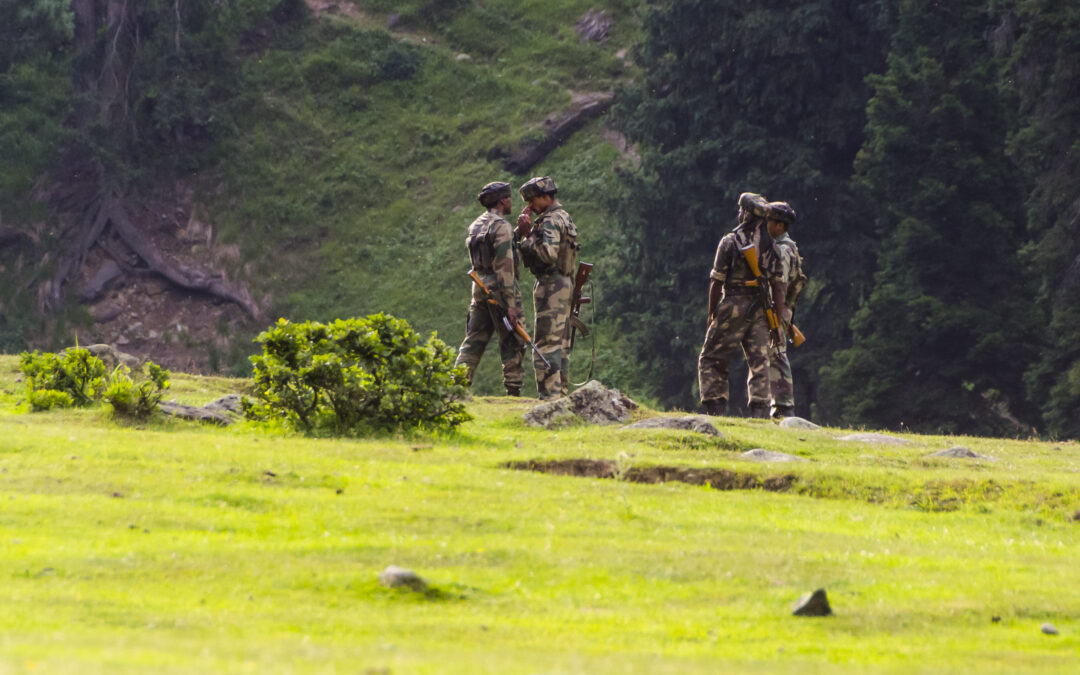
BBC World Service has extended output on shortwave radio in Indian-administered Kashmir to provide reliable news and information.

Director of the BBC World Service, Jamie Angus (pictured), said:  “The provision of independent and trusted news in places of conflict and tension is one of the core purposes of the World Service.  Given the shutdown of digital services and phone lines in the region, it’s right for us to try and increase the provision of news on our short wave radio services. Audiences in both India and Pakistan trust the BBC to speak with an independent voice, and we know that our reporting through several moments of crisis this year has been popular and valued by audiences who turn to us when tensions are highest.”

BBC News Hindi radio output (9515 and 11995kHz) will be extended by 30 minutes from Friday 16 August. The full one hour news programme will be on air from 19:30 to 20:30 local time.

On Monday 19 August, BBC News Urdu will launch a 15-minute daily programme, Neemroz.  Broadcast at 12.30 local time on 15310kHz and 13650kHz, the programme will focus on news coming from Kashmir and the developments around the issue, and include global news roundup tailored for audiences in Kashmir.

BBC World Service English broadcasts (11795kHz, 9670kHz, 9580kHz, 7345kHz, 6040kHz) will be expanded, with the morning programming extended by an hour, ending at 08.30 local time; and the afternoon and evening programming starting an hour earlier, at 16.30 local time.

The shutdown has left people with very few options for accessing news at this time. However, news services from the BBC continue to be available in the region – through shortwave radio transmissions in English, Urdu, Hindi, Dari and Pashto. As well as providing an important source of news to the region, the South Asian language services have brought added depth to the BBC’s coverage of the Kashmir story.

The recent introduction of four new languages services for India – Gujarati, Marathi, Punjabi and Telugu, following additional investment from the UK Government – has enabled the BBC to offer a wider portfolio of languages and distribution methods to a region that is geographically diverse as well as politically tense. This year’s Global Audience Measure for the BBC showed that India is now the World Service’s largest market, with a weekly audience of 50m.

International public service broadcasters speak on threats to media freedom

International public service broadcasters speak on threats to media freedom

Directors of the British Broadcasting Corporation, ABC (Australia), Deutsche Welle, France Médias Monde, NHK (Japan) and United States Agency for Global Media today said public service broadcasting faces ‘increasing threats’ and expressed concern about ‘troubling attacks‘ on journalists around the world.

In a joint communique the broadcasters said: “Public service broadcasters are among the most trusted sources of news and information. The role of public service broadcasters has never been so important but we face increasing threats. Media organisations are subject to widespread censorship and jamming of services. Furthermore, we have seen deeply troubling attacks on journalists around the world and the recent killing of Jamal Khashoggi sent a chilling message to all of us who believe in freedom of expression. Journalists should have the right to work without fear of intimidation and violence and we call on all countries to respect media freedom and safety. We are committed to working together to do everything in our power to help protect journalists around the world.”

The annual meeting of the world’s leading public service broadcasters convened at the BBC in London on 3-4 December to discuss a variety of issues facing international public service broadcasters including trust in journalism, media freedom, interference with broadcasts and current diversity initiatives in the media industry.