Haftar’s Russian Mercenaries: Inside the Wagner Group – a BBC World Service investigation

Haftar’s Russian Mercenaries: Inside the Wagner Group – a BBC World Service investigation

Haftar’s Russian Mercenaries: Inside the Wagner Group – a BBC World Service investigation

BBC News Arabic and BBC News Russian have teamed up to deliver a TV documentary which investigates the presence in Libya of fighters who are working for the Wagner Group – a shadowy Russian organisation supplying fighters to war zones – fighters who are accused of war crimes by the local population. Haftar’s Russian Mercenaries: Inside the Wagner Group reveals the organisation’s apparent access to sophisticated modern weapons that, according to expert testimony, could only come from Russian military supplies.  While Wagner employees almost never speak publicly, two former fighters discuss the types of people who are drawn to the organisation, their motivations, and the organisation’s goals.

BBC News Arabic and BBC News Russian journalists Nader Ibrahim and Ilya Barabanov reveal and analyse the contents of a tablet computer left behind by the Russian fighters when they were forced to retreat from the Libyan capital, Tripoli, in spring 2020. The tablet’s secrets include reconnaissance drone footage and manuals for anti-personnel mines and IEDs. Military maps of the frontline give an unprecedented insight into the group’s operations, as well as codenames of Wagner fighters, which helped the BBC to identify some of them. The tablet also provides evidence of the Russian mercenaries’ involvement in the mining and booby-trapping of civilian houses.

The film includes accounts of other suspected war crimes, among them the intentional killing of civilians. A Libyan villager describes how fighters, he believes were from the Wagner Group, kidnapped his father, his two brothers and their brother-in-law and later executed them. This blindfolded eyewitness survived by playing dead but still managed to glimpse the killers. His testimony, together with footage of Wagner fighters, allows the BBC to identify one suspected killer – a mercenary also suspected of involvement in possible war crimes in the conflict in Eastern Ukraine.

The killing of prisoners is also a war crime. Mohammed, a young veteran from Libya’s government forces, recounts how his soldiers were overwhelmed by Russian fighters who were better equipped and more professionally trained. He describes how one of his men was shot as he tried to surrender.  Four of them are still missing.

The BBC has obtained documents linking Wagner’s mercenaries in Libya to Evro Polis, a Russian company reported to be a beneficiary of contracts for oil and gas field developments in Syria. Yevgeny Prigozhin, a rich businessman close to President Vladimir Putin and currently under US sanctions, has been linked to both Evro Polis and Wagner by the Russian media and foreign intelligence sources.

One of the documents is a request for military equipment for Wagner’s continued operations in Libya. It was addressed to an unnamed “General Director”, believed by some to be Prigozhin.  A military analyst tells the BBC how the document suggests that, contrary to official Russian denials, such state-of-the-art technology would only be available from the Russian military.

A spokesperson told the BBC that Yevgeny Prigozhin has nothing to do with Evro Polis or Wagner.  Mr Prigozhin commented: “I have not heard anything about the violation of human rights in Libya by Russians and I am sure that this is an absolute lie.”

The Ministry of Foreign Affairs of the Russian Federation has responded to the allegations contained in the film:  “Russia is doing its utmost to promote a ceasefire and a political settlement to the crisis in Libya.  Information about the presence of Wagner employees in Libya […] is mostly based on rigged data and is aimed at discrediting Russia’s policy in the Libyan direction.”

Jelena Aparac, Chair-Rapporteur of the Working Group on the use of mercenaries, under the UN Human Rights Office of the High Commissioner, comments: “The Working Group on the use of mercenaries is concerned by the increased involvement and proliferation of non-state actors such as ‘Wagner’ operating in contemporary armed conflicts. The lack of transparency on their status, rules of engagement, roles and command structures allowed states to obscure their involvement in conflicts and evade responsibilities. We have repeatedly called for urgent attention and discussions on ways to counter mercenaries and related activities and supported the discussions on legally binding instruments for private military and security companies.”

Commenting on the investigation, the director of the documentary, Nick Sturdee, says:  “This film provides an unprecedented window into the workings of the Wagner Group and its relationship with the Russian state, uncovers detailed and hard evidence of Russian mercenaries fighting to topple the UN-recognised government in Tripoli, and broadcasts powerful testimony linking Wagner fighters to war crimes committed in Libya.”

Commissioning editor, Christopher Mitchell, adds: “The film dynamically conveys the two interacting investigations in Tripoli and Moscow.  As a joint teamwork between BBC News Arabic and BBC News Russian, this documentary showcases the way the World Service’s language teams benefit from each other’s reporting, insights, and expertise.”

Russian Mercenaries: Inside the Wagner Group is available via the BBC News Arabic website and YouTube channel and other digital and social-media platforms, and in English from 23:00GMT – on BBC News iPlayer (UK only).Content about the investigation will be available via the BBC News website and YouTube channel and via the BBC News Russian website.  The international TV channel, BBC World News, will show the film on Saturday 21 August.  Later, the film will be available via BBC News Russian.

Reporters: Ilya Barabanov and Nader Ibrahim

Producer/director: Nick Sturdee

Executive producers: Kateryna Khinkulova and Paul Mitchell

BBC News Arabic and BBC News Russian are part of BBC World Service. 

China bars BBC World News; RTHK ceases BBC World Service relay

China bars BBC World News; RTHK ceases BBC World Service relay

China bars BBC World News; RTHK ceases BBC World Service relay

BBC World News, the international news and current affairs television channel, has been banned from broadcasting in the People’s Republic of China. China’s National Radio and Television Administration, the country’s media regulator that is under the direct control of the State Council, made the announcement on Thursday 11 February.

According to media reports, the regulator said that reports carried on BBC World News had “violated requirements that news should be truthful and fair”. The Administration said that the broadcasts had harmed the country’s interests and undermined national unity. It provided no evidence to support the claims.

The Chinese government has accused the BBC of reporting “fake news”, in particular around the country’s response to the coronavirus pandemic and treatment of the Uighur minority.

British Foreign Secretary, Dominic Raab, called the decision “an unacceptable curtailing of media freedom”.

“China has some of the most severe restrictions on media and internet freedoms across the globe, and this latest step will only damage China’s reputation in the eyes of the world,” he said.

In its daily press briefing, US State Department spokesman Ned Price answering a question on the ban, said: “We absolutely condemn the PRC’s decision to ban BBC World News. The PRC maintains one of the most controlled, most oppressive, least free information spaces in the world. It’s troubling that as the PRC restricts outlets and platforms from operating freely in China, Beijing’s leaders use free and open media environments overseas to promote misinformation. We call on the PRC and other nations with authoritarian controls over their population to allow their full access to the internet and media.

“Media freedom, as we’ve said, is an important right, and it’s key to ensuring an informed citizenry, an informed citizenry that can share their ideas freely amongst themselves and with their leaders.”

The BBC said that it is “disappointed” by the ban. “The BBC is the world’s most trusted international news broadcaster and reports on stories from around the world fairly, impartially and without fear or favour,” it said.

AIB condemns the ban

The Association for International Broadcasting has condemned the move by the Chinese authorities. “The ban on BBC World News in China is an egregious act that has no place in the international rules-based system,” said AIB chief executive, Simon Spanswick. “China has for decades sought to restrict access by Chinese citizens to information from outside the country. It has consistently jammed Mandarin-language programming from overseas, and frequently interfered with English-language broadcasts. It has never permitted international news channels to be broadcast freely across the country. The Association for International Broadcasting calls on the Chinese government to allow BBC World News to broadcast in the country with immediate effect.”

The AIB is lodging a protest with the Chinese Ambassador in the United Kingdom and will raise the matter within the Advisory Network of the intergovernmental Media Freedom Coalition.

Chinese citizens prevented from accessing international news

It is notable that BBC World News, like all other international news services, has never been available to all Chinese citizens. Instead, distribution has been limited to international hotels and to compounds housing expatriates. Programming from the BBC’s Mandarin-language service has been prevented from reaching audiences in the country by the “Great Firewall of China” that restricts access to many websites from outside China, and to a range of social media platforms.

Programmes from western broadcasters directed towards China have repeatedly suffered from jamming by the Chinese government. The BBC’s Mandarin-language service no longer broadcasts towards China on shortwave.

Shortly after the ban was announced, RTHK – Hong Kong’s public broadcaster – announced that it was ceasing relays of BBC radio services. This caused concern in the former British colony, with the head of the University of Hong Kong’s journalism and media studies centre, Keith Richburg, saying it’s “surprising” that RTHK has pulled the plug on its live relay of BBC World Service. His remarks were quoted on RTHK here.

BBC Global News is a Member of the Association for International Broadcasting

BBC has an ever greater international role, says its Director-General

BBC has an ever greater international role, says its Director-General

BBC has an ever greater international role, says its Director-General

The BBC Director-General, Lord Tony Hall, gave a speech to the virtual Edinburgh International TV Festival on 24 August. He spoke of the role that the Corporation has as an interwoven part of the fabric of UK life, the importance of public service broadcasting and the BBC’s ever more significant international role. Here is the text of his speech.

It’s a pleasure to be speaking to you today, even with all the limitations of Zoom, because I believe the debate you’ll be having – about the role of PSBs – is important, vital and necessary. Our response to Covid-19 has taught us a lot about our role. But so has our response to the killing of George Floyd. There are lessons for us all. You see to my mind media is not only a business, of course it is, but it’s also about our culture – who we are, what makes us tick, what brings us together, what entertains us, what divides us, what inspires us, what shocks us. The stories we tell about who we are. The PSBs are vital to democracy. They inform us. They educate us. And in this country they do that equally for all – whoever you are, wherever you are, rich or poor, old or young – you have access to the best. No pay wall. No subscription – free.

The PSB ecology we have in this country is unique. And it works. I know. I am in the final year as President of the EBU. People outside this country envy what we have. PSBs are under threat everywhere. Of course, we always need to adapt and reform. Yet we are a vital part of any country’s culture – we help define and shape it – just as galleries, museums, theatres do. And of course we are at the heart of the creative economy – one of our huge strengths. Which is why giving voice to talent from wherever it comes is vital to our future. And why diversity and inclusion is so intertwined with the role of public service broadcasting. So a great debate to have – and at the right time.

But first let’s stand back and look at what our audiences think about us.

The tragedy and calamity of the Covid crisis has taught us a lot. In a strange sort of way, it’s been a massive, consultation in real time on what the British public want and expect from great public service broadcasting.

For the BBC, I felt the clarity of our mission came into even sharper focus.

Almost overnight, we reconfigured all our output around the most urgent needs of the nation.

Audiences came to us in their millions – for news and information they could trust, for educational support they could rely on, for world-class content, culture and also for respite from the worries we all, every one of us, was experiencing. Whatever is happening in the world – however ghastly it is – we all need something to make us smile.

And the response…

Well, in March, BBC 94% of the British people used the BBC. And, here’s a key fact, 87% of 16-34s did so. In some weeks, TV viewing was up nearly 50% year on year. TV news hit the highest levels since 2003. There were huge audiences for dramas like Normal People and Killing Eve. But also record ratings for shows that helped us escape the confines of lockdown – like The Repair Shop, Masterchef and (one of my particular favourites) Race Across the World.

During this time, around 24% of all UK video, audio and online time spent by the average adult in a week was with the BBC. Netflix was around 4%.

So what did all this tell us about the role of PSBs in today’s media landscape? And about the role of the BBC in particular? For me, there are two big conclusions.

First, public service values have never been more needed. We’ve been reminded how deeply stitched we are into the fabric of national life.

Second, the BBC – and public service media more widely – can now do more for the UK than ever before. And we’re ready to do more. We’ve reformed and reinvented ourselves for the digital age. There’s much further to go, but we’re already delivering.
And that’s what I want to focus on today.

First, we’ve been reminded how important are those things that bring us all together especially at times of crisis, division and fracture.

We all know, and feel, how the last few years have heightened the sense of polarisation in our society.

Covid has come along and brutally exposed fault lines of deprivation and demography. The killing of George Floyd has left no one in any doubt about the scale and feeling of injustice in our society. And recession may well fan that anger and unfairness still further.

Public service broadcasters – and the BBC in particular – have always been part of the glue that binds our nations and communities together. But the last few months have emphasized that still further.

Despite the lockdown we were all able to commemorate VE Day – or the end of the war in the east just a few days ago. There was no Glastonbury, but we all managed to make our own. We were able to come together across five national radio networks to join the Great British Singalong. April’s Big Night In fundraiser raised £70 million for charities, was backed by the Government, and helped vulnerable people all across the UK.

Our local radio stations in England set up a helpline called Make a Difference, linking those who could offer help with those who needed it. By the end of June over a million people had been in contact and offered or given support.

In April, we pulled out all the stops to support pupils, parents and teachers as schools closed. We produced the biggest educational offer in our history: two hours of original broadcast programming every day; 2,000 hours of curriculum-led daily lessons on Bitesize, with 5 million visitors a week… 5 million!

By the way, we’re talking with the education sector about taking this a stage further working with them on an idea of the ‘open school’ in the tradition of the open university. Think of what we could do pooling all our resources for the benefit of the next generation.

And of course I’ve not mentioned the support we gave to the arts through our Culture in Quarantine programme – an unprecedented collaboration which linked artists, musicians, cultural organisations with audiences in a way that only we can do. We’ll be taking this on into the autumn with even greater ambition. This could change the way the BBC works with the arts fundamentally and forever.

My second point is that our responsibility as the UK’s most trusted news provider has never been clearer and more important. It’s right at the heart of this duty to help bring the nation together.

The forces of disinformation and social media tend to feed on fracture and drive polarisation.

They’re often specifically designed to exploit division for commercial or political gain; to unsettle societies or undermine democracy.

What we do, as a PSB, is a force in the opposite direction. Our goal is to help strengthen society and build bridges by making sure all voices and perspectives are heard.

This is about much more than protecting integrity in news, critical as that is. Impartiality is the keystone of broadcast journalism in this country.

It’s also about helping to protect our democratic integrity, and fostering unity and cohesion.

A few weeks ago, I interviewed Mike Ryan – a highly articulate leader in the WHO. We were talking at a seminar for PSB leaders from across Europe. Why you people are so important, he said, is because even if we have a vaccine tomorrow – up to thirty percent of people, according to polling, would not use it. There is he said another pandemic… that of misinformation.

Today the BBC ranks first with the British public for impartial news, and first for information you can trust – we’re way ahead of the rest.

We also rank first for trust and reliability abroad. In fact, BBC News is now more trusted in the US than all major US news providers.

More and more, in the fake news world, truth is a priceless commodity in our societies.

So let’s not forget that, in the BBC, the UK has a remarkable asset: the pre-eminent provider to the world of facts you can trust.

My third point is that the international reach of the BBC is absolutely crucial to any vision of ‘Global Britain’.

Four years ago, I convinced the then Government – well, George Osborne to be precise – to make its largest-ever increase in investment in the BBC World Service.

That funding – £86 million a year – allowed us to complete the biggest expansion of the World Service since the Second World War.

We now operate in 42 languages. We’ve opened new bureaux with more local journalists on the ground. We’ve got new investigative teams holding power to account around the world.

My goal, when I arrived at the BBC, was to double our global audience to reach 500 million people by 2022 – our centenary year. With two years to go, we are today reaching 468 million people each week… 468 million.

We have plans in place to double that ambition – to reach a global audience of 1 billion people by the end of the decade. But it needs extra investment from government and that bid is with them right now.

No one can do more to carry Britain’s voice and values to the world.

Independent research shows there’s an exceptionally high correlation between places where people are aware of the BBC and places where people think positively about the UK. We even help UK trade.

This could hardly be more important as Britain sets out to forge a new relationship with the world, based on an ambitious vision of ‘Global Britain’.

Success will mean drawing on all our considerable international assets. And that means unleashing the full global potential of the BBC.

And my final point is that Britain in a post-Brexit world must play to its greatest strengths – one of which is the creative industries.

Just as the NHS underpins Britain’s global excellence in research and life sciences, so the BBC – and our unique PSB ecology – underpins the excellence of our creative industries.

This is the sector that, before the crisis hit, was the fastest-growing part of the economy, worth over £100 billion a year. And British creativity is one of our most valuable global exports.

The BBC has long been the single biggest investor in – and platform for – British talent and content.

With creative hubs in every part of the UK, we’re an engine of ideas, risk-taking and ambition that powers the whole of the sector. Every £1 we spend generates £2 for the UK economy. And by the way I know we can do more. As I said at the beginning of the year I believe 70% of the BBC should be based out of London by the end of this charter. And interestingly I think that will be easier and cheaper to achieve in a post-Covid environment.

But there’s one statistic that I think really brings home what our PSB system means for the strength of our creative industries. In 2018, PSBs delivered over 32,000 hours of UK-made original content. The big streamers? 221 hours.

Yes, we need to keep reforming, keep listening and learning about how we can do better. But let’s not forget that PSBs are the magic formula for British success in the global media age. And let’s explore ways to build on their strength, so they can do even more for our economy, for our society, for employment.

So the conditions are there for the BBC to deliver more for audiences, and to be even closer to them. Let’s go back and look at what the data is telling us. It shows we have reached the point where for the first time the decline in audiences to linear channels has been compensated by the uptick in our delivery to audiences online and on demand.

This is a really important moment: history is littered – not just in media, but across many sectors – with companies and organisations that failed to adapt to the digital world. Many great names have fallen. The BBC isn’t one of them. We have made the pivot to a new world. And the BBC is in a great position to continue to thrive in the future.

iPlayer is breaking all records – 4.8 billion requests last year, up 38%. And, for the first time, as I say, growth is making up for the fall in linear TV viewing. The reforms we’ve been making particularly around the length of time content stays on iPlayer, are paying off. We’re the only place you can get that mix of live and on demand. That’s unique – it sets us apart. And BBC Three has played a massive role – growing new talent, delivering some of our best performing programmes, winning Channel of the Year three times.
Now we’re using data to give people a much more personal iPlayer service. 49 million people have now signed in to the BBC – how we use that data to get closer to them, to make them feel the BBC is theirs, really theirs, is going to be crucial.

BBC Sounds now has 3.6 million weekly users. It’s beaten all targets in its first full year – including for younger audiences. As I said at the time, we want to bring the on demand experience to radio and to podcasts – and then to take it global. It was a controversial and hard fought move. But again it’s worked.

And all this means that, far from losing touch with young audiences, we’ve really boosted our performance – reaching as many as 8 out of 10 young people.

We’re all set to compete with the very best in the global digital age.

This has come as result of a real focus on reforming the organisation whilst holding onto the values we believe in. I don’t need to remind you, seven years ago we were an organisation in crisis. It was in the wake of the Savile scandal, there were failings over executive pay-offs, there were fundamental questions hanging over our future.

Today we’re an organisation transformed, inside and out.

We’re leaner and more efficient than ever. Our overheads are at industry-leading levels – just 5% of our total costs, meaning 95% goes on programmes and services.

Seven years ago we had an in house production operation in decline. Today we have BBC Studios – the most-awarded British production company in the UK.

My thanks to my successor Tim Davie, who has led that brand new organisation brilliantly.

We have a first rate partnership with ITV to run BritBox bringing the best of public service programming both globally and now in this country too.

We’re more out of London than ever before. A decade ago, a third of the BBC was based outside the M25. Today it’s half.

In the last few years, We’ve doubled the proportion of programmes produced in Scotland, Wales, and Northern Ireland. And our new BBC Scotland Channel has been a major success. In its first full year, it’s reaching 1 in 6 people each week.

This matters not only because it means so much to audiences to see their lives and communities represented on screen. But also because, as the national broadcaster, spread across all our nations and regions, who is better placed to support the levelling-up agenda?

Of course, The best case for public service broadcasting is made through the quality, the range and authenticity of the programmes. That’s the way to the hearts and minds of younger audiences or indeed all audiences. When I look at something like Michaela Coel’s extraordinary I May Destroy You – I see much more than an unmissable drama. I see a unique voice and talent given unprecedented creative freedom to speak directly to a generation about issues and experiences that matter right now.

When I watched Once Upon a Time in Iraq I’m seeing not only a documentary about the horror of war told by those who were there – and how brilliant was that – but I’m also seeing a series that pushes the boundary of what the genre does. I’ve seen nothing like it.

When I watched David Olusoga’s outstanding programmes on Empire, on Windrush, on being black and British, I thought that these are programmes with deep public service values at their heart. Helping the country, us all, to wrestle with complex issues of identity and history. That’s what we’re all here to do.

This is what we need to stand for. A duty to take risks. To create a space where artists, performers, writers, directors, journalists – do the work of their lives.

So who we employ and how we employ people matters. You don’t know where the talent of tomorrow will be found. That’s why we have massively upped our game on creative diversity. We’ve prioritised £100 million of our commissioning budget for diverse and inclusive programming. And we’ve introduced a new mandatory 20% diverse-talent target in all new network commissions from next April. It means we’re throwing open the doors of the BBC more widely than ever to diverse stories and diverse storytellers. And we’ve already followed it up by doing the same with £12 million of our commissioning budget across Radio and Music.

But to get the best people we also need the best working environment. And the most inclusive one. Satya Nadella, the boss of Microsoft who I first met when we worked on an education project with them, talked about the culture of Microsoft as being one where people are encouraged to realise their personal passions. I like that. Because I believe diversity of thinking leads to great programmes.

We need to attract people who are different, who have different ideas about what matters, who draw on different experiences, who come from different backgrounds. That for me is THE argument for greater diversity. It’s about creativity – promoting talent to deliver diverse thinking. And that in turn brings about great programmes that make sense of and reflect the world in which we live. And we have got to be better at that than anyone else.

So there is no doubt in my mind that PSBs can do more than ever for the UK in the years ahead.

We have to keep banging the drum for what only we can deliver. The role we can play in helping to find the answer to so many of the biggest issues now facing society. From division and polarisation, to the rise of fake news and disinformation, to our creative and cultural strength, even to helping society safely navigate a path through the Covid crisis.

I was much taken with what Daniel Ek, the founder of Spotify said to me last year. In the next thirty years, he said, only those companies with strong values will survive. That’s why public service broadcasting is so much more than an idea of the past. It’s an idea whose time has well and truly come. More relevant, and more needed, than ever.

BBC sets out modernisation plans

BBC sets out modernisation plans

BBC sets out modernisation plans

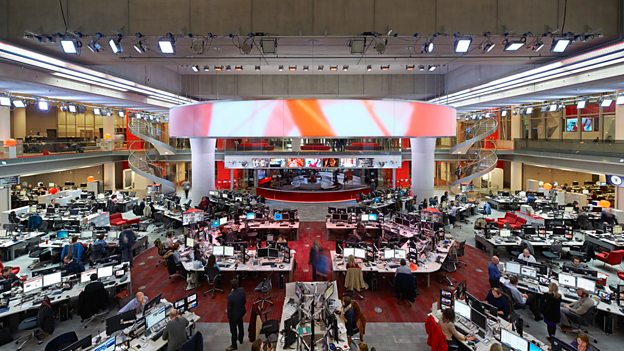
BBC News has set out an update on the plans it announced earlier this year to respond to changing audience needs.

The update addresses the BBC’s worsening financial position and draws on the experiences of operating during the Covid-19 crisis.

In January BBC News announced a series of modernisation proposals. Since then, faced with the Covid-19 crisis, BBC News has made huge operational changes to keep vital news services on air. During this time the proposals were paused, and will now be implemented in stages.

Director of BBC News and Current Affairs, Fran Unsworth, says: “Covid-19 has changed all of our lives. We are still covering the most challenging story of our lifetimes. During this crisis audiences have turned to BBC News in their millions and I’m incredibly proud of what we, as a team, have been able to achieve.

“But if we don’t make changes, we won’t be sustainable. This crisis has led us to re-evaluate exactly how we operate as an organisation.  And our operation has been underpinned by the principles we set out earlier this year – fewer stories, more targeted and with more impact. We’re aiming to reach everyone, every day. For BBC News to thrive, and for us to continue to serve all our audiences, we have to change.”

Alongside structural changes in some departments, updated plans set out today include:

  • Commissioning: the changes to working caused by the Covid-19 crisis mean it is not possible to go straight to the new way of working announced in January, but we will move towards it with a new commissioning group (made up of existing editors) to co-ordinate the biggest planned stories, avoid duplication and make BBC content go further
  • Newsgathering: BBC News will have fewer reporters overall; more correspondents will increasingly be asked to work across a range of content rather than be ‘owned’ by individual programmes. We will invest in new community affairs roles around the country, while reducing numbers in London
  • Digital: We want to ensure digital is at the heart of our journalism. A number of skilled digital journalists will move into the Newsgathering team and be deployed on stories. We will refocus the ‘rollout’ of our stories, so we break more stories in the morning when our digital audiences are highest
  • Original journalism: a new team, bringing together expertise from areas such as the Victoria Derbyshire programme and BBC Stories, will focus on under-reported ‘off diary’ stories, producing content for daily news programmes and online
  • TV political programming: Politics Live, currently airing on Wednesdays only, will return four days a week, Monday to Thursday
    BBC Parliament will focus on live and as-live coverage of the elected chambers across the UK and produce daily and weekly highlights programmes. We will no longer commission most of the other bespoke programmes we currently make for BBC Parliament, although we will continue to draw on our archive to broadcast our popular historical election coverage
  • News channels: We will preserve two clearly branded news channels (the BBC News channel in the UK and BBC World News globally) with a focus on live, breaking and developing stories but will retain some elements of shared output in the mornings and evenings
  • World Service English: we will make some of the current streamlined schedule changes permanent, including reductions in the duration of Newsday and The World This Week will be decommissioned. We will launch a new Africa-focused podcast
  • Business output: To increase the impact of business coverage we will integrate it more closely with the rest of the output, and will no longer run the Business Online live page. We will reduce separate business bulletins on the News channel and BBC World Service English
  • Radio: We will close In Business on BBC Radio 4 but continue long-form business content with The Bottom Line

Building on the lessons of operating during Covid-19, we will use fewer studios and make significant reductions to our operations staff.

The reduction in output means we will also reduce our pool of presenters.

The increased financial pressure on the BBC as a result of Covid-19 means the number of job losses in BBC News will rise to around 520, which is 70 more than the 450 announced in January. This will include senior management posts.

There will be a further update on plans later in the year.

Source: BBC Press Release

BBC World Service delivers free minute bulletins in Nigeria

BBC World Service delivers free minute bulletins in Nigeria

BBC World Service delivers free minute bulletins in Nigeria

BBC World Service is partnering with MTN Nigeria to deliver BBC News Minute bulletins, free of charge to subscribers of the MyMTN App in English, Hausa, Igbo, Pidgin and Yoruba.

This is the first time an international news organisation will feature in the MyMTN App. BBC News Minute is the BBC’s 60-second news round-up that keeps audiences across different demographics up to date with what is trending and shared on social media as well as the latest local and global news – updated at regular intervals 24 hours a day seven days a week. It will showcase the latest news in sport, tech, entertainment, science and more to the BBC’s number one audience in Africa – Nigeria.

Audiences will be able to enjoy on demand BBC News Minute at various intervals during the day and night.

The partnership will serve Hausa, Igbo, Pidgin and Yoruba audience looking for curated short form news and bring BBC Minute in local languages to the fingertips of customers in Nigeria.

With the increase in fake news across Nigeria and the African media landscape this partnership will ensure that MTN customers receive accurate and verified news from the BBC.

MTN Nigeria is Africa’s largest provider of communications services, connecting over 64 million people in communities across the country with each other and the world. It has established an active community on the myMTN app with over four million monthly active users.

Oluwatoyosi Ogunseye, Head of West Africa Languages, BBC World Service says: “This partnership with MTN is at the core of the BBC’s commitment to reaching audiences wherever they may be. It is one of the ways in which the BBC is demonstrating its commitment to Nigeria and we are thrilled about this new engagement with young audiences in this country.”

Also speaking on the partnership, Chief Digital Officer, MTN Nigeria, Srinivas Rao says: “We are proud of this partnership. It is one of the ways we offer young Nigerians more channels to consume relevant information. In an era where fake news spread easily especially through social media, credible platforms like this make a lot of difference.”

Kolawole Oyeyemi, General Manager, Customer Experience, says: “It is also a demonstration of our passion to deliver the best customer experience possible to our customers who use myMTN App, so they have relevant and authentic news they can use on the go, completely free of charge.”

Mary Lusiba, Head of African Business Development, BBC World Service, says: “This exciting deal will raise brand and awareness of BBC World Service for young consumers. It will build on the well established reputation of the BBC for quality news and information and reach out to a new generation of Nigerians. The launch is timely as content will also update audiences on the Covid-19 pandemic in Africa.”