BBC World Service launches emergency radio service for Sudan

BBC World Service launches emergency radio service for Sudan

BBC World Service launches emergency radio service for Sudan

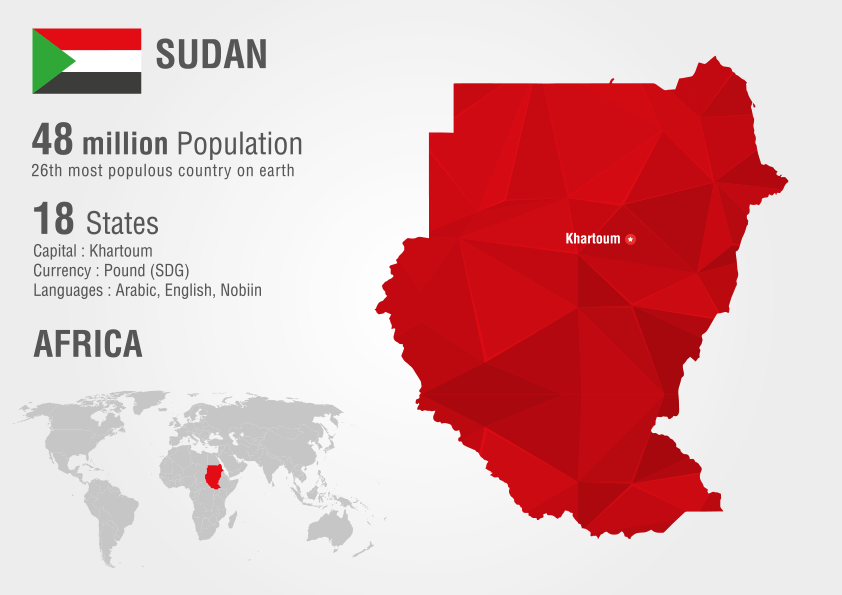
BBC World Service has launched an emergency pop-up radio service on BBC News Arabic for Sudan to provide vital access to news and information for those in the country.

Broadcast twice daily, and complementing our enhanced digital content, the service will feature eye witness accounts, news on diplomatic efforts and serve to counter disinformation in the country. Listeners will also hear information on how to access essential supplies and services as well as analysis from voices inside and outside Sudan.

The programme, which will be broadcast live in London with input from teams in Amman and Cairo, will air on short wave in Sudan and be available on radio, online and across social media.

Tim Davie, BBC Director-General, says: “The World Service provides an essential lifeline to many around the world where access to accurate news and information is scarce. The enhanced emergency service for Sudan will be crucial at a time of great uncertainty in the country.”

Liliane Landor, Director, World Service, says: “The situation in Sudan has escalated quickly with its citizens seeking clear, independent information and advice at a time of critical need. BBC Arabic’s Emergency Radio Service for Sudan will bring vital live updates of the situation on the ground and inform listeners of life-saving resources.”

The programme will broadcast twice daily for three months at 0700 GMT (8am BST, 9am local time) on 21,510 kHz and 1500 GMT (4pm BST, 5pm local time) on 15,310kHz. The first programme aired on Tuesday 2 May at 1500 GMT.

The BBC World Service has a history of responding to emergency situations globally. Most recently, in February 2022, the BBC News Ukraine service began extended TV bulletins following the invasion of the country.

BBC World Service commissions Fukushima audio drama

BBC World Service commissions Fukushima audio drama

BBC World Service commissions Fukushima audio drama

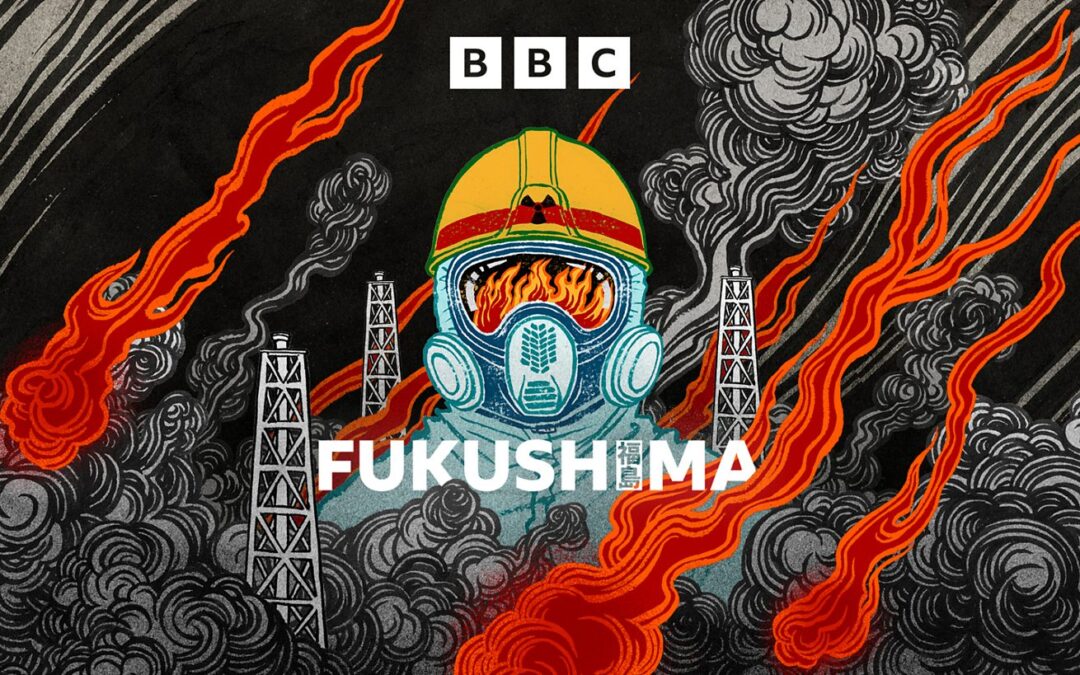
BBC World Service has announced that it has commissioned Fukushima, a new seven-part drama series exploring the 2011 nuclear disaster at the Fukushima Daiichi Nuclear Power Plant in Japan.

In March 2011, the largest earthquake ever recorded in Japan’s history triggered a tsunami which sent five to ten metre waves into coastal towns and cities, killing thousands.

Water barrelled over the seawall protecting the Fukushima nuclear power plant, flooding its basements and cutting power. It led to the world’s most severe nuclear accident since Chernobyl.

The stricken power plant became a ticking timebomb, a threat to life in Japan and beyond. As the energy company and politicians in Tokyo lost control, the reactors became unstable and a “suicide squad” of older workers was sent inside.

Akiko is a journalism student who, 10 years after the disaster, goes in search of the story behind the headlines, of how it unfolded and the consequences for the country.

Simon Pitts, Commissioning Editor, BBC World Service English, says: “Fukushima is a compelling drama that powerfully explores the 2011 disaster.

“Through the eyes of a young journalist the story follows events as they unfold, and interrogates the aftermath and the lasting effects. We’re thrilled to have a cast of brilliant and accomplished actors and crew to bring the story to life, and look forward to sharing Fukushima with our listeners across the world.”

Fukushima is narrated by twice Golden Globe nominated actress Romola Garai, and stars Togo Igawa, Ami Okumura Jones and Eiji Mihari.

It was written by Adrian Penket and produced by Toby Swift and Sasha Yevtushenko. It was commissioned by Simon Pitts for the BBC World Service.

Fukushima premieres on Monday 15 May 2023 and each 30 minute episode will premiere weekly thereafter on BBC Sounds as well as other podcast platforms. There are seven episodes. For more information visit: www.bbcworldservice.com/fukushima

It will broadcast as a radio series on the BBC World Service weekly from Wednesday 31 May at 1030 GMT.

BBC World Service launches “Dars” – the first multi-platform education series for Afghan children barred from school

BBC World Service launches “Dars” – the first multi-platform education series for Afghan children barred from school

BBC World Service launches “Dars” – the first multi-platform education series for Afghan children barred from school

BBC World Service is launching the first series of an education programme for young audiences in Afghanistan. From Saturday 1 April, the new BBC News Afghanistan satellite channel will broadcast Dars (“Lesson”) – a TV and radio series in Pashto and Dari, to bring learning to children not at school, including girls aged over 11 barred from formal education. The series will also be available via BBC News Pashto and BBC News Dari radio, BBC Persian TV broadcasts, and online.

The programme’s commissioning editor, BBC World Service News Controller Fiona Crack comments: “As the global public service broadcaster, it felt only right that BBC World Service stepped in to adapt and use the BBC’s world-leading education content, as well as our journalism, to help children excluded from school, particularly girls. We want to offer a topical, learning-based programme in Afghan homes, and we hope Dars will inform and inspire its young audience.”

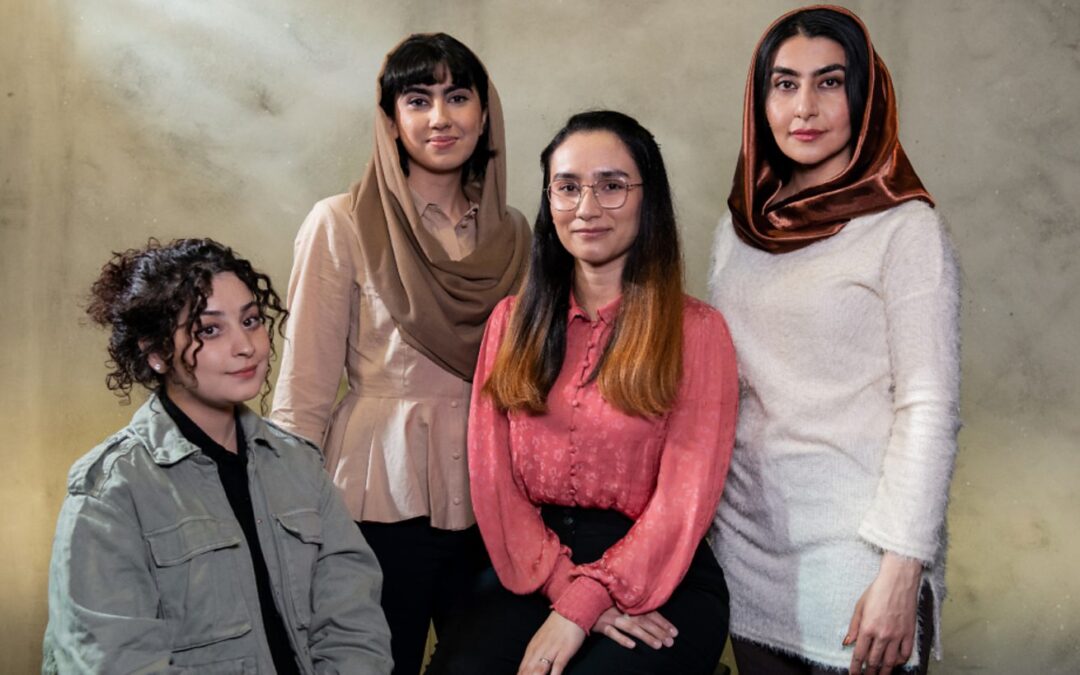
The presenters of Dars – the BBC’s Shazia Haya and Malaika Ahmadzai (in Pashto), and Aalia Farzan and Sahar Rahimi (in Dari) – fled Afghanistan, following the country’s takeover by the Taliban.

Shazia Haya says: “When I am working on this programme, I picture myself as a 16-year-old, and I wish there was a TV programme such as Dars back then… I hope that, as they study with the help of our programme, they also learn that they should not give up on education.”

Aalia Farzan adds: “Sometimes I ask myself, if I were a teenage girl in a country where I can’t go to school, wouldn’t I be very happy if someone helped me, if someone came and taught me? It’s such a privilege for me to be able, through Dars, to encourage people to choose their own life. I want to help them believe that one day you can choose what you are going to be.”

Tailored for 11 to 16-year-olds, Dars makes the most of the BBC’s teaching content with adapted maths, history, science, and Information and Communications Technology modules from BBC Bitesize, the BBC’s online study support resource for UK school-age pupils. BBC Learning English lessons will be split into two sections, for lower- and higher-stage learning. Dars will also bring its young audience current-affairs and inspirational stories from BBC World Service’s multilingual global content and from the World Service’s 100 Women series.

The first 12-week series of Dars will air four times a day, Saturday to Friday, on the newly launched BBC News Afghanistan channel. The half-hour programme will also be available via BBC News Pashto and BBC News Dari Facebook channels, on radio – through the network of BBC FM transmitters in Afghanistan as well as on shortwave and medium wave – and will be part of the BBC Persian TV channel schedule.

BBC News Pashto reaches a weekly audience of 8.3 million in Afghanistan while the weekly reach of BBC News Dari in the country is 4.3 million (BBC Global Audience Measure 2022).

The BBC News Afghanistan satellite channel brings together BBC World Service’s multilingual offer for Afghanistan, with BBC News Pashto, BBC News Dari, and BBC News Uzbek TV and radio content as well as the BBC Persian TV programming.


Image: Presenters: Sahar Rahimi, Shazia Haya, Aalia Farzan, Malaika Ahmadzai (Robert Timothy/BBC)

[Source: BBC World Service press release]

Iran’s targeting of journalists across Europe raised at UN Human Rights Council in Geneva

Iran’s targeting of journalists across Europe raised at UN Human Rights Council in Geneva

Iran’s targeting of journalists across Europe raised at UN Human Rights Council in Geneva

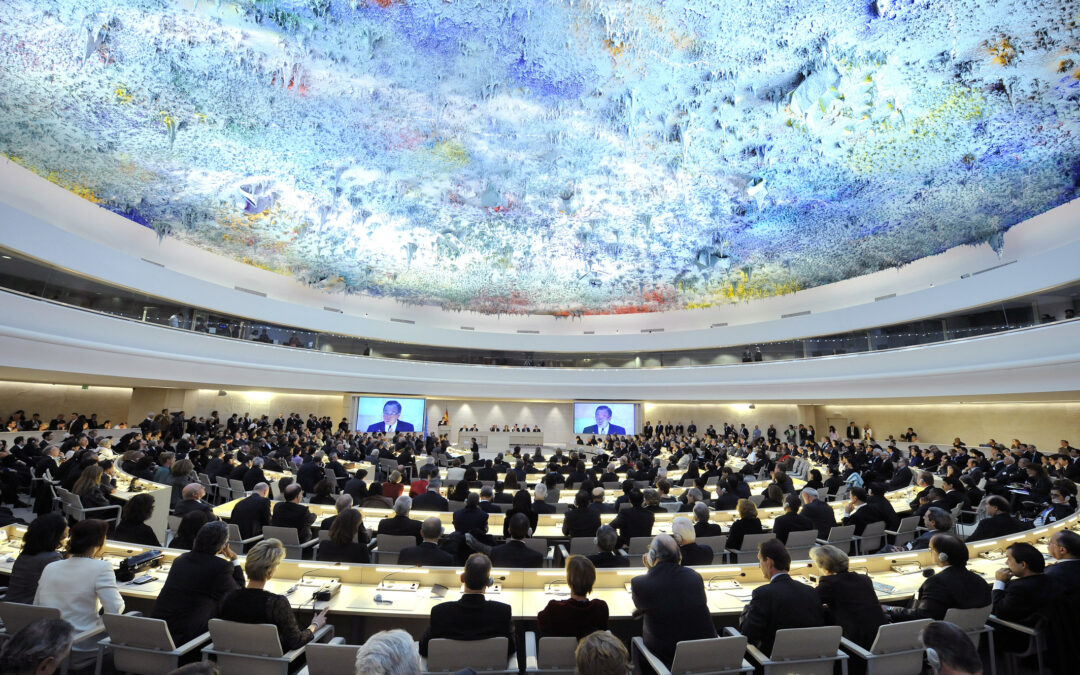
Iran’s extra-territorial targeting of journalists in the UK, Germany and across Europe has attracted criticism and concern at the 52nd session of the United Nations (UN) Human Rights Council in Geneva.

At a side event to the session on Friday 17 March, jointly hosted by BBC World Service and Deutsche Welle (DW), serious concerns were raised regarding Iran’s significant increase in threats directed towards BBC News Persian and DW staff since Mahsa Amini’s death in Iran in September 2022 and the subsequent protests seen across the country.  Escalating risks to journalists reporting on Iran, outside Iran, were discussed with State missions to the United Nations in Geneva.

Speaking by video at the event, the Special Rapporteur on the situation of human rights in the Islamic Republic of Iran, Professor Javaid Rehman, said that Iran’s actions against BBC Persian journalists violate the provisions of the international covenants, treaties and obligations, to which Iran is a state party and signatory: “I am extremely concerned that such attacks to silence journalists violate the fundamental rights of journalists and are an assault on the principles of transparency, democracy and accountability. It is also regrettable that, in these circumstances, there is a chilling effect that is produced on the work of other journalists in the Islamic Republic of Iran, and indeed elsewhere, who are reporting on the country, and may deter them from reporting on issues of public interest and of public importance.”

 In his video address, BBC World Service News Controller, Tarik Kafala, said that the pressures on the BBC Persian staff have never been greater and that there are constant attempts to undermine the audiences’ trust in BBC Persian and challenge the motivation for its work: “We stand with all of our BBC Persian journalists and we stand by their journalism.  We will not tolerate abuse, wherever it comes from. We will absolutely support our staff.  We object to any action by the Iranian authorities aimed at targeting them, their families and our journalism in the strongest possible terms. We welcome the UN’s consistent support for BBC Persian staff and their families and will continue to make our case to the world community until this completely unacceptable harassment ends.”

Head of DW Persian Service, Yalda Zarbakhch, said at the event: “We are extremely concerned about the safety of our staff at DW Persian working in Germany and their families living in Iran. Since DW has been put on the sanctions list by the Iranian government, classifying journalists as terrorists for doing their legitimate work, we have seen a new level of threats. Family members are brought in sometimes daily by the authorities for interrogations. Pressure on our staff is constant. DW urges to recognise the paramount importance of independent reporting out of Iran and for the Iranian people, and that the safety of journalists and the freedom of the media is non-negotiable.”  

Since 2017, BBC World Service has filed a number of UN complaints over the treatment of BBC News Persian staff and their families, represented by Caoilfhionn Gallagher KC and Jennifer Robinson at Doughty Street Chambers,  and supported by the National Union of Journalists (NUJ) and the International Federation of Journalists (IFJ).

Caoilfhionn Gallagher KC and Jennifer Robinson, counsel for BBC World Service, stated:  “The targeting of BBC journalists by Iran is unlawful and designed to stifle and censor independent and objective reporting on events in Iran. The death threats, arbitrary detention of family members and economic sanctions imposed on BBC News Persian journalists violate international law and should be condemned in the strongest possible terms. Iran’s targeting and harassment of journalists inside and outside of Iran has now spread beyond that directed at BBC News Persian, underlining the need for urgent action from the UN and UN member states.”

Jeremy Dear, IFJ Deputy General Secretary, stressed in his video address the need for the special rapporteurs to understand the societal impact of the Iranian regime’s action in denying citizens, at home and abroad, the right to independent information. “But also governments in the UK, Germany and other countries need to take more seriously too the threats to journalists and their families.” He pledged “the IFJ’s continued support for all those journalists at risk until they can report freely from London, from Bonn, or from Tehran.”

NUJ General Secretary, Michelle Stanistreet, comments: “The escalation in the targeting of UK-based journalists by Iran and the weaponising of their families is of enormous concern to the NUJ. It is having a profound impact on all journalists affected, impeding their daily lives and causing deep anxiety and strain for them and their loved ones. Iran’s strategic threats are clearly intended to send a collective message to journalists and media outlets that work hard to report and shine a light on events in Iran. The NUJ calls on the UN and its member states to act robustly to bring this targeting and abuse to an end.”

BBC News Persian is a multimedia news and current-affairs service with a weekly audience of 18.9m (BBC Global Audience Measure 2022). As part of BBC World Service,  it delivers accurate and impartial news, information and analysis from a global perspective to Persian-speakers around the world. 

[Source: BBC press release]

The international media of the DG8 reaffirm the importance of their missions

The international media of the DG8 reaffirm the importance of their missions

The international media of the DG8 reaffirm the importance of their missions

The DG8 leaders held their annual summit on Thursday 15 and Friday 16 December 2022 in Paris, under the chairmanship of France Médias Monde. Organized in a hybrid format, the summit allowed the majority of members to meet face-to-face after two years of pandemic-related restrictions.

During this meeting, the eight major international public media (BBC World Service, Deutsche Welle, USAGM, NHK World-Japan, ABC Australia, CBC/Radio-Canada, SRG SSR/SWI and France Médias Monde) have reaffirmed their cooperation around shared interests: the importance of guaranteeing all citizens access to professional, balanced and independent information, the fight against disinformation and all forms of manipulation, as well as the security of editorial teams on the ground and on digital platform, a corollary of the freedom to inform.

Highly responsive media offerings in the face of global upheavals

International media have played a key role in health awareness during the Covid-19 pandemic for the past two years. They also contribute greatly to raising audiences’ awareness of environmental issues and the consequences of climate change. On a daily basis, they are on the front line to cover all the major events of the world, including the most sensitive ones, even in the most remote areas. They have been particularly active since the beginning of the war in Ukraine in reporting on the conflict and have multiplied initiatives to make their radio and television channels and their digital offerings as widely accessible as possible, by adapting to the broadcasting technologies and reception modes available, and by strengthening or launching offerings in the languages spoken in the region. In the same way, members have successfully continued to develop editorial offers for Africa, Latin America, Middle-East or Asia in regional languages, have increased coverage of the Pacific and have plans to expand their footprint and reach into this strategic vulnerable region, always striving to provide audiences with reliable information that complies with the ethical rules of journalism. These initiatives go hand in hand with efforts to ensure the preservation or growth of a free and professional local media landscape.

Members united to ensure the safety of staff and the freedom to inform

In the face of states that deny their populations’ access to impartial information and attempt to influence discourse outside their own borders, the DG8 media will continue, with the support of the international community and organizations working for press freedom, to seek every means to make themselves accessible. In a context of unfavorable international tensions, the DG8 circumventing censorship working group is actively pursuing its work of exchanging and sharing solutions among members. Similarly, in a context of increasing risks for information professionals, DG8 members continue to cooperate on the physical and digital security of their teams on the ground, including hacking, tracing and other forms of digital harassment, which undermine the freedom to inform.

Unique public service missions that require unfailing support 

Following the summit, DG8 leaders paid tribute to the courage and professionalism of their international media teams serving all audiences, whose work is the first line of defense against disinformation, on a global scale, in more than 60 languages. With more than 1.5 billion user contacts following them every week, the combined audience of the eight groups, which continued to increase significantly in 2022 on both broadcast and digital platforms, illustrates the confidence of audiences in the verified, pluralist and balanced information they deliver on all continents. In order to consolidate their unique, international and multilingual mission on information, the members of DG8 wished to stress the importance of guaranteeing the level and predictability of their financial resources, as well as preserving and reaffirming all the guarantees of their independence, which are a prerequisite for the confidence of their global audience.

[Source: USAGM press release]