BBC World Service reveals 310 of its journalists are working in exile

BBC World Service reveals 310 of its journalists are working in exile

BBC World Service reveals 310 of its journalists are working in exile

Ahead of World Press Freedom Day on Friday 3 May, the BBC is announcing for the first time that over 300 World Service journalists – around 15% – are working in exile.

Recent crackdowns on press freedom in Russia, Afghanistan and Ethiopia have pushed more BBC teams to relocate for their own safety, many leaving family and friends behind.

This new figure was announced at World Service Presents, a three-day series of events highlighting the courageous work of journalists around the world, and the state of media freedom globally.

Journalists are facing increasing pressure, including state interference, harassment, and criminal charges, which are consistently used to attempt to undermine their work. Staff at BBC News Persian have been working in exile for over a decade and continue to face harassment and persecution. Last month, the BBC World Service filed an urgent appeal to the UN over abuse of national security and counter-terrorism laws against BBC News Persian journalists.

Following the invasion of Ukraine, BBC News Russian journalists and their families were moved out of Moscow to the Latvian capital of Riga. Now, 39 BBC staff remain in Riga, continuing the work of reporting independent and impartial news to audiences around the world in Russian. They also play an active part in countering disinformation about the war.

On 12 April, BBC Russian correspondent Ilya Barabanov was labelled as a “foreign agent” by the Russian justice ministry. Barabanov has written extensively about Russia’s war in Ukraine. The “foreign agent” label has been used by the government to marginalise journalists and critics of the Russian invasion of Ukraine. Ilya and the BBC reject the decision, which they are disputing in court.

Ilya Barabanov, says: “The most difficult part about exile is the lack of direct contact with people. We lost the opportunity to talk to our contributors. The inability to travel around Russia, report from the field, talk to real people – that’s the hardest part about being a journalist in exile.

“In early April, the Russian authorities designated me a “foreign agent”. This affected my status and ability to talk to people. I now must warn my contributors about this new, unpleasant status.”

Liliane Landor, Director, BBC World Service says: “Press freedom is under increasingly intense pressure at a time when millions, voting in elections around the world, need to be well-informed of the choices ahead of them. The BBC’s news services are blocked or difficult to access in many countries including China, Russia and Afghanistan.

“Our journalists face ongoing harassment and persecution from countries such as Iran and Russia to name but two. World Press Freedom Day is a stark reminder of the gravity of the situation underscoring the urgent need for journalists everywhere to be able to do their job unhindered.”

BBC World Service Director to step down

BBC World Service Director to step down

BBC World Service Director to step down

Liliane Landor, Senior Controller of BBC News International Services and BBC World Service Director, has decided to leave the BBC later this year.

BBC Director-General Tim Davie says: “The whole of the BBC owes Liliane a huge debt of gratitude. She is an exceptional journalist and editor. The BBC World Service is one of the jewels in the BBC’s crown, and has flourished under her leadership.

“Liliane has been a formidable champion of the BBC’s international services, and an inspirational leader to so many BBC News staff. I’m extremely sorry Liliane has decided to leave us, and wish her the very best for the future.”

BBC News CEO Deborah Turness says: “In a polarised world where truth is under attack, Liliane has led our BBC World Service teams with real courage. She has been a global ambassador for our powerful and important journalism, and has worked with great skill to modernise World Service output to reach digital audiences. Liliane is a person of great integrity and I will miss her wisdom very much. ”

Liliane Landor says: “Serving as Director of the BBC World Service has been an immense privilege. To have been entrusted with leading a global service relied upon by hundreds of millions worldwide is humbling and the greatest honour of my professional life.

“With media freedom under threat, the World Service is a force for good and the BBC needs to look after it.”

Liliane Landor rejoined the BBC in 2021, after a role as Head of Foreign News at Channel 4 News.

Liliane built a major part of her journalistic career at the BBC, where she began at the French Service.

She went on to manage, present, and edit key areas of the BBC World Service, including a role as head of News and Current Affairs in English, before becoming Controller of Languages, where she was editorially responsible for all non-English language services on radio, TV and online. She left this role in 2016.

Liliane also founded the BBC’s staff network, Global Women in News, which remains high-profile and active, and launched the popular 100 Women project in 2014, being named on the list herself in 2016.

Liliane will leave the BBC in July.

BBC World Service Director to step down

BBC World Service files urgent appeal to UN over abuse of national security and counter-terrorism laws against BBC News Persian journalists

BBC World Service files urgent appeal to UN over abuse of national security and counter-terrorism laws against BBC News Persian journalists

The BBC World Service has submitted an updated complaint to its urgent appeal filed with the UN and requested urgent action.

The action follows recent developments, including the publication of documents in late February 2024 by a hacking group, which appear to reveal that a number of current and former BBC News Persian journalists were convicted in absentia by a court in Tehran in February 2022 for “propaganda against the Islamic Republic”. This comes after sanctions were imposed on Iranian officials by the UK and US in January this year for threats towards Iranian journalists in London.

The updated complaint was sent to five Special Procedures mandate-holders with whom it was first filed in December 2020 and updated in February 2022: the Special Rapporteur on the Promotion and Protection of the Right to Freedom of Opinion and Expression; the Special Rapporteur on the Situation of Human Rights in the Islamic Republic of Iran; the Special Rapporteur on Extrajudicial, Summary or Arbitrary Executions; the Special Rapporteur on Violence Against Women, its Causes and Consequences; and the Working Group on Arbitrary Detention.

The new complaint was also addressed, for the first time, to the Special Rapporteur on the Promotion and Protection of Human Rights and Fundamental Freedoms while Countering Terrorism, citing “the relevance of historic and recent events” to this UN Special Rapporteur’s mandate, including the sanctioning of BBC News Persian by Iran, as well as the mass national security criminal investigation of BBC News Persian staff and the associated asset freeze.

In the appeal, submitted on behalf of the BBC by counsel for BBC News Persian, Caoilfhionn Gallagher KC and Jennifer Robinson, and presented by them as “extremely urgent”, the UN experts are requested to issue:

  • a new communication to Iran, raising both Iran’s inadequate response to their previous communication in 2022, and the recent developments; and
  • a public joint statement from UN experts condemning the ongoing targeting and harassment of BBC News Persian journalists.

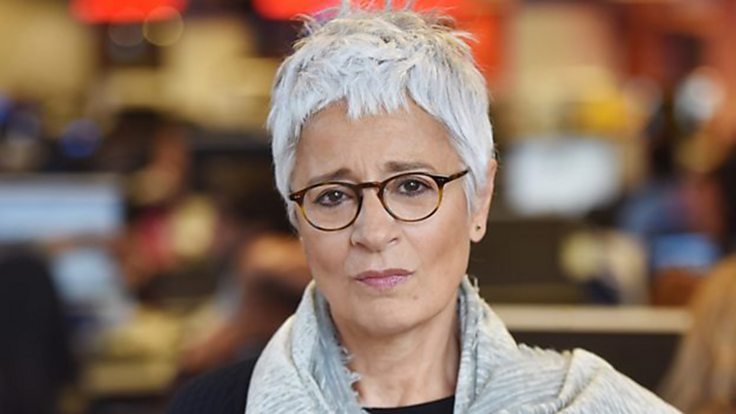
Liliane Landor, Director, BBC World Service (pictured), says:  “Recent developments have amplified the severe situation facing our BBC News Persian staff on a daily basis. They are being penalised for their journalism and professionalism.

“As we look to World Press Freedom Day next month, we are urging UN experts to robustly condemn the Iranian authorities’ harassment and to hold the regime to account.”

Michelle Stanistreet, NUJ general secretary, said: “Journalists must not be targeted for doing their job. Speaking truth to power and covering the news without fear or favour must be the cornerstones of journalism, but BBC News Persian and other Iranian journalists are today suffering for doing just that. We fully support this intervention from the BBC and encourage the UN to exercise its influence to bring safety and justice for Iranian journalists and their families who are targeted so heartlessly.”

Caoilfhionn Gallagher KC and Jennifer Robinson, said: “Iran’s abuse of national security and counter-terrorism laws against the BBC and the convictions in absentia for BBC News Persian journalists for ‘propaganda’ against the state for their independent reporting on Iran are designed to intimidate and silence the BBC’s journalism about Iran. It must stop. We call on the UN to denounce these unlawful actions in the strongest possible terms.”

These recent developments come in the context of comprehensive targeting and intimidation of BBC News Persian staff and the harassment of their families, which escalated dramatically from September 2022 in the aftermath of the mass protests and increased tension in Iran, which BBC News Persian has reported extensively on. This was the subject of the UN Independent International Fact-Finding Mission on the Islamic Republic of Iran whose final report issued earlier in 2024 documented the continuing threats and harassment of BBC News Persian staff.

The ongoing harassment is also documented in a 2024 survey of BBC News Persian staff where half of the respondents said they had received online threats or been harassed online for working for the BBC. The work of the BBC journalists continues to cause harassment of their families or friends, with over 60% of the respondents having been harassed, threatened or questioned in Iran. Nearly 70% said that they hadn’t been able to say goodbye to one or both their parents before they passed away in Iran.

BBC News Persian is part of the BBC World Service.

[Source: BBC press release]

BBC staff launch new company to serve audiences with BBC Indian language services

BBC staff launch new company to serve audiences with BBC Indian language services

BBC staff launch new company to serve audiences with BBC Indian language services

Four BBC staff members have announced plans to leave the organisation and form a new entity in India which will provide audiences with a breadth of services across India, as commissioned by the BBC.

The establishment of Collective Newsroom Private Limited ensures the BBC and Collective Newsroom can meet their shared commitment to Indian audiences and cover stories on India that matter to global audiences. It is in compliance with the Indian Foreign Direct Investment law.

Collective Newsroom has been established as an Indian company, wholly owned by Indian citizens, with four existing staff members leaving the BBC to lead Collective Newsroom. These senior leaders have a wealth of editorial and programme-making experience. The BBC will commission Collective Newsroom to produce its six Indian language services as well as Indian digital output and Indian YouTube channel in English for audiences globally.

The BBC has a long-held and deep-rooted place in India’s media landscape, having first launched the Hindi language service in 1940. Since then it has developed a range of BBC output, expanding the number of Indian language services and growing audience figures from decade-to-decade with its agenda-setting and high impact journalism.

Rupa Jha, Senior News Editor, BBC India, and founding shareholder of Collective Newsroom, says: “Audiences in India can be assured that the BBC’s Indian language services and unique range of quality output will inform, educate and entertain audiences across our diverse and highly engaged country under the agreement between the BBC and Collective Newsroom. We launch Collective Newsroom with big ambitions for audiences in India and beyond.”

Jonathan Munro, Deputy CEO, BBC News says: “The BBC’s presence in India is steeped in a rich history that has always put audiences first, so we warmly welcome the formation of Collective Newsroom which continues that progression. The BBC will get first class content from Collective Newsroom that will be rooted in India and in line with the editorial standards audiences expect from the BBC. We look forward to working with them.”

Liliane Landor, Senior Controller, BBC News International Services, says: “Two of the BBC’s critical strengths are its truly global output for audiences and our reputation as a trusted source of news. We are deeply committed to excellence in journalism for and from India, and this agreement ensures the continued production of independent, international and impartial journalism that the BBC News brand is renowned for in India and around the world.”

Activity for BBC Monitoring and the BBC’s English language newsgathering operation for global output will remain with the BBC.

  • The four staff members leaving the BBC to lead Collective Newsroom are; Rupa Jha, Mukesh Sharma, Sanjoy Majumder and Sara Hassan
  • The BBC provides content in six Indian languages (BBC News Hindi, BBC News Marathi, BBC News Gujarati, BBC News Punjabi, BBC News Tamil, BBC News Telugu) as well as in English, to 82 million people around the country on average each week
  • BBC News Hindi is the BBC’s language service with the largest audience and in 2023, across all platforms, its weekly reach figure grew 27% year-on-year
  • The BBC World Service reaches 318 million people on average every week globally and operates 42 different language services

​Earlier in 2023 it looked as if a number of international TV news channels broadcast in India would have to close after the Ministry of Information and Broadcasting announced a significant increase in the “net worth” of Indian companies holding downlink licences on behalf of global channels. After lobbying, this move was rescinded allowing the small-scale local licence holders to continue operating on behalf of international channels. 

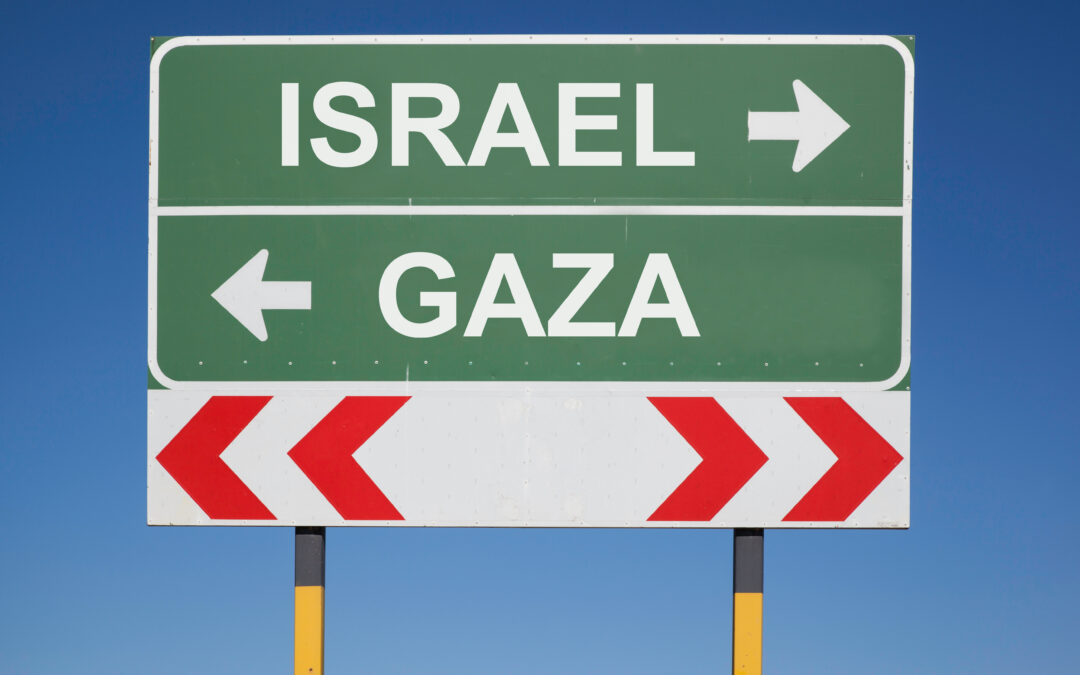
BBC World Service announces Emergency  Radio Service for Gaza

BBC World Service announces Emergency Radio Service for Gaza

BBC World Service announces Emergency Radio Service for Gaza

BBC News Arabic has today (1 November) announced an Emergency Radio Service for Gaza in response to the conflict in the region.

The emergency service – Gaza Daily – will broadcast vital news daily to the people of Gaza during this time of urgent need.

It will provide listeners in Gaza with the latest information and developments as well as safety advice on where to access shelter, food and water supplies.

Produced in Cairo and London and broadcast on medium wave, the service will initially run one programme a day at 1500 GMT from Friday 3 November. A second daily update will be broadcast at 0500 GMT from Friday 10 November.

The BBC World Service has a history of responding to emergency situations globally. Most recently, in May 2023 during the conflict in Sudan BBC News Arabic began an emergency radio service. In February 2022, the BBC News Ukraine service began extended TV bulletins following the invasion of the country. The BBC also previously launched a service for Gaza in 2014 following a summer of conflict.

Liliane Landor, Director, BBC World Service, says: “BBC News Arabic are extremely well-placed to offer this vital service for the people of Gaza at a time of greatest need. Their expertise and specialist knowledge of the region alongside the BBC’s reputation as the most trusted news provider, means we can reach civilians in Gaza with the information they need.”

Notes to editors: The Gaza service will be broadcast on MW 639kHz for morning and evening episodes.

[Source: BBC press release]