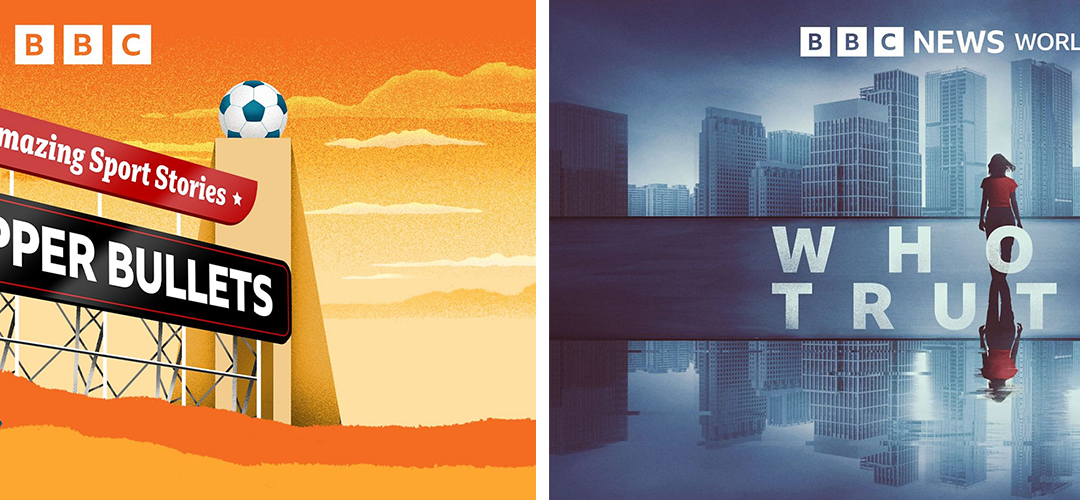
 In a new four-part season of Amazing Sports Stories, we hear the tragic story of the plane crash that took the lives of the Zambian men’s national football team in 1993, at the peak of their success.
Presenter and former international footballer Robert Earnshaw sets out on a journey to learn more about this extraordinary story.
Zambia excelled at the 1988 Olympics, bursting onto the global football stage with an exceptionally talented generation of players. The team was a point of pride for the whole nation and by 1993 they were in a great position to qualify for the World Cup for the first time ever.
However, the nation’s dreams were shattered when the plane carrying the team – nicknamed the KKXI after the Zambian President Kenneth Kaunda – crashed in Gabon in 1993.
The tragedy broke the nation’s hearts and had a devastating impact on the families of the crash victims. But the Zambian people were defiant, and a new team was assembled to continue the World Cup dream and compete in the Africa Cup of Nations, the biggest football tournament in Africa.
Incredibly, this new, hastily assembled team went much, much further than anyone could have possibly imagined.
In this new instalment of Amazing Sports Stories, Robert speaks to players and managers, obtaining first-hand accounts of the dramatic story of the World Cup qualifying campaign and Africa Cup of Nations in 1994.
Robert Earnshaw, says: “This story is tragic, romantic, powerful, and simply one of the most fascinating football stories of all time. While narrating the story, I was especially moved given that as a football player I travelled on flights internationally the same as ‘The Copper Bullets’ (The Zambia Football Team), and it’s incredible that some of my family were supposed to be on that plane.”
Born in Zambia and raised in South Wales, Robert Earnshaw made his international debut for Wales in 2002, later playing for the Premier League.
Along the way, we hear from ex-footballers, journalists, football fans, academics and ordinary Zambian citizens.
The first episode of Copper Bullets will be available as a podcast on BBC Sounds on Monday 10 June and more widely available on other podcast platforms from Monday 17 June. Episodes will be released weekly. Copper Bullets will air weekly on BBC World Service radio from Saturday 13 July.
Copper Bullets is produced by Richard Power and George Hodkinson. It is a 7digital Production for the BBC World Service
Amazing Sport Stories is the BBC World Service podcast about sport but not as you know it. There are other podcasts about champions, team news and millionaire superstars – this one is about courage, rulebreakers and expecting the unexpected. We’ve searched the world for these tales which are told in mini-seasons and short stories.
Previous mini-seasons have included the stories of the “Black 14”, a group of 14 American football players who were kicked off their university team in Wyoming in 1969 for wanting to protest against racism at another university. Frozen Out is the story of a 12-year-old girl from Canada who just wanted to play ice hockey with the boys – when she was told she couldn’t, she turned from the ice rink to the court, transforming a sporting fight into a legal battle. Chasing Mountains follows five mountaineers risking their lives in some of the harshest environments on earth, trying to become the first woman to reach the summits of the 14 highest mountains in the world.
 In a new four-part series titled Whose Truth? Babita Sharma hears from Nobel Prize laureates, global analysts, activists, and changemakers to discuss global problems that are demanding a new approach to critical thinking.
Four Nobel Prize laureates describe their experiences of disinformation in their field: Katalin Karikó, Nobel Prize in Physiology or Medicine 2023; Oleksandra Matviichuk, whose organisation was one of the recipients of the Nobel Peace Prize 2022; Sir Paul Nurse, Nobel Prize in Physiology or Medicine 2001; and Maria Ressa, co-recipient of the Nobel Peace Prize 2021.
The partnership combines the expertise of Nobel Prize laureates and researchers with the BBC’s journalistic expertise and global reach across 43 languages. It will equip audiences with accessible, digestible, and relatable content, to better understand and interrogate false narratives.
Young adults face a world of unprecedented challenges. Not only are they facing global threats such as climate change, war and persecution, but they are doing so when the very fabric of what is considered real or truthful is under attack.
Disinformation, an increased distrust of fact-based science and journalism, and the proliferation of fake news on social media, is threatening journalism, science and democracy worldwide. The series explores how critical thinking is a crucial skillset in combatting this spread.
Across four episodes we hear from Nobel Prize laureates about the spread of disinformation in their fields of work and the young people around the world combatting and exposing these distortions.
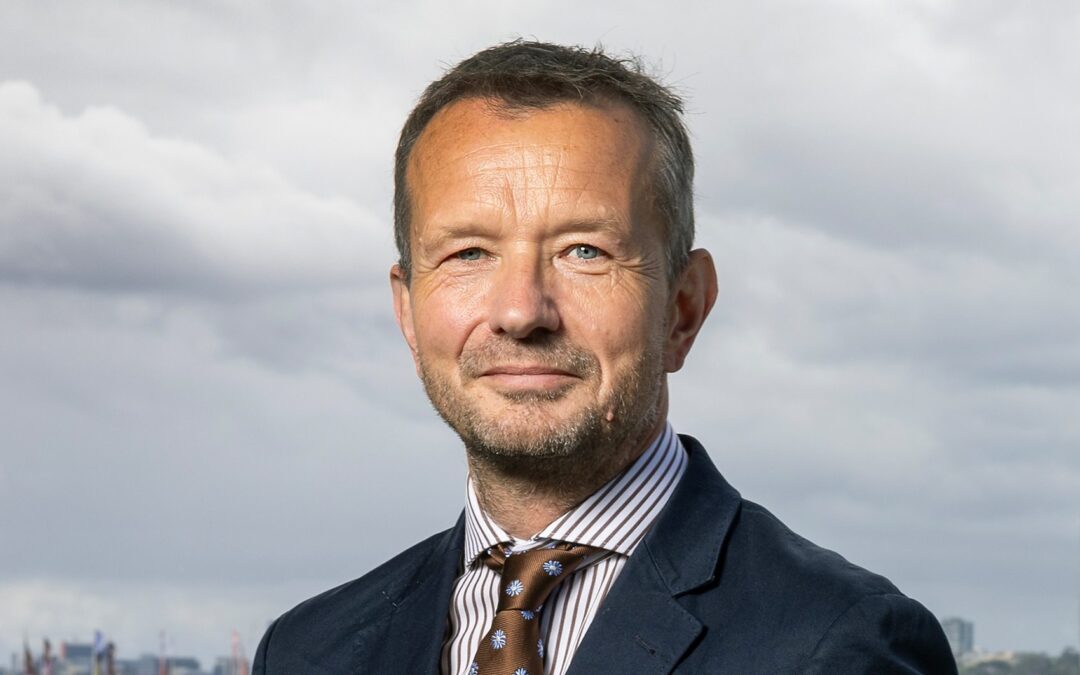
Jon Zilkha, Controller, BBC World Service English, says: “With the alarming rise of disinformation around the world, this thoughtful series considers how we navigate that challenge. Our partnership with Nobel Prize Outreach will offer listeners insights from world-leading experts and their experiences of countering disinformation.”
Simon Doyle, Chief Digital Officer, Nobel Prize Outreach, says: “Nobel Prize laureates often highlight the importance of critical thinking skills and express deep concern about the threats to fact-based worldviews. The series provides new insights into the risks but also shows that tools exist to combat disinformation to make better decisions. Through our editorial collaboration, we will strengthen each other’s voices and inspire audiences across the globe.”
Episode 1: Whose Truth? The vaccine
How Nobel Prize laureate Katalin Karikó got caught up in the Covid vaccine disinformation wars. What was it like – as someone behind one of the vaccines – to be in the eye of the false information storm? Katalin tells her story to Babita Sharma. And US educator and artist Young Elder tells Babita how she helped to build trust in the vaccine among Baltimore’s black community. She works with Hip Hop Health, an organisation combatting health and vaccine disinformation, started by rapper Doug E Fresh.
Episode 2: Whose truth? Russia vs Ukraine
Can information become a weapon of war? Oleksandra Matviichuk, whose organisation was awarded the Nobel Peace Prize, is documenting alleged Russian war crimes against Ukraine. She talks to Babita Sharma about how she uncovers the evidence. Babita also speaks to Anastasiia Romaniuk, a young Ukrainian digital platforms analyst, who is exposing disinformation around the war, and to Lisa Kaplan, founder and CEO of a US company which helps organisations protect themselves from social media manipulation.
Episode 3: Whose truth? Climate change denial
Nobel Prize laureate Sir Paul Nurse wants science, not politics, to guide the debate surrounding climate change. But how do you convince the denialists? Babita Sharma takes us through the evolving strategies of those who claim climate change isn’t real. And she speaks to two young people who are trying to make a difference. UK climate activist Phoebe L Hanson founded Teach the Teacher, which gives school children the resources to engage with their teachers on climate change. Ugandan Nyombi Morris set up a non-profit organisation, Earth Volunteers, to mobilise young people like him who wanted to promote the fight against the climate crisis.
Episode 4: Whose truth? Online women haters
Attacked on social media – how Nobel Peace Prize laureate Maria Ressa came under fire for doing her job as a journalist in the Philippines, covering the Presidency of Rodrigo Duterte, and challenging social media companies for spreading disinformation. She talks to Babita Sharma about the fight to stop social media being used to spread lies and hate against powerful women. Babita also speaks to two female digital pioneers. Lucina Di Meco is the co-founder of the California-based group She Persisted, which addresses the digital threat faced by women in politics. Audrey Pe is founder of the non-profit organisation WiTech which aims to inspire young people to use technology to bring positive change.
The series is produced by Ian Rose, Claire Williamson, and Philippa Goodrich for the BBC World Service, in partnership with Nobel Prize Outreach.
All four episodes of Whose Truth? will be available from Wednesday 5 June on The Documentary podcast feed wherever you get your BBC podcasts. It will air weekly on BBC World Service radio from Saturday 15 June.
Additional digital content includes a video showing what football fans’ support reveals about group bias; and a series of animations with critical thinking tips from Nobel Prize laureates including Claudia Goldin, Maria Ressa, Daniel Kahneman and Saul Perlmutter.