30 April 2018
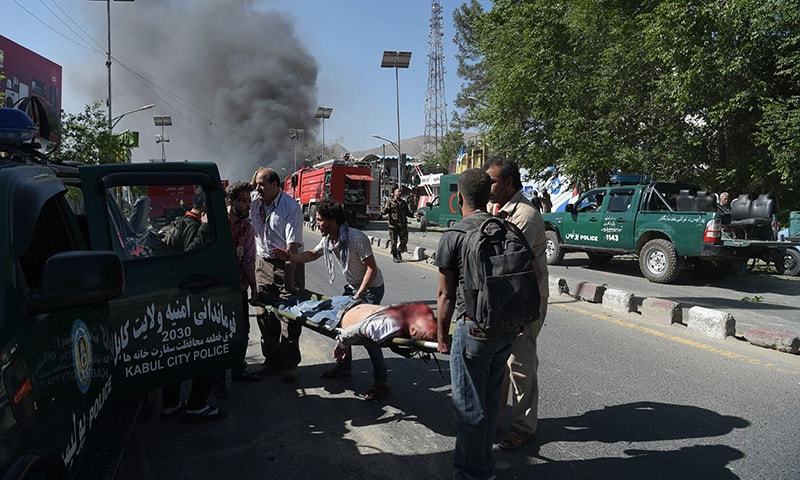
Monday 30 April has been one of the deadliest days for journalists working in Afghanistan. Ten journalists were among dozens killed in multiple attacks across the country. News Agency AFP says that it is the worst days for the country’s media since 2001.
AFP reported that two suicide blasts in Kabul killed 25 people including Shah Marai, the agency’s chief photographer in Kabul, along with at least eight other journalists. Reporters Without Borders said this was the most lethal single attack on the media since the fall of the Taliban.
The attack, claimed by the Islamic State group, was condemned internationally by groups including the United Nations and the European Union, and spurred an outpouring of grief among Afghan journalists, many of whom took to Twitter to post tributes to colleagues and friends.
Journalists from Radio Free Europe and Afghan broadcasters Tolo News and 1TV were among those killed in Kabul.
 AFP’s Marai – who was buried later Monday – joined the international news agency as a driver in 1996, the year the Taliban seized power, and began taking pictures on the side, covering stories including the US invasion in 2001.
In 2002 he became a full-time photo stringer, rising through the ranks to become chief photographer in the bureau. He leaves behind six children, including a newborn daughter.
“This is a devastating blow for the brave staff of our close-knit Kabul bureau and the entire agency,” said AFP Global News Director Michele Leridon, describing him as a “treasured colleague”.
“We can only honour the extraordinary strength, courage, and generosity of a photographer who covered often traumatic, horrific events with sensitivity and consummate professionalism,” Leridon said.
“We also send our condolences to the families of other journalists killed in this terrible attack.”
Jamie Angus, Director of BBC World Service, announced: “It is with great sadness that the BBC can confirm the death of BBC Afghan reporter Ahmad Shah following an attack earlier today. The attack took place in Khost province.

“Ahmad Shah was 29. He had worked for the BBC Afghan service for more than a year and had already established himself as a highly capable journalist who was a respected and popular member of the team.
“This is a devastating loss and I send my sincere condolences to Ahmad Shah’s friends and family and the whole BBC Afghan team. We are doing all we can to support his family at this very difficult time.”
Photo credits: AFP/BBC

23 April 2018
The future of digital media in the Western Balkans will be the main theme of a major conference in Belgrade organised by the BBC’s Serbian service. The Balkan media market is facing serious challenges such as the proliferation of fake news, the fragmentation of the media scene and financial instability.
The Director of BBC World Service Group, Jamie Angus and senior BBC journalists will come together with leading media representatives from around the region at the one-day conference. They will discuss some of the key issues facing the region’s digital news industry, and how the BBC’s standards, experience and insights can help serve the regional audiences on digital platforms.
Jamie Angus will open the conference, the Future of digital news in the Western Balkans, at Belgrade’s Hotel Zira on Tuesday 24 April. UK Ambassador to Serbia, Denis Keefe, will join Jamie Angus to greet participants. First Deputy Prime Minister and Minister of Foreign Affairs of the Republic of Serbia, Ivica Dacic, will join Jamie for the closing of the conference.
Jamie Angus says: “Just as our newly launched service, BBC News Serbian, is establishing itself on the regional media scene, I am very happy to welcome our colleagues from Serbia, Montenegro, and Bosnia and Herzegovina to join us in a very timely conversation about reaching and serving digital audiences.”
The subjects to be discussed at the conference include:
- Rising to the global challenge: quality news in the age of fakes, fragmentation and financial uncertainty
- Future of digital news – regional voices
- The Serbian diaspora and digital news – what are they reading and why?
- The BBC Newsroom stylebook – creating a standard style for online journalism
- The business of digital news – where does the money come from?
BBC News Serbian (BBC News na srpskom) digital service was launched on 26 March 2018 and in its first week reached over 95 thousand people through its website, bbc.com/serbian and social media (Twitter and Facebook). BBC News Serbian was the last of the 12 new language services launched as part of the expansion of the BBC World Service between 2017 and 2018.
12 March 2018
BBC World Service and Norway’s NRK are joining forces on a major new podcast-first production, Death in Ice Valley, which will investigate the mysterious death of a woman in Norway in the 1970s.
Death in Ice Valley has been commissioned specifically as a podcast and combines innovative production with first-class journalism and storytelling. Listeners will join investigative reporter Marit Higraff and documentary maker Neil McCarthy on a journey in which they will attempt to piece together the woman’s life. Who was she? Why hasn’t she been missed? Was her death the result of murder or did she take her own life?
Episodes will be released weekly and Marit and Neil are poised to react to any significant leads that come into them from podcast listeners. The series preview will be made available on March 26th, with the first episode launching on April 16.
Often referred to as the ‘Isdal Woman’, the body was discovered in November 1970. No one knew who she was and almost half a century on, her identity remains a mystery. Her badly burnt body was found in the remote Isdalen (Ice Valley) under unusual circumstances. Police investigating at the time found her suitcases at the nearby Bergen railway station, with disguises inside. The woman had stayed in numerous hotels using different names. Labels had been removed from her clothing. It is a case which has perplexed Norway.
All we know is she almost certainly wasn’t Norwegian. This is an international investigation.
 NRK’s Marit Higraff has been investigating the case for two years. She and Neil McCarthy will be travelling across Norway and beyond to find out what they can about the woman at the centre of this enduring mystery. A specially commissioned soundscape has been designed by Phil Channell.
Listeners will be invited to join and contribute to a Death in Ice Valley Facebook group –www.facebook.com/groups/deathinicevalley.
Death in Ice Valley follows the BBC World Service’s highly successful and popular podcast, The Assassination.
Mary Hockaday, Controller, BBC World Service English said: “We’re thrilled to be collaborating with NRK, combining the shared expertise of our journalists and documentary makers as they delve into this riveting and perplexing story. The growing popularity of podcasts is phenomenal, and Death in Ice Valley is just one example of how we’re exploring the power of podcasts to offer our World Service audiences new stories and new ways of listening.”
Frank Gander, chief editor for documentaries at NRK, said: “This collaboration with the BBC World Service opens up new possibilities in the case of the Ice Valley woman for NRK. Although we reach 4 of 5 Norwegians daily through radio, TV and online, the BBC has a far wider reach. And one of the main theories in this mystery is that the answers lie somewhere in Europe. It has been exciting and rewarding to work with BBC on this project, and my team and I are anxious to see what kind of feedback we will get when this podcast series starts in April”.
World Service English Podcast Editor Jon Manel, who commissioned the series, said: “We are in the process of transforming our podcast collection. Death in Ice Valley is an immersive, episodic listening experience, designed specifically with podcasting in mind. Investigating a true, very sad and perplexing story, it seeks to use both science and the power of podcasts. Can podcast listeners help to provide answers?”
Ten episodes are being made – and there could be more.
The preview will be available from 26 March and the first episode will be available from 16 April. You can listen to or download Death in Ice Valley via the BBC World Service website or from wherever you get your podcasts. The Death in Ice Valley website is www.bbcworldservice.com/deathinicevalley
1 March 2018
Members of the Association for International Broadcasting have elected a new Executive Committee for the two years from 1 March 2018. The AIB Executive Committee provides governance and oversight of the activities of the Association and helps to define the strategic direction of the not-for-profit organisation.
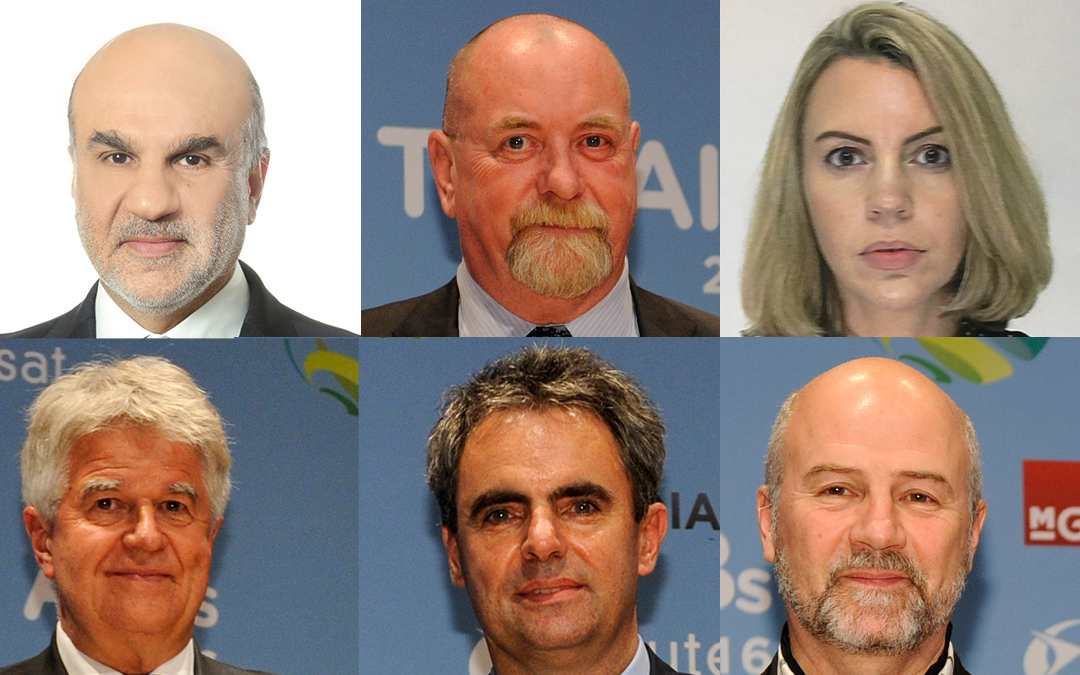
11 senior executives of AIB Member companies stood for election, of which six were existing Executive Committee members who offered themselves for re-election. After votes were counted from the 48% turnout of AIB Members eligible to vote, those elected to the Executive Committee are (pictured above from top left):
- Abdulla Al-Najjar, Al Jazeera Media Network
- John Maguire, FMM
- Anastasia Ellis, Bloomberg
- Klaus Bergmann, DW
- Simon Kendall, BBC World Service
- Alexey Nikolov, RT
“The field of candidates in this year’s election for the AIB’s Executive Committee was immensely strong,”says AIB chief executive Simon Spanswick. “I’m delighted that the Association for International Broadcasting’s Members have elected such a strong Executive Committee, and one that brings together a range of expertise and knowledge from major global broadcasters that will help steer the Association in the rapidly-changing media marketplace. My colleagues and I at the AIB Secretariat look forward to working closely with the Executive Committee as the Association continues to expand both its work and its membership.”
The AIB Executive Committee holds office for a two-year period. Members of this new Committee will hold office from 1 March 2018 until 29 February 2020.
19 February 2018
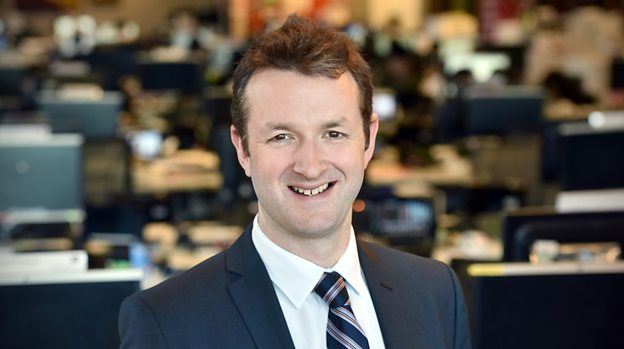
Jamie is currently Deputy Director of the World Service Group and Editorial Director of BBC Global News Ltd (GNL). He has been Acting Director of the World Service Group since the beginning of this year.
As Director, Jamie will lead the BBC’s global news services – BBC World Service, BBC World News and BBC.com – as well as BBC Monitoring. The BBC’s global news services have a weekly audience of 346m and the BBC World Service is currently undergoing its biggest expansion since the 1940s.
Director of BBC News and Current Affairs Francesca Unsworth says: “The BBC’s international news services are more important than ever, and Jamie brings huge editorial and leadership expertise to the Director role. He has a clear and strategic vision for the future of the World Service Group – both editorially and for our commercial services.
“The BBC World Service plays a unique role for the BBC, for Britain, and across the world, and I am confident it has an exciting future under Jamie’s direction.”
Jamie Angus says: “It’s a great honour to be appointed as World Service Director. There’s never been a greater need globally for the BBC’s independent, creative and engaging news services. With the expansion to 41 language services, we are already reaching new audiences everywhere; our English services on TV radio and online remain the gold standard for international news.
“With global concern growing about disinformation, ‘fake news’ and media literacy, the World Service Group has never been in a stronger position to show the way forward. We spot the stories, see the patterns and make sense of the world for our audiences. I’m very pleased to be able to lead that mission in the coming years.”
Jamie was previously the editor of Radio 4’s Today programme, covering high profile stories including the 2015 UK General Election, Scottish Independence referendum and the EU referendum. Under his leadership Today reached record audience figures of 7.4m and won an ARIA Radio Academy gold award for best National Speech Breakfast Programme.
Jamie joined the BBC in 1999 and was previously acting editor of Newsnight, editor of World At One and The World This Weekend, and editor of Daily News Programmes on World Service radio. He worked for the World Service Group in 2010-12 where he commissioned and launched new language TV bulletins in Urdu, Hindi and Swahili and the daily Focus on Africa TV bulletin, and worked on attachment as head of the World News newsroom.
His appointment follows a competitive recruitment process. Jamie replaces Francesca Unsworth, now Director of News and Current Affairs.
