ABC sets out five year plan

ABC sets out five year plan

ABC sets out five year plan

ABC Managing Director David Anderson has launched the ABC’s five-year strategy and outlined proposals to address budget cuts while protecting the Corporation’s independence and Charter responsibilities for all Australians.

“The ABC Five-Year Plan 2020-2025 will guide us as we continue to transform from a traditional broadcaster to the nation’s most trusted and valued digital content provider across all platforms,” Mr Anderson told ABC employees.

“This strategy lays out the next steps in the ABC’s proud 88-year history, ensuring that now and into the future we remain the home of Australian stories, trusted information and conversations that connect us all.”

Mr Anderson said proposed savings initiatives aligned with the five-year plan, ensuring the ABC is more relevant to more Australians with a greater focus on accessibility and the on-demand digital services audiences now expect.

Mr Anderson said the Federal Government’s indexation pause, which cut the ABC’s budget by $84m over three years with an ongoing reduction of $41m a year from 2022, coming on top of the $64m in ongoing cuts imposed in 2014, made difficult decisions affecting jobs and services inevitable.

“The proposals announced today ensure the ABC can enhance its value to all Australians now and into the future,” he said.  “However, we anticipate we will farewell as many as 250 people through this process, valued colleagues who have made tremendous contributions to the ABC and to our audiences.

“This is a difficult time for us, as it is for the broader economy and community as we all struggle with the events of this year.”

ABC Chair Ita Buttrose said “the ABC Five-Year Plan is a robust blueprint for the future of the ABC that emphasises the important role the ABC plays in the Australian way of life.”

The proposed savings initiatives include:

 Giving ABC Life a new editorial direction and name, ABC Local, sourcing content from across the ABC, including outer suburban and regional areas.

 A greater focus on digital and on-demand news services, including discontinuing the 7.45am broadcast-only radio news bulletin and shifting focus to provide news across all our audio platforms.

 Rebranding ABC Comedy to create a home for a range of genres, such as Arts, Science, Education and Religion. Comedy will continue to be commissioned for ABC main channel and a destination on iview.

 Reducing independent production by approximately $5m p.a., predominately from the factual and entertainment slate, with the ABC prioritising investment in Drama and Children’s programming.

The proposed initiatives are in addition to reduced numbers in management and support teams and identified savings greater than 2% through current vacancies, redundancies and reducing operating costs.

The ABC has also reduced travel budgets by 25%, with a greater reliance on technology to connect the workforce.

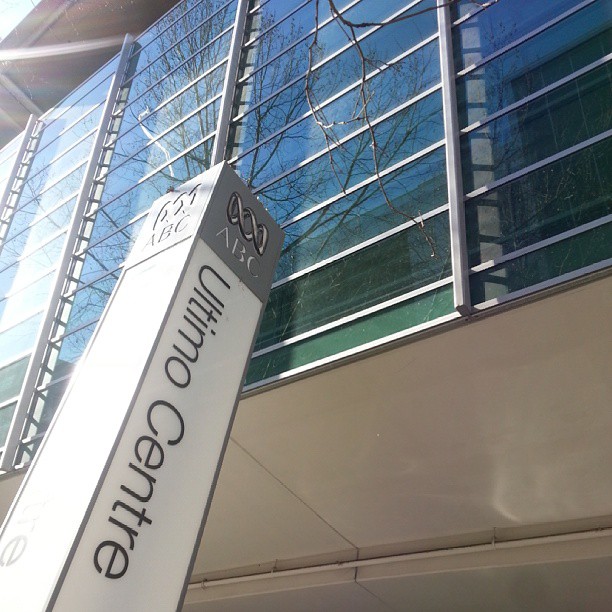
A review of the ABC’s property portfolio will consider options to either improve our accommodation, lease vacant space or relocate if it is more beneficial.  Assessing spare capacity for leasing in ABC Ultimo could potentially create a $4 million p.a. saving. A portion of this could be reinvested in services.

Increased investment in regional centres reflects another important commitment in the Five-Year Plan and will see 75% of content-makers working outside the Ultimo headquarters by 2025, ensuring greater engagement with local communities.

Mr Anderson told employees both he and the ABC Chair Ita Buttrose would continue to seek the Government’s endorsement for a five-year funding period to give the ABC certainty in delivering this plan for all Australians.

“The ABC Five-Year Plan 2020-2025 is just the start of this next stage in the ABC’s history,” Mr Anderson said. “We will uphold the highest editorial values, remaining Australia’s best and most trusted source of news and information and continuing to deliver the best public interest journalism that strengthens our democracy.”

“The ABC Five-Year Plan is a commitment to the ABC tradition of telling Australian stories that are accessible, bold and creative.  Our message to the Australian people is clear.  Now, more than ever, we are your ABC.”

Image: Flickr/Stilgherrian
AIB provides evidence to Australian Senate Committee on media freedom

AIB provides evidence to Australian Senate Committee on media freedom

The Association for International Broadcasting has made a submission to the Australian Senate Standing Committee on Environment and Communications Inquiry into Press Freedom.

This Inquiry, running in parallel with the Australian Parliamentary Joint Committee on Intelligence and Security inquiry into the impact of the exercise of law enforcement and intelligence powers on the freedom of the press, is gathering submissions from key stakeholders in the media industry and others with an interest in the highly topical issue of media freedom in Australia.

“We have been pleased to be able to submit evidence to this important inquiry in Australia,” commented Simon Spanswick, Chief Executive of the Association for International Broadcasting. “The AIB was appalled by the raids undertaken by the Australian Federal Police on the ABC and on the home of a News Corp journalist earlier this year. The raids marked a low point in media freedom in Australia and had a chilling effect on the robust journalism of which Australians have been rightly proud. We are looking forward to helping the Senate Committee and the Parliamentary Committee in their work on this vitally important area in which Australia should be leading the Indo-Pacific region.”

The two submissions have been prepared in conjunction with London-based Doughty Street Chambers, a set of internationally-renowned barristers with a reputation for excellence, specialising in areas of law across multiple jurisdictions, often in cases which have a strong emphasis on human rights and civil liberties. Barristers Caoilfhionn Gallagher QC and Jennifer Robinson are acting for the AIB.

Lead barrister Caoilfhionn Gallagher QC said: “The heavy-handed way in which the Australian authorities targeted major media companies is almost unprecedented in a major democracy. The evidence that we’ve made on behalf of the AIB to the Australian Senate provides global perspective on the issue of Australia’s media freedom. The submission includes recommendations on best practice drawn from our extensive experience of media law in other jurisdictions that could be usefully applied in the Australian context, protecting journalism and journalists, as well as state security. We urge the Senate to make use of the AIB submission as it works to safeguard freedom of the media.”

The AIB has also made a submission to the Parliamentary Joint Committee on Intelligence and Security inquiry which can be read here: http://cfb.d5c.myftpupload.com/Media-Freedom/AIB-submission-PJCIS-260719.pdf.

On 7 November, the AIB will hold its second media freedom conference in London at Doughty Street Chambers with the support of Al Jazeera Media Network. This one-day event will bring together AIB Members and the wider media industry to hear evidence from broadcasters on how their operations are being impacted by restrictions on media freedom, and will explore ways to expand the AIB’s international work programme on media freedom. To register for this event, go to: https://forms.gle/wY26Kv37zLc4rfX9A.

AIB responds to Australian Parliamentary Inquiry on media freedom

AIB responds to Australian Parliamentary Inquiry on media freedom

The Association for International Broadcasting has responded to the Australian parliamentary enquiry into law enforcement & intelligence powers on media freedom. Working with Doughty Street Chambers, the AIB has highlighted issues surrounding Australia’s legislation and the way it has been framed to potentially prevent or restrict journalists from covering stories of significant public interest. Following the raids on the ABC and on journalists working for NewsCorp publications and associated international outcry, the Australian Parliament has convened this inquiry. Submissions will be accepted up until 6 August 2019.

“The raids on the ABC and on journalists in Australia marked a low point in media freedom in Australia,” comments Simon Spanswick, AIB chief executive. “We are glad that this inquiry has been established. It is time for legislators in Australia to recognise that restrictions on journalists working in the country must not be continued or increased. Australia has a vital role to place in the Indo-Pacific region in promoting rule of law and media freedom.”

Read the submission here.

Proposal for new Australian International Broadcasting Corporation

Proposal for new Australian International Broadcasting Corporation

Proposal for new Australian International Broadcasting Corporation

“Australia’s international broadcasting service is a wasting and wasted asset,” according to a strategy paper published by the Australian Strategic Policy Institute [ASPI].
 
As Radio Australia heads towards its 80th anniversary in 2019 and Australia’s international TV services approaches a quarter of century of operations, the Australian government is consulting on the country’s soft power in the Asia-Pacific region.
 
The paper from ASPI, authored by Graeme Dobell, Geoff Heriot and Jemima Garrett, laments the lack of a strong voice from Australia in a region where other powers are exerting considerable influence but where news and current affairs is in short supply. The authors lament the way that the ABC has been used as a political football with the Corporation’s international services often suffering as a result.
 
The report calls for the establishment of the Australian International Broadcasting Corporation [AIBC], a ring-fenced organisation that doesn’t compete with ABC domestic services for funding. It claims that current legislation allows for the establishment of a subsidiary organisation by the ABC exists, making this new international corporation relatively easy to set up. It says that the AIBC should have its own chair and board and separate budget. Alongside the deputy chair and the managing director of the ABC, the head of the Special Broadcasting Corporation [sic] should also sit on the board.
 
It’s going to be interesting to see how this proposal is received by the Australian government, and what other responses are submitted to the consultation.

RNZ welcomes investment in public media

RNZ welcomes investment in public media

RNZ welcomes investment in public media

RNZ welcomes the injection of $15m to the public media sector in Budget 2018, says chief executive Paul Thompson.

“This is good news and signals the Government’s commitment to investing in a stronger, multimedia RNZ that provides freely-available, high-quality journalism and programming.”
“While we have yet to receive detail of RNZ’s share of the funding we are preparing our plans to ensure the public benefit from any increase.

“RNZ is the nation’s commercial-free public broadcaster and we will play a growing role in ensuring New Zealand is a connected and informed democracy.”
“We are also encouraged by the indication that further funding will be allocated in future budgets for full implementation of the Government’s public media policy.”

(Source: RNZ press release)