ABC and SBS take DAB to Australia’s Gold Coast

ABC and SBS take DAB to Australia’s Gold Coast

ABC and SBS take DAB to Australia’s Gold Coast

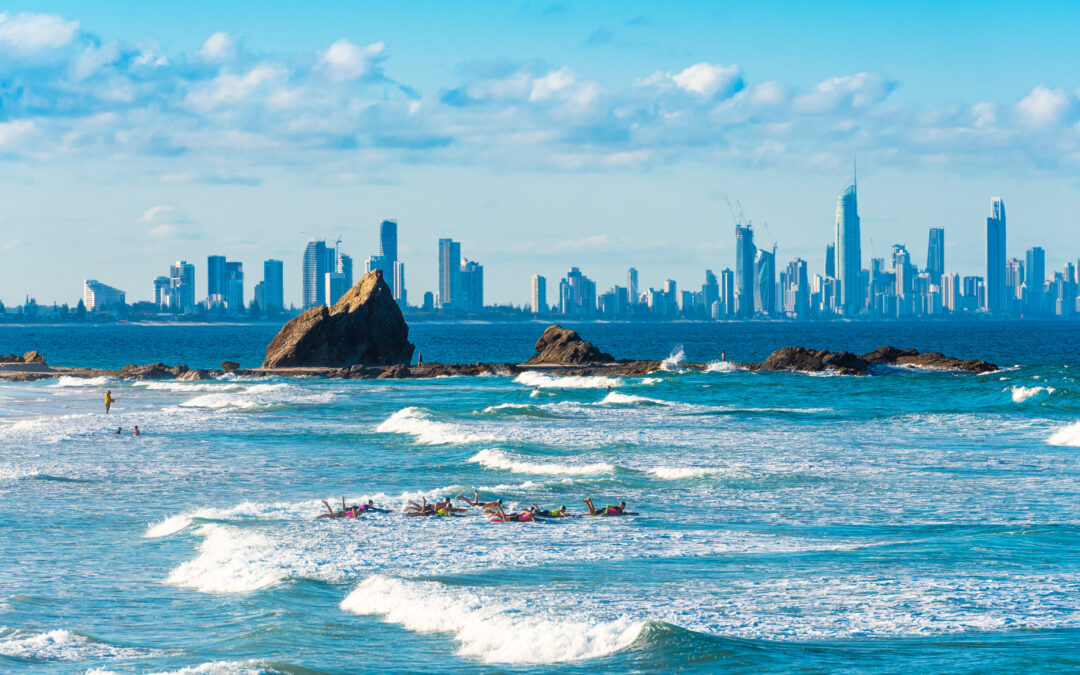
Australia’s public broadcasters ABC and SBS have announced that audiences on the Gold Coast now have access to a range of new radio stations with the launch of digital radio (DAB+) services.

Listeners are able to enjoy the full range of ABC Radio services including ABC Gold Coast, Double J, ABC Jazz, ABC Country, ABC Sport, triple j Unearthed and ABC KIDS listen.

They can also to tune in to SBS Audio services including language programmes on SBS Radio 1, SBS Radio 2, SBS Radio 3, SBS Arabic24 and SBS South Asian, as well as music stations SBS Chill and SBS PopAsia.

ABC Head of Audio Ben Latimer said: “The addition of DAB+ will improve access to the ABC’s wealth of audio services for audiences on the Gold Coast. These audiences will experience high-quality audio across our range of popular digital audio brands like Double J, ABC Sport and the ABC Kids listen.”

SBS Acting Director of Audio and Language Content Pamela Cook said: “With the latest Census data showing nearly a third of Gold Coast residents were born overseas, the launch of DAB+ radio means more Australians can now enjoy SBS Audio’s full suite of over 60 language services. This provides news, community stories, entertainment, plus a new SBS South Asian destination channel.”

Audiences can find more information about DAB+ on the ABC Digital Radio Help Page and SBS Audio How Do I Listen Page.

Media Freedom Coalition statement on the closure of Al Jazeera in Israel

Media Freedom Coalition statement on the closure of Al Jazeera in Israel

Media Freedom Coalition statement on the closure of Al Jazeera in Israel

The undersigned members of the Media Freedom Coalition are concerned with the recently adopted legislation giving temporary powers to the Israeli government to prevent foreign media networks from operating in Israel, and do not support the subsequent shut down of Al Jazeera’s operations in Israel.

A free and diverse media landscape is crucial for democracies to function, especially in times of conflict, as people rely on independent information from multiple, reliable sources to stay informed and make their decisions. This is even more important in an age of mis- and disinformation. It is essential that all journalists be given unhindered access to cover events and developments as they unfold, so that they have the possibility to report and inform transparently and factually.

It is therefore of vital importance to protect press freedom and to prevent any undue restrictions on freedom of expression and access to information.

Signed:

Australia
Belgium
Canada
Chile
Czechia
Denmark
Estonia
Finland
France
Germany
Iceland
Ireland
Italy
Japan
Kosovo
Lithuania
Luxembourg
New Zealand
Norway
Portugal
Republic of Korea
Slovenia
Sweden
Switzerland
the Netherlands
the United Kingdom
the United States
Spain
Costa Rica
Latvia

The AIB is a member of the Consultative Network to the Media Freedom Coalition, representing AIB members and the wider global media community.

Image: Ralf – stock.adobe.com

BBC World Service reveals 310 of its journalists are working in exile

BBC World Service reveals 310 of its journalists are working in exile

BBC World Service reveals 310 of its journalists are working in exile

Ahead of World Press Freedom Day on Friday 3 May, the BBC is announcing for the first time that over 300 World Service journalists – around 15% – are working in exile.

Recent crackdowns on press freedom in Russia, Afghanistan and Ethiopia have pushed more BBC teams to relocate for their own safety, many leaving family and friends behind.

This new figure was announced at World Service Presents, a three-day series of events highlighting the courageous work of journalists around the world, and the state of media freedom globally.

Journalists are facing increasing pressure, including state interference, harassment, and criminal charges, which are consistently used to attempt to undermine their work. Staff at BBC News Persian have been working in exile for over a decade and continue to face harassment and persecution. Last month, the BBC World Service filed an urgent appeal to the UN over abuse of national security and counter-terrorism laws against BBC News Persian journalists.

Following the invasion of Ukraine, BBC News Russian journalists and their families were moved out of Moscow to the Latvian capital of Riga. Now, 39 BBC staff remain in Riga, continuing the work of reporting independent and impartial news to audiences around the world in Russian. They also play an active part in countering disinformation about the war.

On 12 April, BBC Russian correspondent Ilya Barabanov was labelled as a “foreign agent” by the Russian justice ministry. Barabanov has written extensively about Russia’s war in Ukraine. The “foreign agent” label has been used by the government to marginalise journalists and critics of the Russian invasion of Ukraine. Ilya and the BBC reject the decision, which they are disputing in court.

Ilya Barabanov, says: “The most difficult part about exile is the lack of direct contact with people. We lost the opportunity to talk to our contributors. The inability to travel around Russia, report from the field, talk to real people – that’s the hardest part about being a journalist in exile.

“In early April, the Russian authorities designated me a “foreign agent”. This affected my status and ability to talk to people. I now must warn my contributors about this new, unpleasant status.”

Liliane Landor, Director, BBC World Service says: “Press freedom is under increasingly intense pressure at a time when millions, voting in elections around the world, need to be well-informed of the choices ahead of them. The BBC’s news services are blocked or difficult to access in many countries including China, Russia and Afghanistan.

“Our journalists face ongoing harassment and persecution from countries such as Iran and Russia to name but two. World Press Freedom Day is a stark reminder of the gravity of the situation underscoring the urgent need for journalists everywhere to be able to do their job unhindered.”

BBC World Service Director to step down

BBC World Service Director to step down

BBC World Service Director to step down

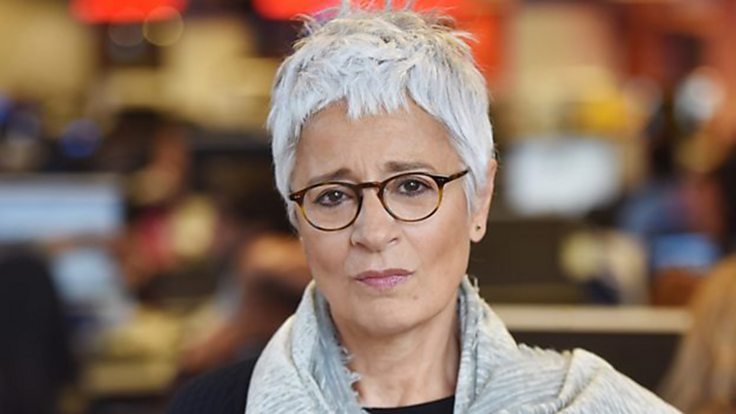
Liliane Landor, Senior Controller of BBC News International Services and BBC World Service Director, has decided to leave the BBC later this year.

BBC Director-General Tim Davie says: “The whole of the BBC owes Liliane a huge debt of gratitude. She is an exceptional journalist and editor. The BBC World Service is one of the jewels in the BBC’s crown, and has flourished under her leadership.

“Liliane has been a formidable champion of the BBC’s international services, and an inspirational leader to so many BBC News staff. I’m extremely sorry Liliane has decided to leave us, and wish her the very best for the future.”

BBC News CEO Deborah Turness says: “In a polarised world where truth is under attack, Liliane has led our BBC World Service teams with real courage. She has been a global ambassador for our powerful and important journalism, and has worked with great skill to modernise World Service output to reach digital audiences. Liliane is a person of great integrity and I will miss her wisdom very much. ”

Liliane Landor says: “Serving as Director of the BBC World Service has been an immense privilege. To have been entrusted with leading a global service relied upon by hundreds of millions worldwide is humbling and the greatest honour of my professional life.

“With media freedom under threat, the World Service is a force for good and the BBC needs to look after it.”

Liliane Landor rejoined the BBC in 2021, after a role as Head of Foreign News at Channel 4 News.

Liliane built a major part of her journalistic career at the BBC, where she began at the French Service.

She went on to manage, present, and edit key areas of the BBC World Service, including a role as head of News and Current Affairs in English, before becoming Controller of Languages, where she was editorially responsible for all non-English language services on radio, TV and online. She left this role in 2016.

Liliane also founded the BBC’s staff network, Global Women in News, which remains high-profile and active, and launched the popular 100 Women project in 2014, being named on the list herself in 2016.

Liliane will leave the BBC in July.

UN Under-Secretary-General calls on global media companies to collaborate

UN Under-Secretary-General calls on global media companies to collaborate

UN Under-Secretary-General calls on global media companies to collaborate

Melissa Fleming recognises importance of the media industry in achieving the Sustainable Development Goals

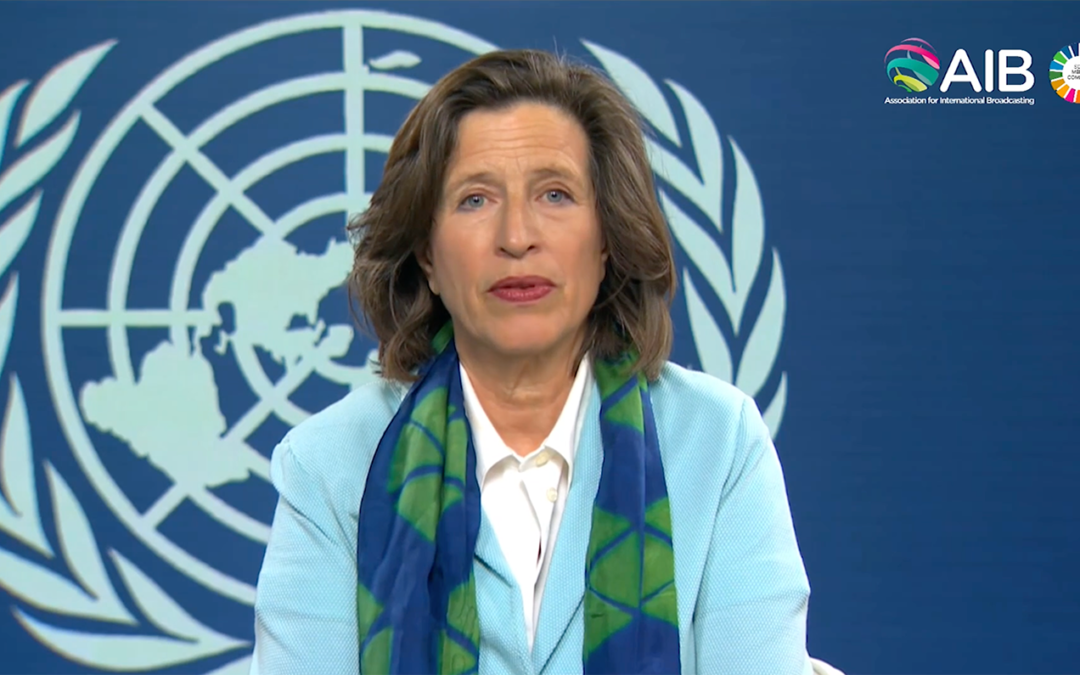
Opening a global webinar on media and sustainability organised by the Association for International Broadcasting, United Nations Under-Secretary-General for Global Communications, Melissa Fleming, called on all media companies to “join forces to be true changemakers”.

Addressing the audience of media leaders and sustainability experts, Melissa Fleming said: “today, I urge all of you to continue these kinds of collaborations to scale up your sustainable development initiatives to innovate on screen and off for the SDGs and to create content that engages your audiences with urgent global efforts to achieve them.”

The AIB is leading the development of the Global Media Sustainability Initiative (GMSI), a ground-breaking effort supported by the United Nations through the UN SDG Media Compact to leverage the global media industry in promoting and achieving the Sustainable Development Goals (SDGs).

During a pivotal webinar hosted by the AIB on 11 April 2024, United Nations officials, along with media industry leaders, highlighted the critical role of the media in shaping a sustainable future.

The GMSI serves as a unique platform where media companies worldwide can collaborate, share innovative practices, and create impactful content that addresses urgent global issues such as climate change, gender equality, and health. The initiative, as part of the United Nations SDG Media Compact, has already attracted media organisations globally, ranging from broadcasters in Africa to publishers in Europe and multimedia companies across the Americas.

Simon Spanswick, CEO of the AIB, remarked on the initiative’s importance, “Today, we stand at a crucial juncture where the power of media to inform and motivate the public is more critical than ever. The GMSI not only aims to unite media companies in a shared mission but also to inspire action that contributes directly to a sustainable future.”

The webinar detailed the initiative’s structure, which will focus on four core areas: increasing public awareness of the SDGs, combating misinformation, training storytellers, commissioners and journalists, and making media companies more sustainable themselves. Notable contributions from media veterans and development experts, such as Georgia Arnold, co-founder and until recently Executive Director of the MTV Staying Alive Foundation and Victor Olvera, Senior Economist at the World Bank, underscored the effectiveness of media in driving societal change and influencing policy at both local and international levels.
Chris Jackson, SVP US Public Affairs at global research company Ipsos, demonstrated public perception of the SDGs in multiple markets, and how citizens in different countries rank the importance of the 17 SDGs personally. The conclusion is that there is much work to be done to achieve awareness of the SDGs, let alone effect societal change on the issues the SDGs seek to address.

Melissa Fleming emphasised the importance of the media’s involvement: “Media organisations are essential partners in the fight against global challenges. Through the SDG Media Compact, we aim to catalyse actions within the industry, helping to drive advocacy, action, and progress towards the SDGs.”

The AIB invites media companies and professionals to become part of the GMSI and participate in forthcoming events, including a significant gathering at the UN General Assembly in September 2024.

For more information on how to engage with the Global Media Sustainability Initiative and make a difference through media, please visit https://aib.org.uk/GMSI/AIB-GSMI-intro-2024-01-15.pdf.

Watch the April 11 webinar at https://player.vimeo.com/progressive_redirect/playback/933311138/rendition/1080p/file.mp4?loc=external&log_user=0&signature=989eea1c21e433609364b80fbe9de92ac7aba1083cccd50741fbd00de61c6472.

CNA’S 25th Anniversary: Mediacorp’s News Network Announces plans to scale up

CNA’S 25th Anniversary: Mediacorp’s News Network Announces plans to scale up

CNA’S 25th Anniversary: Mediacorp’s News Network Announces plans to scale up

Expansion strategy outlined at CNA’s Silver Jubilee includes the introduction of new editions in North America, UK and Indonesia, as well as plans for an increased presence in China

Mediacorp’s news and current affairs brand CNA will focus on reaching new audiences in regional and international markets like Indonesia, East Asia, US, and the UK, while continuing to serve Singaporeans by delivering trusted news and quality stories across its multiple platforms.

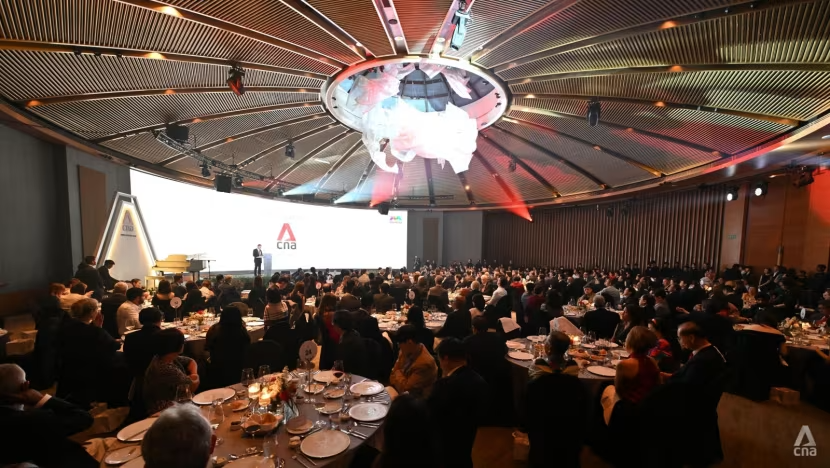
These plans were announced at CNA’s 25th Anniversary Gala Dinner, held on 19 March at Capella Singapore with Deputy Prime Minister Lawrence Wong as Guest-of-Honour.

Addressing a celebratory gathering of 300 guests, Mediacorp Chairman Niam Chiang Meng affirmed CNA’s commitment to continue evolving to meet the demands of a changing global mediascape: “We aim to be present at every touchpoint in people’s lives, engaging them through a combination of our own platforms and third-party platforms. This multiplatform approach is anchored on our understanding of how people consume content today – across platforms and devices, languages, and genres.”

Since its launch in Singapore in March 1999, CNA has grown from a local news channel to a network consumed around the world, reaching more than 94 million homes and hotel rooms in Asia Pacific and the Middle East. Digitally, CNA content is consumed by an average of more than 10 million unique visitors every month [1]. On YouTube, CNA has a combined four million subscribers and over 27 million views per month for its CNA and CNA Insider channels. Its strong presence on YouTube has introduced the brand to a growing international audience, with the US being one of the top three markets in terms of watch time for its content [2]. The brand has also earned recognition on the global stage, having garnered more than 500 international awards and accolades in the past decade. Please refer to the Annex for a list of key milestones since CNA’s establishment in 1999.

Fresh initiatives to expand audiences and enhance offerings

With an eye towards fostering further growth, CNA has embarked on developments aimed at building its existing base, meeting new needs, and engaging untapped audiences beyond Singapore:

Making inroads in the US, Canada, and the UK: The CNA brand will be introduced in North America, Canada, and the United Kingdom across a combination of platforms: television streaming services, YouTube, and a curated edition of the CNA website. The roll out will be conducted in phases over this year. This undertaking will cater to people in these regions who are looking for breaking news and insightful documentaries about Asia – in particular China, Japan, and Korea.

Strengthening depth of coverage on China: As part of its expansion strategy and to deepen its on-ground understanding and reporting of China-related news, CNA plans to augment its mix of TV and digital bureaus, with plans to open a new bureau in Shenzhen, and potentially station more correspondents at its Beijing and Shanghai bureaus.

Introducing East Asia Tonight: Audiences can also look forward to a new one-hour bulletin, East Asia Tonight. Airing on CNA every weekday at 6pm from April. Through a combination of ground reporting of the latest developments, original in-depth features and expert analysis, CNA will seek to help audiences around the world to better “Understand Asia”.

Adopting AI to debut a Bahasa Indonesia website: Tapping on a large audience profile closer to home, CNA has launched cna.id, a website in Bahasa Indonesia. To achieve this milestone, CNA’s first digital foray beyond English, CNA signed a research collaboration agreement with Agency for Science, Technology and Research (A*STAR) to build an English-to-Bahasa Indonesia AI translation tool. A dedicated team of Bahasa Indonesia editors then checks these translated as well as original news reports and features before publishing them.

Providing more engaging content experiences: Continuing to harness AI, CNA has introduced AI-generated summaries (FAST) for articles on the CNA app. Launched on 18 March, the FAST feature uses AI large language models to extract key sentences from stories. These are vetted by the CNA editorial team before publication, providing time-pressed readers with an option to sample content quickly and efficiently when on the go. This feature will be launched on the website soon.

Earlier this year, CNA also introduced a text-to-speech conversion to enable readers to listen to digital stories; and improved its personalised experiences with MyFeed, a feature which allows readers to select and receive more stories on topics of interest to them.

Mediacorp Editor-in-Chief & Chief Sustainability Officer Walter Fernandez said: “CNA’s Silver Jubilee marks a significant milestone in our journey as CNA goes global.”

Added Mr Fernandez: “In the past decade, CNA has won more than 500 international awards for its outstanding content; CNA was named ‘Channel of the Year’ by the London-based Association for International Broadcasting in November 2020; and two years later CNA was named the global winner of the ‘Best News Website or Mobile Service’ by the World Association of News Publishers. Building on this track record of high-quality content and engaging programming, CNA has set its sights on being the global news source to ‘Understand Asia’. The next leg of CNA’s growth will focus on expanding our coverage and sharpening the nuance of our reporting about China; while growing our global audience particularly in North America and Europe.”

[1] Source: Adobe Analytics, April 2023 – February 2024
[2] Source: YouTube Studio