VoA responds to Turkish regulator threat over Internet services

VoA responds to Turkish regulator threat over Internet services
VoA responds to Turkish regulator threat over Internet services

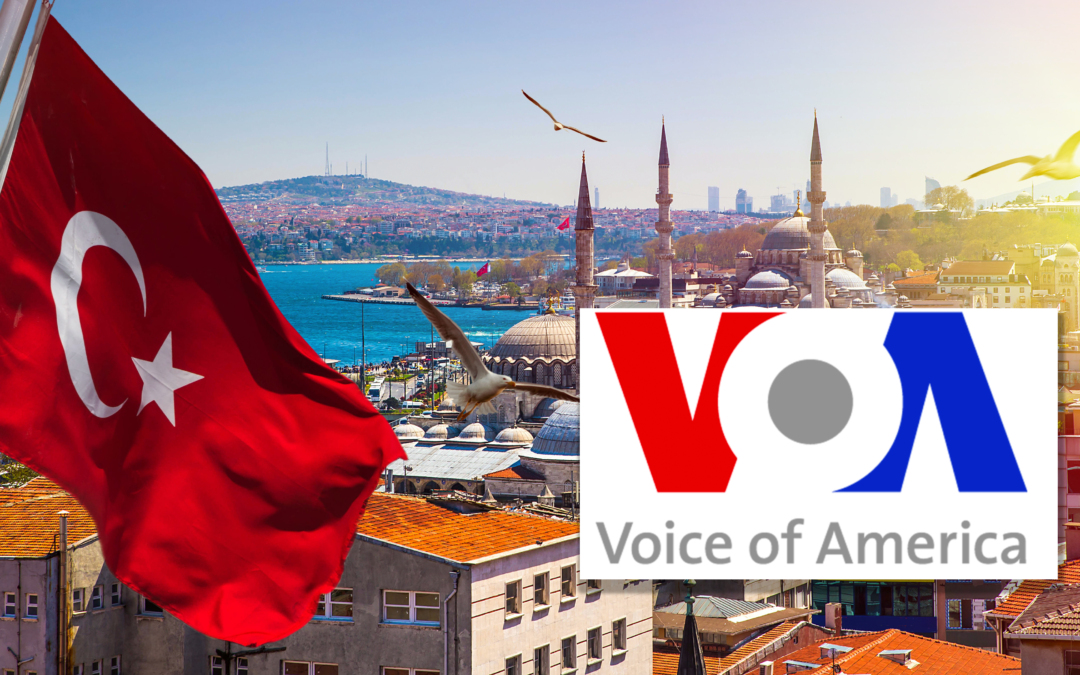
Following the announcement by Turkish media regulator RTüK about its plans to force international broadcasters to apply for licences to operate Internet-delivered services in the country [read the story here], Voice of America has issued a statement setting out its position.

On Monday, February 21, Turkish media regulator RTUK posted an official notice that the VOA Turkish language website would be blocked in 72 hours if VOA does not begin the process of applying for an “Internet broadcasting license.”

Many media organizations within and outside of Turkey have expressed significant concern that this licensing requirement is designed to enable censorship of unfavorable press coverage.

Licensing is the norm for radio and TV broadcasting, because broadcast spectrum is a finite public resource, and governments have a recognized responsibility to regulate the spectrum to ensure it is used in the broader public’s interest. The internet, by contrast, is not a limited resource, and the only possible purpose of a licensing requirement for internet distribution is enabling censorship.

VOA is a public service international broadcaster, VOA is legally required to provide “accurate, objective, and comprehensive” news coverage to audiences in all of the countries it serves. Accordingly, VOA’s Charter prevents VOA from agreeing to or allowing its coverage to be censored in any way. Our editorial decisions are required to be governed at all times by the highest professional standards of journalism. So VOA could not comply with directives from a regulator to censor or remove content; nor then could VOA willingly agree to subject itself to such censorship.

“The threat to block the websites of the Voice of America, Deutsche Welle, or any other independent, public service, professional news service in Turkey is worrisome,” said Acting VOA Director Yolanda López. “Voice of America’s independent journalism cannot be subject to this or any government’s control which results either in censorship or even the perception of it.”

Accordingly, absent an alternative, VOA believes that it will be obliged to file an objection with Turkish regulators to the request to apply for a license.

Commenting on the situation, AIB chief executive Simon Spanswick said: “At the AIB, we are extremely concerned about the demand by Turkey’s media regulator that two of our members – Deutsche Welle and Voice of America – must apply for a licence to deliver their Turkish language service online in the country. The decision by RTÜK appears arbitrary and out of step with other regulators in Europe (RTUK is a member of the European Platform of Regulatory Authorities). There is a real danger that the decision will deprive Turkish citizens of access to the important international news sources that DW and VoA provide.”

Australian government to end ABC funding freeze

Australian government to end ABC funding freeze

Australian government to end ABC funding freeze

Australia’s federal government has announced that it is ending a freeze on funding of the ABC.

From July 2022, the ABC will receive almost A$3.3 billion (US$2.37 billion) over three years. SBS – the country’s second national broadcaster – will receive more than A$950 million over the same period.

ABC Chair Ita Buttrose said: “I am delighted with the Government’s decision to commit $3.3 billion over the next three years to the ABC.

“It will allow the national broadcaster to continue doing what it does best – provide information and entertainment to Australians wherever they live.”

ABC Managing Director David Anderson commented: “On behalf of the ABC, I welcome the funding certainty this announcement brings to the national broadcaster for the next three years.

“The $3.3 billion over the next triennium, announced by the Minister Paul Fletcher, sees the resumption of indexation, the continuation of the Enhanced Newsgathering (ENG) program that provides vital services across the country, and ongoing support for audio description services for blind or visually impaired audiences.

“ENG funding has delivered more tailored news to local communities and has seen the ABC invest more in specialist resources that provide vital context and analysis about issues that matter to all Australians.

“Importantly, this announcement also guarantees the ability of the ABC to continue to reinvest funds from the recently concluded Google and Facebook deals into rural and regional services.

“As the ABC’s Managing Director, I have consistently made the case for the resumption of indexation on the ABC’s base funding and the continued support for ENG program.

“The triennial funding announcement is an important recognition that the ABC is needed now more than ever, and this funding is required so it can continue to fulfil its vital role in our democratic society.

“I would like to thank the Minister, Paul Fletcher, and the Government for recognising the enduring value of the ABC as we mark 90 years of serving Australians.”

Media Freedom Coalition evaluation published at Estonia conference

Media Freedom Coalition evaluation published at Estonia conference

Media Freedom Coalition evaluation published at Estonia conference

​A new evaluation finds that the Media Freedom Coalition requires a ‘re-injection of energy’.

The Foreign Policy Centre – an independent, non-partisan international affairs think tank based in the United Kingdom – has supported the publication of a report evaluating the first two years of the Media Freedom Coalition (MFC). The MFC is a partnership, established in 2019 by the UK and Canada, of 50 countries working together to advocate for media freedom and the safety of journalists. The report is being launched on 9 February at the Global Conference for Media Freedom in Tallinn, Estonia. https://mfctallinn.humanrightsestonia.ee/video/

Conducted by a team of six academics and researchers, from the University of East Anglia, City, University of London and University of the Philippines-Diliman, the report poses one central question: is the Media Freedom Coalition working?

“Our assessment is that the MFC is only partially achieving its objectives,” states Dr Mary Myers, the lead author of the report. “It has taken some positive steps towards its ambitious goals including attracting a relatively large membership and establishing collegiate ways of working. However, partly because of the COVID-19 pandemic, the actions of the MFC have not been as rapid, bold or visible as was initially promised.”

The report concludes that MFC requires a ‘re-set’ and ‘re-injection of energy and funds’ in the next two to three years if it is to achieve its original aims, and provides a scorecard and recommendations to support future development.

“The objective of our report was to identify key areas for improvement to strengthen the MFC’s work moving forward, as such, we hope members of the MFC will take on board our findings and adopt our recommendations,” added Dr Myers.

Evaluating the MFC

The evaluation report’s findings are based on over 100 interviews with relevant stakeholders; analyses of news coverage, social media commentary and public statements; and a survey of media freedom campaigners – as well as detailed case studies in Sudan and the Philippines. The research team assessed the MFC against its own pledges to:

– Promote accountability by ‘raising the cost’ to those who abuse or violate media freedom;

– Hold its own members to account over media freedom violations;

– Work together as a coalition, expand the membership and collaborate with partners (including the Consultative Network, UNESCO and the High Level Panel of Legal Experts on Media Freedom;

– ‘Shine a spotlight’ on the issue of media freedom by raising awareness of it; and

– Develop and defend the media by providing practical support to independent media around the world.

The report finds that the Coalition had some early successes. Several states – such as the Maldives and Sierra Leone – have made positive improvements domestically, as a direct result of joining the MFC and there have been several instances of successful private diplomacy by Coalition members working together. However, according to Dr Martin Scott, another of the report’s co-authors, “its working methods have been slow and lacking transparency, its communications poor, and its financial commitments small”.

The Association for International Broadcasting is a member of the Consultative Network to the Media Freedom Coalition.

Germany and Russia go head to head over broadcasters

Germany and Russia go head to head over broadcasters

Germany and Russia go head to head over broadcasters

Germany and Russia have traded blows over the two countries’ international broadcasters.

 
On Wednesday 2 February 2022, the German Commission on Licensing and Supervision (ZAK) decreed that RT must cease broadcasting German-language programmes saying it “does not have the necessary broadcasting licence”.
 
RT DE – the Berlin-based German-language division of RT (formerly Russia Today) acquired a licence from the Serbian media regulator on 17 December 2021. Both Germany and Serbia are signatories to the European Convention on Transfrontier Television. Licences granted by one ECTT member state provide the legal grounds for transmission and reception of a licensed service in another ECTT-ratified state. However, Germany says that since the programmes are produced in Germany and not Serbia, the licence does not provide the right for the channel to be received in the country. RT has said that it will challenge this in the German courts.
 
The following day, 3 February, the Ministry of Foreign Affairs of the Russian Federation issued a statement announcing that it is closing the operations of Germany’s international broadcaster DW in the country (headquarters in Bonn pictured).
 
The statement reads:
As part of the response measures announced on February 2 in response to the unfriendly actions of the Federal Republic of Germany to ban satellite and other broadcasting of the German-language television channel RT DE, the Russian side intends to implement the first stage of response measures:
– closure of the correspondent office of the German television and radio company Deutsche Welle in the Russian Federation;
– cancellation of accreditation of all employees of the Russian Bureau of Deutsche Welle;
– termination of satellite and other broadcasting of the Deutsche Welle television and radio company on the territory of the Russian Federation;
– initiation by the competent authorities of the Russian Federation of the procedure for considering the issue of recognising Deutsche Welle as a foreign mass media outlet acting as a foreign agent;
– launching the process of forming a list of representatives of state and public structures of Germany involved in restricting the broadcasting of RT DE and otherwise putting pressure on the Russian media operator, who will be banned from entering the territory of the Russian Federation. The list is not expected to be published.
Information on the next steps in the response will be published in a timely manner.”
 

DW has issued a press statement about the Russian move. It quotes DW Director-General Peter Limbourg as saying: “The measures by the authorities in Russia are completely incomprehensible and a total overreaction,

“We have been made into a kind of pawn, which the media must often endure in autocracies. We formally protest against this absurd reaction by the Russian government and we will take legal action against the announced measures. Until we are officially presented with the measures, we will continue reporting from our office in Moscow. Even if we ultimately do have to close it, our reporting about Russia will remain unchanged. In fact, we would increase our coverage.”

According to the press statement, Deutsche Welle has held a broadcast license in Russia since 2005 for its DW English and DW German TV channels. The current licenses issued by Russia’s media authorities are valid until 2025 for DW English and until 2027 for DW German.

DW English is broadcast in Russia via the ASTRA-5B satellite. DW German is broadcast using the ASTRA-4A satellite. In line with the binding conditions of the license, the DW German TV channel has a window for Russian-language programming in its schedule. This programming consists of DW magazines adapted into Russian (a total of 18 hours per week: 2 hours per day, Mon.-Fri. and 4 hours per day, Sat.-Sun.). Several cable TV distributors in Russia also run the Russian-language programming of DW German. They are Rostelecom, Tricolor, Beeline, ER-Telecom, MTS and NetByNet.


Picture: The Foreign Ministry in Moscow

AIB welcomes acquittal of Pakistan media group head

AIB welcomes acquittal of Pakistan media group head

AIB welcomes acquittal of Pakistan media group head

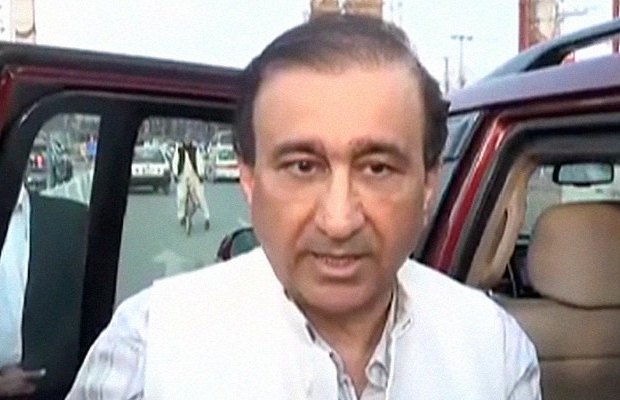
The AIB welcomes the decision of the Accountability Court in Lahore to acquit Mir Shakil-ur Rahman, editor in chief and CEO of Jang-Geo Group, of charges relating to property transactions over 30 years ago.

Rahman was kept in jail for eight months until pressure from the international community – including the AIB – resulted in his release on bail in November 2020 following an order by Pakistan’s Supreme Court. 

MSR’s arrest followed a significant campaign by the Pakistan government against Geo TV and Jang Group that has included restrictions on carriage of the nationwide TV network imposed by the Pakistan Media Regulatory Authority, and attacks on journalists working for Geo TV and Jang publications.

“We hope that the release of MSR marks the start of a change in approach to media freedom in Pakistan,” said Simon Spanswick, chief executive of the AIB. “The intimidation of journalists and media owners in the country has gone on for far too long. Pakistan needs to embrace the principles of media freedom for the benefit of its citizens.”

Deborah Turness appointed CEO, BBC News and Current Affairs

Deborah Turness appointed CEO, BBC News and Current Affairs

Deborah Turness appointed CEO, BBC News and Current Affairs

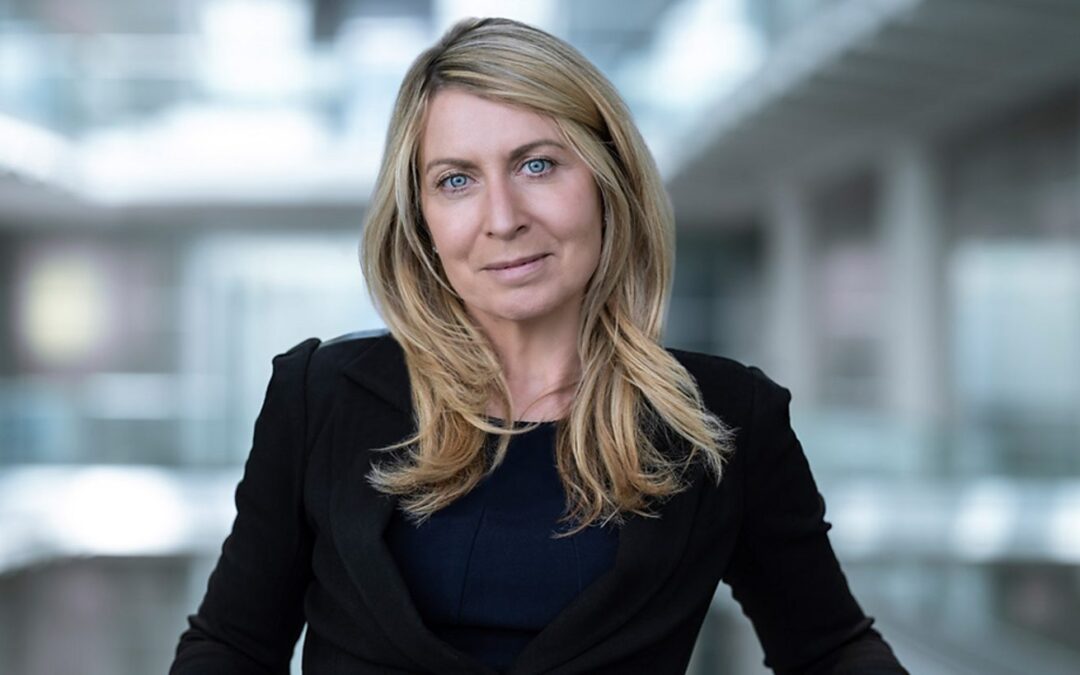
The BBC has announced that Deborah Turness has been appointed as CEO, BBC News and Current Affairs. Deborah will join the BBC from the UK’s ITN, where she is CEO.

Tim Davie, BBC Director-General, says: “I’m delighted Deborah Turness is joining the BBC as our CEO for BBC News and Current Affairs. Deborah brings a wealth of experience, insight, first-class editorial judgement, and a strong track record of delivery. She is a passionate advocate for the power of impartial journalism and a great believer in the BBC and the role we play, in the UK and globally. She will do a brilliant job of leading our news and current affairs as we deliver on the BBC’s public service mission in the digital age.”

Deborah Turness says: “In the UK and around the world there has never been a greater need for the BBC’s powerful brand of impartial, trusted journalism. It is a great privilege to be asked to lead and grow BBC News at a time of accelerated digital growth and innovation, when its content is reaching more global consumers on more platforms than ever before.”

As CEO of BBC News, Deborah will have responsibility for a team of around 6,000 people, broadcasting to almost half a billion people across the world in more than 40 languages. The BBC is consistently rated the world’s most trusted international news provider, and record numbers of people have turned to BBC News during the coronavirus pandemic. The latest figures show that eight out of ten UK adults use BBC News every week. 

Her title of CEO reflects the BBC’s ambition to continue to build the BBC’s global news brand and continue to grow its news services, which are now reaching a record 456 million people worldwide. Deborah will also be nominated to join the BBC Board.

Her appointment follows a competitive recruitment process. She replaces Fran Unsworth, who is retiring and leaves the BBC at the end of January.