Media Freedom Coalition Statement on Russia’s Invasion of Ukraine and Assault on Media Freedom

Media Freedom Coalition Statement on Russia’s Invasion of Ukraine and Assault on Media Freedom
Media Freedom Coalition Statement on Russia’s Invasion of Ukraine and Assault on Media Freedom

The global Media Freedom Coalition issued the following statement on 10 March 2022.

The undersigned members of the Media Freedom Coalition strongly condemn Russia’s premeditated, unprovoked and unjustifiable war against Ukraine with the participation of Belarus. We reiterate our staunch support for Ukraine’s sovereignty and territorial integrity and for the people of Ukraine. As the situation rapidly deteriorates, we are seriously concerned that the Russian Federation is completely supressing journalists and media workers from reporting on events that are taking place on the ground in order to control the information space, including through Russian disinformation. The same applies to Belarus, which supports Russia’s aggression against Ukraine and continues to further exacerbate the already extremely troubling situation for media freedom in their country.

The Kremlin is throttling or blocking access to many social media platforms. It is also blocking the websites of many of the few remaining Russian independent media outlets. The BBC, TV5 Monde, CBC/Radio-Canada, CNN, CBS, ABC News, Bloomberg, Radio Free Europe, Radio Liberty, and others are moved to suspend their operations in Russia due to new legislation that criminalizes any individual or organization accused of sharing what Russia views as “fake news” about Russia’s war in Ukraine. While media organizations may decide to re-commence their reporting from Russia, they do so in the face of ongoing risk posed by the new law. We strongly condemn Russia for passing this repressive law that unduly restricts journalists and media workers from carrying out their vital, independent, work.

Putin’s campaign of intimidation and repression against journalists and media workers is aimed at preventing the people of Russia from accessing accurate and independent information about the illegal and reprehensible acts being perpetrated in their name against Ukraine. Free access to information is important to the exercise of the right to freedom of opinion and expression.

We also strongly condemn Russia’s longstanding use of coordinated disinformation campaigns against Ukraine, most recently, to create false pretexts to attempt to justify their illegal and immoral acts and to conceal the atrocities they are committing.  The ongoing efforts by the Kremlin to muzzle local journalists and foreign correspondents providing fact-based coverage of the war are a violation of international human rights law. Therefore, the Media Freedom Coalition welcomes the steps already taken by online platforms and calls to take further action to prevent state-sponsored disinformation, including that propagated by Russia Today and Sputnik, and the sanctions adopted by many governments against the individuals in charge of these Russian state-media.

Independent media has a crucial role in all societies. Journalists and media workers must be allowed to safely carry out their work, particularly in times of conflict. We condemn attacks on journalists, including the brutal killing of a Ukrainian TV station LIVE cameraman following a Russian airstrike on a TV broadcast tower in Kyiv, as well as the attacks on journalists of the Sky News, Ekstra Bladet, RSF, Alaraby TV, and other media outlets. We call on Russia to immediately end the brutal crackdown on independent media and to respect the rights of journalists and media workers in accordance with international human rights law and international humanitarian law. We call out all violations of the right to freedom of opinion and expression, including attacks on journalists and media outlets. These cannot be tolerated.

We stand with journalists and media workers who, at great personal risk and sacrifice, work to bring Russia’s human rights violations and abuses to light.  We commend their professionalism and resilience to ensure the free flow of independent information despite the most challenging circumstances.

Signed:

Australia

Austria

Canada

Croatia

the Czech Republic

Denmark

Estonia

Finland

France

Greece

Iceland

Ireland

Italy
Japan

Republic of Korea

Latvia

Lithuania
Luxembourg

the Netherlands

New Zealand

North Macedonia

Norway

Portugal

Sierra Leone

Slovakia

Slovenia

Sweden

Switzerland

Ukraine
the United Kingdom

the United States

Belarus: Director General Limbourg denounces classification of DW as ‘extremist’

Belarus: Director General Limbourg denounces classification of DW as ‘extremist’

Belarus: Director General Limbourg denounces classification of DW as ‘extremist’

On Wednesday 9 March, Belarusian authorities classified the Telegram channel of DW Belarus, information services and Deutsche Welle (DW) as “extremist.”

DW Director General Peter Limbourg denounced the decision, saying, “The blocking of our websites in Belarus in October 2021 was already an unbelievable encroachment on press freedom. The recent announcement of the criminalisation of the DW logo proves how nervous the regime there is.”

“DW is still informing many people in Belarus via tools for bypassing censors. Especially following the attack on Ukraine, the numbers have significantly increased. Now they want to use cheap tricks to create pseudo-legal grounds to take action against people who make use of their right to free speech.”

The Ministry of Internal Affairs of Belarus released a statement on March 9: “The Minsk Central District Court, based on material from the Main Directorate for Combating Organised Crime and Corruption of the Ministry of Internal Affairs of the Republic of Belarus, has classified the information products of the Telegram channel and the DW Belarus chat as extremist material.”

DW locates Moscow bureau to Latvia

DW locates Moscow bureau to Latvia

DW locates Moscow bureau to Latvia

Deutsche Welle (DW) is relocating the journalistic operations that were based in Moscow to Latvia following the closure of its Moscow studio and the withdrawal of its staff’s accreditation by the Russian government.

Infrastructure for DW’s broadcasting operations will be set up over the coming weeks in the capital city of Riga. Yuri Rescheto, previously DW Bureau Chief Moscow, will be head of DW’s new foreign location.

DW Director General Peter Limbourg: “We continue to take all the technical and organisational measures possible to provide our audience in Russia and around the world with critical information. We remain committed to providing independent and objective reporting. Even though our website and most social media channels have been blocked by the Putin government in recent days, people in Russia can find a variety of ways to circumvent censorship.”

DW Editor-in-Chief Manuela Kasper-Claridge: “From Germany, Ukraine, neighboring European countries and now soon also from Riga, we provide our audience in Russia with comprehensive and sustainable information about the war in Ukraine. Latvia offers geographical proximity to Russia, and the vibrant media landscape in the Baltic countries now creates optimal conditions for our team and reporting.”

On February 3, 2022, the Russian government banned DW from broadcasting in Russia, citing as a reason Germany’s ban on the German-language channel of Russian state TV network RT DE. The following day, staff at DW’s Moscow studio had to hand in their press accreditations. The Russian Foreign Ministry also announced an investigation into whether DW should be classified as a foreign agent.

Second Ukraine TV tower hit; channels off the air

Second Ukraine TV tower hit; channels off the air

Second Ukraine TV tower hit; channels off the air

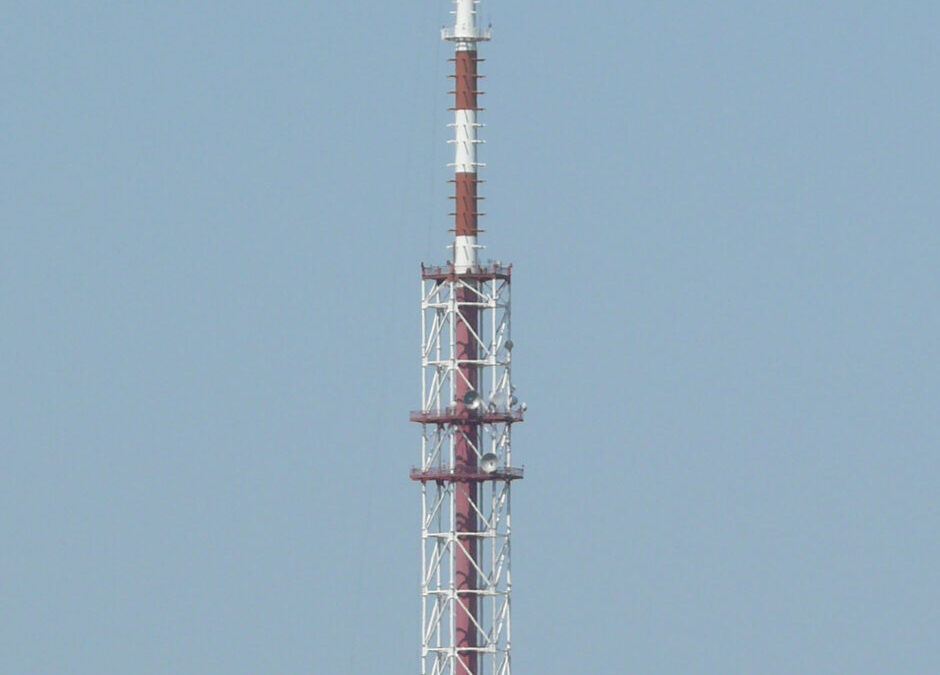
Reports from Ukraine say that the Russian invasion has targeted a second TV transmission tower. 

The TV tower in Kharkiv is reported to have been hit on Sunday 6 March, taking TV channels off the air. It appears that this is a new tactic by Russia as it attempts to restrict access to information for Ukrainian citizens in the country. 

Standing 240m high, the Kharkiv tower was constructed in 1981 and is believed to carry TV and radio signals to the city and surrounding area. 

Ukraine media companies offer free materials

Ukraine media companies offer free materials

Ukraine media companies offer free materials

Ukraine’s 1plus1 Media Group is making available to news organisations around the world footage and other material that may be of assistance in covering the situation in the country. The material is on a free-of-charge basis. We reproduce details below.

We are granting access for redistribution to news outlets worldwide and giving the right to archive the material.

  1. The technical parameters for broadcasting our TV-Channels are as follows: satellite Astra 4A at 4.8°E, transponder 12 130 (B22), polarisation vertical, frequency 27500, FEC ¾.


  1. UNIAN, an information agency, which is part of 1+1 media group, has the largest operational photo stock on news in Ukraine. Access to it is open to all media services, influencers and international media agencies. Thus, anyone who is to cover news in the media about Ukraine’s resistance to Russian aggression can use these photos for free.

The agency notes that all photo reporters are working on one and only topic in these crucial days for the country: red-flagging the aggressor country’s crimes and covering the courageous resistance of Ukraine.

All the photos are available in different resolutions, including the maximum one and with no registration needed. https://photo.unian.info/ (English)

  1. 1+1 media group is actively working on debunking fakes in the international media space and also interacting with foreign journalists to massively refute Russian lies, share key information with people all over the world and record the crimes, committed by the Russian Federation in Ukraine. In order to achieve that, TSN.ua news website (ТСН.ua), which is a part of 1+1 media, accumulates all information about military events in Ukraine in the website section “Materials for The Hague“.


  1. Also we have a Twitter account. Only truth, objectivity and breaking news from official sources and witnesses. Created and held by one of the biggest Ukrainian media groups — 1+1 media. https://twitter.com/truth_about_war.


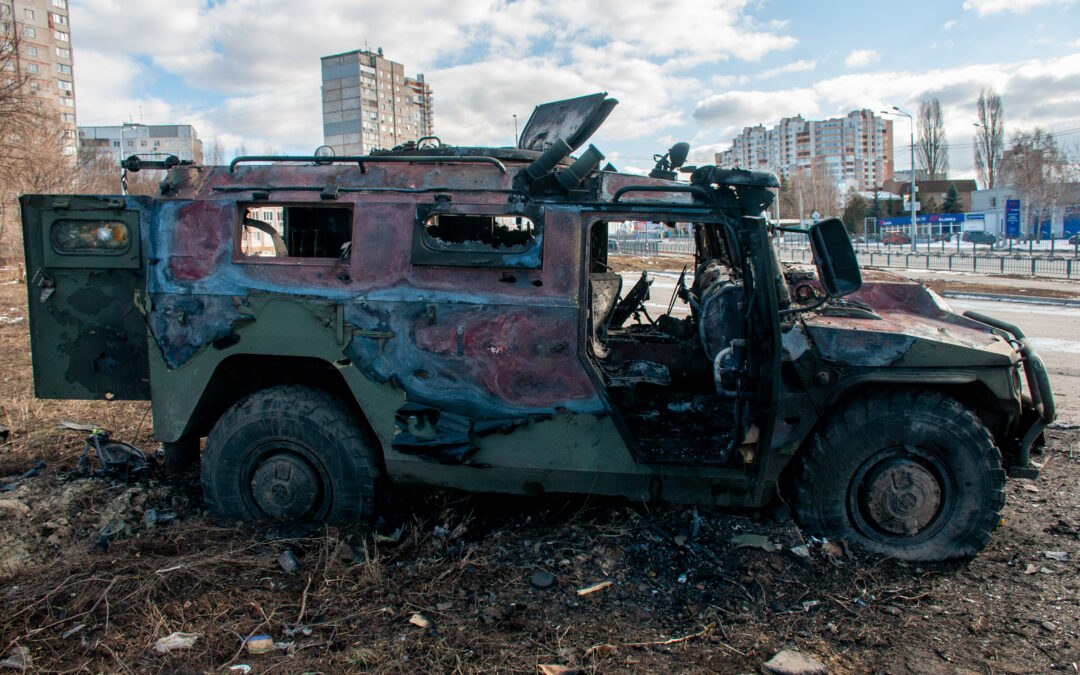
Photo: Marienko Andrii, Kharkiv

DW says Turkey trying to stifle its online operation

DW says Turkey trying to stifle its online operation

DW says Turkey trying to stifle its online operation

Germany’s international broadcaster DW has responded to the Turkish media regulator’s call to apply for a licence for internet services.

In a statement, the German broadcaster said:

DW was given notice from Turkey’s media regulator RTUK on Monday [21 February] to obtain a broadcast license in Turkey within a period of 72 hours or have its online content (dw.com) blocked.

The Turkish media regulatory authority RTUK published a statement to this effect on its website on February 21, 2022.

DW Director General Peter Limbourg: “After having subjected the local media outlets in Turkey to such regulation, an attempt is now being made to restrict the reporting of international media services. This move does not relate to formal aspects of broadcasting, but to the journalistic content itself. It gives the Turkish authorities the option to block the entire service based on individual, critical reports unless these reports are deleted. This would open up the possibility of censorship. We will appeal against this decision and take legal action in the Turkish courts.”

DW, alongside other international broadcasters, is one of the few remaining news outlets from which people in Turkey can obtain independent information. In addition to DW, Voice of America and Euronews were also given notice to apply for a license.

DW had established a liaison office in Turkey in accordance with the 2019 law and has been registered with the relevant Turkish ministry since February 2020. This registration is independent of DW’s correspondent office in Istanbul.

Commenting on the situation, AIB chief executive Simon Spanswick said: “At the AIB, we are extremely concerned about the demand by Turkey’s media regulator that two of our members – Deutsche Welle and Voice of America – must apply for a licence to deliver their Turkish language service online in the country. The decision by RTÜK appears arbitrary and out of step with other regulators in Europe (RTUK is a member of the European Platform of Regulatory Authorities). There is a real danger that the decision will deprive Turkish citizens of access to the important international news sources that DW and VoA provide.”